Thursday, March 17, 2011

THE MURDERER'S DAUGHTERS by Randy Susan Meyers (2009) St. Martin's Press, 307 pages


Randy Susan Meyers (@randysusanmeyer) joins the list of fabulous women writers whose work I've discovered through the heady cyber company of the book community on Twitter: @AmyMacKinnon @rosannecash @clairecookwrite @robin_black @angie_abdou @julieklam and @EmilyMandel--I've reviewed books by all of them here on my blog.

I've been especially keen to read Meyers' novel knowing that it explores that complicated relationship between a father and his children after he commits a heinous and violent crime.

My mother was raised to believe her father was dead when the truth was he was in prison for fraud, a fact she discovered quite by accident when she was in her early twenties when she met his brother. I know how deprived she felt when the prison chaplain returned her letter insisting that she was better off not knowing the man her father had become. And, though she forged a relationship with her uncle, she never did meet her father, even after he had served his time, because he was too ashamed about abandoning her when she was just a child. It is heartbreaking even now many decades later.

When THE MURDERER'S DAUGHTERS opens in July 1971, Lulu is nine going on ten (her birthday is the next day) and her younger sister Merry is almost six. One night their estranged father pounds on the apartment door and demands that he be let in to talk to their mother. Lulu explains that her father "wanted things he couldn't have" perhaps most of all "he hungered" for her mother and her "pin-up girl façade." Knowing that she's not supposed to let her father into the apartment, Lulu weakens when he reassures her using her pet name: "Don't worry, Cocoa Puff. Mama won't get mad. I promise."

What transpires as a result is shocking and traumatizing. Not only does their father kill their mother, but he also wounds Merry, who spends swaths of time alone in hospital because of the narrow-minded attitudes of her mother's relatives. For a time the girls are raised by their grandmother, but when she dies and no relative will saddle themselves with the responsibility and stigma of the murderer's daughters, Lulu and Merry are put in an orphanage, where they learn to fend for each other at all costs. Even when the girls are fostered out to a wealthy New York doctor and his social worker wife, they realize that they can only really rely on each other.

Told over the course of 30 years, THE MURDERER'S DAUGHTERS is an unconventional bildungsroman that offers what feel like emotionally true perspectives from both the victims and the criminal who tries desperately to make amends.

Tuesday, March 15, 2011

IF I LOVED YOU, I WOULD TELL YOU THIS: STORIES by Robin Black (2010) Random House, 268 pages


Richard Ford says that in literature he found belonging. That literature made him believe in a better place.

His statement has never been truer for me than between the pages of this debut collection of short stories. There were moments that I felt as if Robin Black were whispering in my ear truths about my own life, both those obviously known to the world around me and those I hold secretly in my heart.

In each of the pieces in IF I LOVED YOU, I WOULD TELL YOU THIS there are characters coming face to face with real transitions in their lives, moments that are tender and agonizing. For example, in "The Guide" a protective father must offer up to his blind daughter on the cusp of college an opportunity to forge independence; in "If I Loved You" a middle-aged couple struggles with terminal illness and the complication of telling a developmentally delayed son; in "Immortalizing John Parker" a portraitist mourns the loss of a love affair while realizing her subject is dying and wonders about letting go of her past; in "Tableau Vivant a mother worries about her adult daughter's infidelity; in "The History of the World" a recently separated woman finds herself in crisis after an accident while traveling in Italy and discovers through the kindness of a stranger that her lifelong assumptions about herself just might not be true.

Black's hand tapped me on the shoulder and swiveled my head when she wrote in "Divorced, Beheaded, Survived,"

"The truth is that sometimes even more than a day goes by before I remember to think of my brother. It's only natural, I've told myself, time and time again. It's human nature, I've thought--as though there's consolation to be found in that. And maybe there is. Maybe it's a gift to be able to let go of the remembering."

Just as the rare faint scent of Fleurs de Rocaille (my grandmother's perfume) will turn my head on a street, in a theatre, in a bookshop, hopeful in that olfactory moment that she'll round the corner even though she's been gone for 16 years, Black's words bring me to my only brother and how my life "changed utterly" (to reference Yeats) after his accidental death in 1994.

In a recent post Black wrote for Beyond the Margins she explained that there is "the point at which an author gives the story to the reader. Here, I am finished. It belongs to you now. Do with it what you will." That leap of collaborative faith between the writer and the reader is part of the magic of fine fiction. Fiction that helps you find belonging and believe in a better place.

Robin Black's exquisitely drawn portraits of flawed people like you and me in IF I LOVED YOU, I WOULD TELL YOU THIS will indeed give you pause. Your heart will skip a beat, or two, and you'll feel all the finer for it.

DEAL BREAKER by Harlan Coben (1995) Random House, 343 pages


Although this is Coben's first Myron Bolitar novel, it's not the first time I've met Myron or his psychotic, but critically helpful, former university roommate Win because I haven't been reading the series in order, but rather as each book finds its way to me.

Myron is building his business as a sports agent and he's guided ably by his assistant Esperanza, a former wrestler known as Pocahontas on the ladies' circuit, who suffers no fools--especially the ones who are bullies. His current high profile client is Christian Steele, a football star whose fiancée Kathy Culver mysteriously disappeared from her university campus 18 months previous. The Culver family recently suffered another unexpected loss when Kathy's father Adam was murdered in his own home in what the police regard as a botched robbery. Myron is not so sure that there was a robbery at all or that Kathy and Adam's cases are unrelated. The cases are complicated by Myron's previous relationship with Kathy's sister Jessica and by his undercover instinct to set the record straight.

One of the aspects of Coben's character building that keeps me hooked is his playfulness with popular culture references. In DEAL BREAKER I was continually amused by the Broadway musical theatre posters that decorate Myron's office walls and Myron's ability to reference a song or a moment from one of those very shows as a way to test his closest friends.

As I have come to expect with Coben's novels, DEAL BREAKER is rife with wit, tension and a messy protagonist's need to make things right.

Tuesday, March 08, 2011

HOLDING STILL FOR AS LONG AS POSSIBLE by Zoe Whittall (2009) House of Anansi Press, 296 pages


Don't you just love it when you find a new-to-you writer whose first book is such a treat that you can't wait to get your paws on the next? Even though HOLDING STILL FOR AS LONG AS POSSIBLE is not Zoe Whittall's first novel (BOTTLE ROCKET HEARTS is), it is the first one of hers that I've read.

An unconventional love triangle between a paramedic (Josh), a former teen-sensation (Billy) and an emerging filmmaker (Amy) is at the heart of this gritty, urban narrative that roams streets familiar to me from the different lives it feels I've led here in Toronto. Though it is decades since I enjoyed my twenties like these three, Whittall triggered memories of what it was like to feel on the cusp of something good and new and true. When every moment felt like a possibility.

In addition to the palpable tension between the main players, I enjoyed the behind the scenes peek at a working life for Emergency Services--the adrenaline rush and necessary emotional distance required of medics and police and firefighters on the front lines of trying to keep us safe from ourselves and each other. It's not only the story Whittall tells that had me hooked, but also the way she tells it. Sentences thrum with the rhythm of life and there are many that reveal her poetic heart. Consider "Canadian art movies" that "exist as though poured from the rusty taps of the local indie rock bar," or "Memories run through her brain like the soft strokes of a watercolour brush." Fantastic, right?

Like Russell Smith, Zoe Whittall slices the piece of the Toronto pie that she knows and loves so well and serves it up in style.

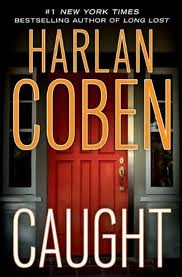
CAUGHT by Harlan Coben (2010) Penguin Canada, 388 pages


High school senior Haley McWaid is a model student, sister and daughter, but when she doesn't return home one night, her parents are right to worry in earnest. Reporter Wendy Tynes is on a mission to identify and confront sexual predators through her nationally televised program Caught in the Act . Dan Mercer is a divorced middle-aged man who works with troubled teens. Their three paths cross unexpectedly and the result is enough to tear a community apart.

With what I have come to regard as trademark intelligence and tension, Harlan Coben has the courage to inhabit each character convincingly so you are kept just enough off balance to second guess yourself about who the actual villains/victims are. Some are obvious, but others are not. Criminal Defense Attorney Hester Crimstein returns in CAUGHT and she is as irascible and sharp-tongued as ever. She will never suffer fools gladly, even if that fool is her own client.

Having read many of Coben's crime novels by now, I continue to be amused by his ability to weave social networking into his plot, so that it is not only a plot device and a tether to our real world, but also a character itself. Here he reminds us how easy it is to fake cyber identities on Facebook and blogs wherein damaging rumours are handily perpetuated.

What I like most about Coben's stories, though, is how he leaves room for the possibility of forgiveness and redemption. As Leonard Cohen wrote, "there is a crack, a crack in everything/ that's how the light gets in."

Sunday, March 06, 2011

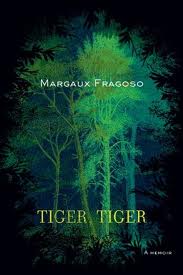
TIGER, TIGER by Margaux Fragoso (2011) Douglas & McIntyre, 320 pages


Picture this: you are an only child of a phlegmatic jeweler father and a mentally ill mother. You are used to tip-toeing around on figurative eggshells in your own home because tempers flare. Frequently. One day you're swimming at the local pool and introduce yourself to a father figure who seems so much more fun than your own and your mother agrees. Later, your mother will even suggest that maybe he was Jesus in a former life. You are seven when you begin to spend time with this charismatic and caring man who has a house filled with exotic pets he lets you tend and the most lovely and tender mutt named Paws who becomes your friend. His place is a paradise that encourages your imagination to run wild. And you do run wild. And so does he.

Like most pedophiles, 51-year-old Peter Curran preys on the most vulnerable children. Children like Margaux Fragoso who are willing to trust all too easily in a stranger who shows them that he loves them and does not threaten to beat them when they disagree or disobey.

I'm not sure that any book has made me feel so viscerally ill as I read it as TIGER,TIGER did. I kept thinking about my own fortunate childhood and how I didn't have to think about the choices Margaux makes to stay close to Peter until I was well into my twenties. I still can't quite grasp how she was able to write her story of horrific sexual abuse (that lasted 15 years and only ended with Peter's suicide--not a spoiler, by the way) without a whiff of self pity. Her prose is strong and vibrant and her approach unflinchingly honest. And, she is a compelling narrator.

By the end of this harrowing memoir, I felt emotionally gutted, just as I did after watching BLUE VALENTINE. Both have taken exquisite pain and given it full resonant voice in the telling.

THE FINANCIAL LIVES OF THE POETS by Jess Walter (2009) HarperCollins Canada, 290 pages

This summary is not available. Please click here to view the post.

Thursday, March 03, 2011

COMBAT CAMERA by A.J. Somerset (2010) Biblioasis, 255 pages


Protagonist Lucas Zane is a burnt-out war photographer who finds himself making rent money working for an odious impresario of low budget pornography, Richard Barker in Mississauga. When an incident with one of the young actresses, Melissa, moves Zane to action, the two of them begin a journey that could possibly lead to their salvation.

The opening of COMBAT CAMERA hooked me. The prose is visceral and clean. Somerset writes like Hemingway by way of Richard Ford, and any of you who know me know how much I admire Ford's work: there's no finer social satirist writing today. Read the first paragraph and you'll understand what I mean:

"The most alarming development now confronting Zane was his suddenly frangible reality. Even his routine moments had become fraught with risk. Suppose, for example, a glint of sunlight was to catch the crack traversing his grime-smeared windshield; a disturbance as trivial as this could inexplicably fracture the entire tableau, could set fragments of his past tilting and sliding through his mind like pieces of coloured glass in a broken kaleidoscope. Things finally come to rest in a jagged landscape of unwelcome memories, and then where in hell are you?"

On almost every page of COMBAT CAMERA there's a found poem, like this one:

frangible reality
routine moments

fraught with risk
could fracture

the entire tableau
could set fragments

of his past
tilting and sliding

like pieces of coloured glass
in a broken kaleidoscope

Somerset never wants for narrative drive nor does he resist describing the horrors that haunt Zane from his experiences as a photographer on the fronts of civil wars in Liberia, Nicaragua, Honduras, Lebanon, Afghanistan, Yugoslavia or Sierra Leone. Each flashback comes in a thoughtfully framed image and I felt as though I were peering over Zane's shoulder daring to take a closer look at each moment with him. Several times those photos brought to mind the work of Walker Evans and Dorothea Lange--photographers whose visual perspectives defined moments.

Somerset's writing is not surprisingly filmic. He is able to turn a visual image into such convincing prose that it felt consistently as though I were working my way through a photo essay.

Consider the final paragraph as well:

"Zane stood at the window in the failing light and looked out over the freight yard, over gulls wheeling above steel and crushed stone, over wooden railway ties slick with rain, the river beyond sliding and eddying down to meet the sea. A lone man in a rain slicker walked between the rails. He carried a plain aluminum lunch box and a thermos, and with every step his feet slipped in wet gravel. The man walked with his head down, plodding, and Zane watched him until he disappeared behind graffiti-scarred cars that still stood patiently rusting in the endless rain, long after discharging their loads of mysterious freight."

Fantastic, isn't it?

I'm not the only one who thinks so.

Canadian novelist Ray Robertson calls it "a lean, mean piece of story-telling machine" and COMBAT CAMERA won the 2009-2010 Metcalf-Rooke Award.

A.J. Somerset is a writer whose trajectory I am keen to follow. And, to do my bit in promoting his work, I plan to put COMBAT CAMERA on my curriculum for Grade 12 Writer's Craft for 2011-2012. It will be a perfect compliment to Dexter Filkins' series of personal essays in THE FOREVER WAR.

Sunday, February 27, 2011

LAST NIGHT IN MONTREAL by Emily Mandel (2009) Unbridled Books, 247 pages


Emily Mandel is another writer whose work has come to me through Twitter (where you too should follow her @emilymandel). That is a pretty impressive pantheon so far that includes Rosanne Cash, Amy MacKinnon, Harlan Coben, Angie Abdou, Andrew Shaffer and Robin Black. Since I read about 150 books/year, I am always keen to find a new-to-me narrative voice. Mandel's debut novel LAST NIGHT IN MONTREAL simply knocked my socks off.

Like my current favourite movie, WINTER'S BONE, LAST NIGHT IN MONTREAL comes at you quietly, and with intelligence. It is perfectly structured and the prose is luminous. In it, absence is poetic.

Lilia Albert has been on the run since she was abducted by her father when she was only seven. She is unable to remember her early childhood before that winter's night when her estranged father scooped her off her feet, out of the snow and into the safety of his arms. Now in her twenties and in a loving relationship with Eli, Lilia realizes that it just may be impossible for her to stop running, because that is what she has known.

Flight is a recurring motif in the novel, symbolized by paintings of Icarus by Matisse and Bruegel, by the feathery costume wings Michaele dons and by mariposa--the Spanish word for butterfly. Several characters are in flight: sometimes from their past, other times from their present and from the idea of their future.

In reading Mandel's elegiac LAST NIGHT IN MONTREAL you will learn that coming to terms with sacrifice and abandonment may be the only way to find your way home.

Saturday, February 26, 2011

AS LONG AS THE RIVERS FLOW by James Bartleman (2011) Random House Canada, 247 pages


I heard James Bartleman read from this novel on Wednesday night at the Harbourfront Reading Series. I am predisposed to like his work, having enjoyed RAISIN WINE, his memoir of growing up Native in Muskoka and admiring the real work he has engaged in following his tenure as the Lieutenant Governor of Ontario--promoting literacy and mental health.

Throughout his travels to fly-in Native communities in the far north, Bartleman discovered the suicide epidemic of children who hanged themselves "to show how worthless they were; how fundamentally deserving of pain." AS LONG AS THE RIVERS FLOW is a composite portrait of such a place that has inherited the residential school legacy of previous generations and the shame and pain that entails with the younger generation of children who need to re-establish a cultural identity in order to heal.

Martha Whiteduck, the protagonist, remembers what it was like to be raised with respect for the land and the old ways before she was flown away to residential school from age 6-16 where she was beaten by the nuns and molested by the priest, Father Antoine--damaged emotionally in ways from which she would never heal. Returning to the reserve partially educated and distrusting, Martha runs wild. She gets pregnant and gives birth to a son, a boy she names Spider because of the birthmark on his brow.

Unable to stop drinking, Martha loses Spider to the Children's Aid and he is raised by a loving White family in suburbia who try to honour his Native traditions, but cannot begin to understand his temper. Spider's trajectory is a predictable one, where, as a victim of Fetal Alcohol Syndrome, he ends up storming out of his adoptive parents' lives and finding belonging in a homeless community in Toronto, living rough under the Gardiner Expressway, stopping in at Evergreen on Yonge Street for a warm meal and panhandling to feed his addictions.

Meanwhile, Martha becomes pregnant again and gives birth to a daughter she names Raven. Her mother begs her to leave Raven with her to be raised in the traditional ways on the reserve and Martha agrees, because it gives her the opportunity to try to find Spider.

Years pass and Raven finds herself pledging a suicide pact with her pre-adolescent peers who feel so desperate about their futures that they plan to kill themselves on their thirteenth birthdays. Only when Raven confides in the chief does she get the support that she needs and he arranges for a Healing Circle for the community to face the horrors of their past and present and to find their way to forgiveness where actual healing may begin.

Bartleman does not shy away from ugly realities that continue to plague Native communities nor does he excuse anyone from their culpability. That Martha manages to offer forgiveness as a true gift is what is remarkable to me in this story and a reminder that the work of Truth and Reconciliation is essential.

FINDING THE WORDS, ed. Jared Bland (2011) McClelland & Stewart, 297 pages


This FINDING THE WORDS anthology celebrating WRITERS ON INSPIRATION, DESIRE, WAR, CELEBRITY, EXILE AND BREAKING THE RULES is a fundraiser for PEN Canada, one of the organizations I have supported for years. PEN centres around the world defend freedom of expression and support writers who have been silenced because of their work. As the editor explains in the introduction, "To ensure that as much of the anthology's cover price will go directly to PEN Canada, McClelland & Stewart is contributing all of its resources in the publication of the book and Random House of Canada is contributing its warehousing and shipping costs. Friesens is also providing its printing services at a significant discount."

Between these carefully curated pages you'll find pieces by Canadian luminaries including David Bezmozgis, Emma Donoghue, Steven Heighton, Lisa Moore, Alice Munro, Heather O'Neill and Michael Winter. There is even a transcription of the conversation between legendary British editor-turned-memoirist Diana Athill and Alice Munro from the Opening Night International Festival of Authors event that I co-chaired in October 2009.

What strikes me about each of the pieces included is their intimacy. You'll read about one author's father who struggled to become literate as an adult and another who confesses that "the solitude of writing is nothing compared to the emptiness of being between books."

Using language is a right that must be defended. Please do your part and purchase a copy of FINDING THE WORDS and check out other ways to support PEN Canada by visiting its website: www.pencanada.ca

Friday, February 25, 2011

CRIME MACHINE by Giles Blunt (2010) Random House Canada, 294 pages


What a delight to return to the sane company of Detective John Cardinal, Algonquin Bay's contemplative and fair-minded investigator.

CRIME MACHINE finds Cardinal working on cold-case files during the day and spending platonic evenings with his work partner Lise Delorme a year after his beloved wife Catherine's unexpected death (Read BY THE TIME YOU READ THIS for her emotionally complicated story). Cardinal has moved out of the home he shared with Catherine and their daughter and now lives in a cramped apartment that's walking distance from Delorme's place.

The winter quiet that has enveloped Algonquin Bay like a blanket is soon fractured by the deaths of two out-of-towners who are discovered beheaded in a summer property that had been on the market. As lead investigator on the case, Cardinal soon realizes that appearances are deceiving. Puzzling his way through this case, Cardinal becomes entangled with the FBI, allegedly upstanding members of the local community, the press, the fur industry, a young Native woman and possibly the Russian mafia. And, though Cardinal does solve the current crime and one of his cold cases, it's not before both his and Delorme's lives are put at risk.

What is remarkable to me about this novel is how Blunt so flawlessly inhabits the minds of all of his characters, so you not only feel sympathy for the victims, but also for the monstrous villains as well.

Wednesday, February 23, 2011

THE WILDWATER WALKING CLUB by Claire Cook (2009) Hyperion, 239 pages


Noreen Kelly takes a buyout from her long-time employer and is dumped by her clandestine boyfriend in one fell swoop. With a trunk full of staff-discounted top-of-the-line running shoes, Noreen decides to reclaim her health, both physically and mentally by striding towards it one step at a time. She is soon joined by her neighbours Tess and Rosie and the three women pledge to clock 10,000 steps/day and plan to reward themselves with a long weekend getaway once they've met their goal.

As part of her package, Noreen attends a weekly group session with a career coach who encourages her to define herself in ways that do not relate to her professional identity and by doing just that she is able to make breakthroughs in other aspects of her life, including in her romantic relationships. Noreen's awakening is helped along by observing Rosie's chickens (nicknamed The Supremes) and their loyal protector, the rooster Rod Stewart. I am not kidding here, folks. The chickens have it all figured out before Noreen does. They don't tolerate disloyalty, and, in fact, had previously pecked to death a former rooster due to his transgressions. As Noreen quips, there's a lot to be learned from chickens.

The three women finally agree on a reward destination: west coast lavender farms, where Rosie is sure to pick up tips to improve her own family-run lavender business and all three of them will enjoy touring local vineyards like the characters in Sideways.

THE WILDWATER WALKING CLUB shows middle-aged women coming to terms with their own identities and contemplating, then accommodating, the balancing act that the responsibility of aging parents and young adult children requires.

Monday, February 21, 2011

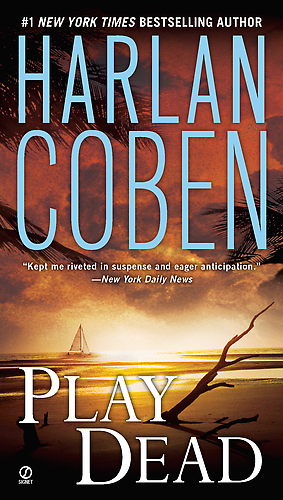
PLAY DEAD by Harlan Coben (1990) Penguin


Are you a diehard basketball fan of the Boston Celtics? Have you ever fantasized about having a supermodel as a spouse? Do you like to read thrillers where past mistakes stick to present circumstances like stink on skunk? If you've nodded yes to any of these questions, then chances are PLAY DEAD is your kind of book.

After eloping in Australia, newlywed Laura Ayers finds herself mourning on her honeymoon the unexpected loss of her husband, Celtics superstar David Baskin who appears to have drowned near the Great Barrier Reef. Laura turns to David's best friend, former college roommate and current cop TC for help to uncover the final hours of David's previously charmed life. And, when some of the details just don't add up, Laura discovers she's just not sure who she can trust. Not her family nor her closest friends, it seems, will be able to help Laura inch closer to the truth. And, it's a truth about an horrific incident in the past that threatens to cleave Laura's heart even more in the present.

Coben adds tension to Laura's journey by introducing David's long lost brother Stan, an obvious degenerate who pretends to woo Laura's equally troubled sister Gloria and revealing moment by moment troubling secrets that bind Laura's parents Mary and James, who from the outside appear to be upstanding members of Boston society.

Although I found the ongoing reference to Laura's current beauty and previous ugly duckling adolescence more than a tad tiresome, it didn't deter me from flipping through this well-paced thriller, eager to discover who the true villain was. There are plenty of red herrings to mislead and as a result I felt connected to Laura and her own frustration as she puzzles out the truths about the past and her present.

Friday, February 18, 2011

THE CANTERBURY TRAIL by Angie Abdou (2011) Brindle and Glass


CBC radio devotees like me will recognize Angie Abdou's name from the recent Canada Reads competition where her first novel THE BONE CAGE (an allusion to BEOWULF, by the way) was championed by Georges Laraque.

From the outset, her new novel THE CANTERBURY TRAIL is about a group of west-coast snow enthusiasts who try to finish out the season with one final spectacular run. Completed as part of a PhD program, the story also appeals to literature geeks like me who will recognize both broad and specific allusions to Chaucer's THE CANTERBURY TALES, a series of competitive stories told by pilgrims to amuse themselves and each other along their journey. So, for example, if you are aware of the "misdirected kiss" and Chaucer's predisposition for lewd and licentious detail, you will happily discover Abdou's contemporary appropriation of it in her savvy detail.

Just as Thomas King has each narrator embellish and one-up the previous storyteller in GREEN GRASS RUNNING WATER, so does Abdou move from Hermit to Ski Bum to Mother to Urbanite to Redneck to Hippy to Miller layering scatological detail and sexual tension until both resolve in unavoidable eruptions that are equal parts amusement and prurient disgust.

When all of the characters find themselves sharing a not-so-idyllic space at Camelot, tempers flare. And, although many of the disgruntled folk manage to make amends, it's only Mother Nature herself who can truly clear the air.

In THE CANTERBURY TRAIL Abdou walks a tightrope, balancing elements of comedy and tragedy with equal poise and shows herself an able inheritor of ribald Chaucerian tradition.

Tuesday, February 15, 2011

HOLD TIGHT by Harlan Coben (2008) Penguin Books


Mike and Tia Baye realize that they are losing touch with their increasingly secretive teenaged son Adam. Since the suicide of his best friend Spencer, Adam has become predictably moody and withdrawn. In a paradoxically responsible and desperate step, Mike and Tia decide to have spy software installed on their son's computer to try to monitor his online behaviour and to figure out what he might be struggling with that simmers just below the surface and beyond their ken.

The Bayes aren't the only family with secrets, though. A neighbourhood family, the Lorimans, is also struggling with the upsetting reality of their 10-year-old son Lucas's rare degenerative disease (FSGS) and without a kidney transplant Lucas is not likely to see his next birthday. Mike is involved in Lucas's case tangentially because he referred the Lorimans to his medical partner Dr. Ilene Goldfarbe at New York Presbyterian, one of the finest transplant surgeons in the country. Time is running out for Lucas as it is difficult to find a matching donor and since Lucas is an only child, his best hope, a sibling, is out of the question. And, there are other complicating factors that involve high stakes secrets of their own.

With prescient heartache just below the pulse of daily life in the community there is also a pattern of gruesome killings of women and an apparent stalker/serial killer who threatens to destroy any remaining sense of security.

In order to try to save his son, Mike finds himself entwined in a dark underworld that involves prescription drugs (to which he has ready access as a medical doctor) and pursued by the FBI.

In HOLD TIGHT, Coben probes parental fears about abduction and loss and leads you along the twisted path to redemption. There were moments during my reading that I felt my pulse quicken and my heart pound as I worried what could possibly come next.

Like Alafair Burke, Harlan Coben creates a world that is immediately recognizable and all the more terrifying because of those knowable details. And, so far, I can trust him to mete out suitable punishment to those whose inhumanity to man is sickening and to recognize the tenderness at the heart of most human relationships, messy though the journey may be.

Saturday, February 05, 2011

BETTER LIVING THROUGH PLASTIC EXPLOSIVES (2011) from the Penguin Canada ARC


Forthcoming from Penguin Canada in April, ZsuZsi Gartner's new collection of short stories is as smart, satiric, playful and wicked as her previously acclaimed and bestselling book ALL THE ANXIOUS GIRLS ON EARTH. In BETTER LIVING THROUGH PLASTIC EXPLOSIVES (perhaps the most provocative title of 2011), Gartner opens with a gentle Horatian approach in the Darwinian "Summer of the Flesh Eater" where unisex-named Kim may have contemplated a "crack wax" during his spa day and and we learn alongside the nosey neighbours that "Boys who can burp the Lord's Prayer at age eight retain the ability, like a vestigial limb flaring to life, well into their thirties."

Each story has a shadow self and with precision Gartner deftly reveals the dark potential in us all, especially in "Investment Results May Vary," and her Juvenalian take on adoption in "The Adopted Chinese Daughters' Rebellion," which was for me the most heart-breaking piece in the collection.

What impressed me in each of the stories is Gartner's remarkable talent for unique analogies. Witness a "tortoise, heavy lidded and benign...a little like Sinatra in his later years." Or in "Floating Like a Goat," where a mother kvetches in a missive to her daughter's uncreative art teacher and suggests that synesthesia may well be an antidote: " 'Your voice is damaged swimwear,' I told a stranger waiting for the bus.....'You sound like fresh cement,' I said to a waitress midway through her recitation of the daily specials."

Above all Gartner is an accomplished social satirist. Don't be surprised if you don't like what you see when she holds the mirror up to your face for reflection.

COMPOSED by Rosanne Cash (2010) Viking Penguin


As a beloved songwriter and previously published author of a children's book Penelope Jane: A Fairy's Tale and the adult short fiction collection Bodies of Water there's no doubt that Rosanne Cash is an accomplished writer. With this memoir Composed, her most intimate book, Cash mines her life's work so far and reflects on the paths that have led her to where she is today as a mother, a musician, a wife, a sister, a daughter and a friend.

The great strength of this book is the frankness with which Cash expresses herself, a daring boldness that never borders on arrogance or entitlement, though at times she was certainly spoiled as the daughter of an American icon who was happy to take care of her and her siblings both financially and emotionally. It's heartening to discover that her father especially savoured their company in his challenging final years, when even the idea of family meant so much to him.

As an eldest child myself I could relate to the young Rosanne's innate sense of responsibility for her younger siblings, especially when they lived in the desert north of L.A. in Casita Springs where rattlers where commonplace and she "developed a near-psychotic fear of snakes that resonates to this day" after watching her mother chop off their heads with a garden hoe and "hurl their writhing bodies like a javelin onto the fence."

Throughout COMPOSED I felt as though I were being invited to bear intimate witness to Rosanne's life in all its joys and sorrows--and there are plenty of both. What impressed me, though, was the genuineness with which she approached each moment with gratitude and oftentimes infused it with her permeating dark humour. COMPOSED is an eloquent testimony to a life well lived and an acknowledgement that the best may be yet to come.

Wednesday, February 02, 2011

DARKEST FEAR by Harlan Coben (2000) Dell


Edgar Award-winning novelist Harlan Coben writes another gripping Myron Bolitar tale in DARKEST FEAR.

When Myron's longtime ex-girlfriend Emily visits him at his parents' place, she brings news that makes Myron feel that he's been chopped at the knees. Her 13-year-old son has contracted a rare degenerative disease that is fatal without a bone marrow transplant. Problem is that the equally rare matching donor, registered through a bone-marrow bank, has disappeared without a trace. Emily appeals to Myron's decency and professional acumen to help track down the donor and confesses that Myron has more than helping a past paramour at stake.

In spite of the unconditional support of his trusted friend Win, Myron finds himself entangled in a dark mystery that involves the FBI and a history of brutal kidnappings. Forced to face truths about the past and himself, is it possible that Myron has done too little too late?

Harlan Coben is my new favourite thriller writer, joining my particular pantheon of crime writers including Kate Atkinson, Alafair Burke, James Lee Burke, P.D. James, Denise Mina and Ian Rankin.

Tuesday, February 01, 2011

THE SALT ROAD by Jane Johnson (2011) Doubleday Canada


Isabelle Treslove-Fawcett, a successful investment banker living a comfortable life in London, is given an enigmatic gift from her cryptic estranged father following his sudden death. There is a box with her name on it in the attic of his home and inside is an exquisitely carved amulet, something in her father's letter that he refers to as a waymarker for her life. In his long overdue apology from the grave, Isabelle's father confesses, "I know I have been a great disappointment to you, as a father and as a man. I do not ask for forgiveness or even understanding." The legendary archeologist abandoned Isabelle and her mother when Izzy was only 14 and from that time forward her mother openly blamed her only daughter for ruining their great love affair.

Determined to discover for herself the history of the amulet, Isabelle travels with her best friend Eve to Morocco to try to find out more about the charm as well as dig up clues to her archeologist parents' past. There, on a risky rock climbing adventure, Isabelle has a fall, damages her ankle and finds herself depending on the kindness of a stranger, Taib, a knowledgeable and handsome antiques trader who introduces Izzy to the heady culture of the resilient Tuareg people. Through Taib, Izzy learns that eventually you can go home again.

Izzy's narrative is interwoven with the story of Mariata, an independent Tuareg woman descended from the legendary Tin Hinan in the not-so-distant past who traveled across the desert alone after she believes her husband has been savagely murdered. Through the kindness of an intersexed blacksmith, Tana, Mariata feels strengthened to continue her dangerous journey in the company of her unborn child and an obstinate camel. Time after time Mariata faces obstacles both natural and human and each time she prevails, even when it means she must embrace a life of solitude to survive.

In a tender scene where Izzy finds herself preparing for burial the body of an elderly Tuareg woman, I was momentarily irked by the serenity of the woman's passing because, "her expression was beatific, her eyes closed, her mouth curved up in a smile." In the deaths I have witnessed of people I've loved, no mouth has ever curved up in a smile. All mouths have been left agape at odd angles after the final breath escapes. So, while I was more than prepared to suspend my disbelief about nomadic desert life, this one romantic description of an extraordinary death, became a chink in the believability.

Nevertheless, Johnson is clearly passionate and knowledgeable about the landscape and the rigors of a nomadic lifestyle and I found myself envious of Mariata's unwavering connection to all that binds her to both. And, as Izzy moves closer to the emotional truth about her own sense of belonging, abandoning her previous allegiance to materialism at the feet of fine furniture and designer labels, I cheered for her every inch of the way.