Friday, March 08, 2013

ANOTHER BULLSHIT NIGHT IN SUCK CITY by Nick Flynn (2004) W.W. Norton, 341 pages


Not only is the title beguiling, but so is every story unfurled in this unabashedly direct memoir of a lost father and a son trying to find his way.

Flynn opens with a close-up of his father Jonathan in an ATM, pretending to be banking, “brought to you by the Museum of the Homeless” where he “bends to his deposit slip, Six hundred and seventy thousand cash…puts it in an envelope, licks the envelope shut” then “curls up on the ceramic floor, turns his face to the baseboard, tucked below the window so the fake police won’t see him.”

Flynn-the-younger worked in a Boston homeless shelter from 1984-1990. His father was homeless for five years, beginning in 1987. It was inevitable that their paths would cross. And, you witness both of them struggle with addiction. About his father’s insistence on writing a novel, he discloses: “His novel, such as it is, if it is at all, written in blackout and prison, is his ark, the thing that will save him…His single-mindedness impresses most, his fathomless belief in his own greatness, in his power to transform a failed world, to make it whole again by a word. By a story. That if you stick with your vision long enough you will be redeemed.” And, you hope for redemption for both, a shared redemption that in the end comes in the shape of the book in your hand.

Each sentence in Nick Flynn's memoir is a gasping punch to the solar plexus or a curare dart to the heart.

I will read everything he writes.

Follow @_nick_flynn_ on Twitter or visit his website: http://nickflynn.org

Tuesday, March 05, 2013

WAVE by Sonali Deraniyagala (2013) McClelland & Stewart, 228 pages


Harrowing, heartbreaking and healing, Sonali Deraniyagala unflinchingly recounts her journey since the tsunami that devastated her immediate family on December 26, 2004. That morning her husband Steve, their two young sons Vikram and Malli, and her parents were killed by the 30-foot wave that swallowed the lives of 200K others in Yala, Sri Lanka.

In prose that is spare and precise and a gasping gut-punch, Deraniyagala begins her narrative by admitting, “I thought nothing of it at first…It didn’t seem that remarkable. Or that alarming. It was only the white curl of a big wave.” Yet within moments that stretch into hours and days, the centre of her world falls apart and although she is the only one in her family who survives the disaster with cuts to her face and limbs and stones in her tangled hair she says her “mind could not sort anything out.” And, when a truck arrives at the hospital triage with a load of recovered corpses the “wild, wretched” shrieking crackles “into the numbness” in her head, “blasting the smallest stir of hope” in her heart.

How extraordinarily excruciating it must have been for Deraniyagala to live those personally apocalyptic moments and then relive them as she committed them to paper. What strikes me as most remarkable about WAVE is the generous way in which she so vibrantly recreates her sons and her husband and as in the fiction of Alice Munro and Carol Shields celebrates the ordinariness of daily life. And, in flashes we hear their voices, as when then-five-year-old Malli tells his older brother Vikram, “Don’t be scared. It’s good when it’s all really black. You can see your dreams better.”

Deraniyagala moves from plotting her own death to reconciling herself to yearning for what never will be. She assures that “their voices have doubled in strength now, not faded with time. Their chatter plays with my thoughts no end. And, I am sustained by this, it gives me spark.”

WAVE is simultaneously published today by McClelland & Stewart in Canada, Virago Books in the UK, and A.A.Knopf in the United States. Find the courage to read this extraordinary book. It’s the least you can do since Deraniyagala faced such darkness and summoned the grace and courage to not only write it, but to share such an ultimately redemptive story with the world.

Monday, March 04, 2013

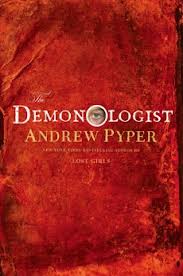
THE DEMONOLOGIST by Andrew Pyper (2013) Simon and Schuster, 285 pages


Pyper's finest yet, THE DEMONOLOGIST has a terrifying, taut, intelligent narrative featuring a Milton scholar who faces an unthinkable darkness that challenges everything he believes about this world and the next.

From the familiarity of paradoxically intimate public spaces in New York City like the Oyster Bar in Grand Central Terminal to the labyrinthine calles of Venice, Pyper will have your heart thudding an impatient tattoo as you feel with each gasping breath what his protagonist David Ullman feels as he attempts to recover his lost daughter Tess. With whiplash-inducing narrative drive, THE DEMONOLOGIST will have you flipping pages through the night.

Already optioned for the big screen and in development at Universal Pictures by Robert Zemeckis (Back to the Future, Forrest Gump, Flight), Pyper’s smartypants storytelling will certainly reach an even wider audience than his already dedicated readers. In my dream casting Michael Shannon—surely one of the finest, most fearless actors of our time—will play the Paradise Lost scholar for whom everything falls apart because of his unwavering paternal love.

THE DEMONOLOGIST deserves all of the superlatives heaped upon it and I hope it firmly establishes Andrew Pyper as a writer with the courage to face deeply human fears in a profoundly human way.


Get your own copy of this remarkable book, available in stores today. Follow @andrewpyper on Twitter and visit his website: www.andrewpyper.com 

Sunday, March 03, 2013

3 Terrific 2012 novels: A LAND MORE KIND THAN HOME, SHINE SHINE SHINE, and WHERE'D YOU GO, BERNADETTE


A LAND MORE KIND THAN HOME by Wiley Cash (Harper Collins)
If you're a fan of Margaret Laurence's style, then you'll love this debut. If you're snake phobic like me, the first 50 pages will be a struggle. Follow @wileycash on Twitter. Visit his website: http://www.wileycash.com


SHINE SHINE SHINE by Lydia Netzer (St. Martin’s Press)
The best book about alopecia, astronauts and autism that you'll ever read. A startling debut novel. I read it in one great gulp. Follow Lydia Netzer as @lostcheerio on Twitter. Visit her website: http://lydianetzer.blogspot.ca


WHERE’D YOU GO, BERNADETTE by Maria Semple (Little, Brown and Company)
Quirky, smart, sly, this novel by Maria Semple (who cut her teeth as a writer for television on ARRESTED DEVELOPMENT) is maddening, joyful and deeply human. Visit her website: http://www.mariasemple.com

Monday, February 11, 2013

SPEAKING FROM AMONG THE BONES by Alan Bradley (2013), Doubleday Canada, 358 pages


Precocious, amusing, chemistry genius 11-year-old Flavia de Luce returns to solve yet another mystery in this most beguiling series set in 1950s rural England. Batman had Robin as his trusty sidekick, but Flavia has her bicycle who she christens Gladys “because of her happy nature” to spirit her to and from her crumbling family estate, Buckshaw. There she’s beleaguered by her girly older sisters Feely and Daffy, and finds kinship with the family’s longtime butler Dogger, who treats her like a person instead of a meddlesome little kid.

It’s the 500th anniversary of St. Tancred’s death, and the local church is planning to open its patron saint’s tomb. Nobody could be more intrigued about his remains than Flavia. What she does not expect, however, is to be faced with the fresh corpse of the current organist Mr. Collicutt, kitted out as he is in an eerie mask reminiscent of the most recent war. And, to complicate matters the precious “Heart of Lucifer” stone has gone missing.

It takes all of Flavia’s chemistry wiles, best behaviour, instinct for allegiance, and greatest acting for her to puzzle out the timely murder that has all of the tongues wagging throughout Bishop’s Lacey.

More satisfying than the realization of whodunit, however, is the delicious secret held back until the final sentence. A writerly trick Bradley filches from Salinger’s “A Perfect Day for Bananafish.” And, it’s a secret that cracks the ongoing narrative wide and anticipates even more intrigue to follow for all of the de Luces.

Hop on Gladys’s handlebars and join Flavia for the dizzying ride.

Wednesday, February 06, 2013

THE PAINTED GIRLS by Cathy Marie Buchanan (2013) Harper Collins Canada, 349 pages


Set in late 19th Century Paris, Cathy Marie Buchanan’s THE PAINTED GIRLS transports you to another time and place with such evocatively rich sensory detail that you’ll find yourself immersed in the clatter and clamour of those narrow streets, your head turning at the imagined scents wafting from the local boulangerie.

Impeccably researched, Buchanan’s narrative peels apart the darker criminal elements that were inevitable pieces of the lives of the impoverished class at the same time that Zola’s words played on Paris’s stages and les petits rats trained and performed in the corps at the Paris Opera Ballet.

If you’ve ever seen a copy of Degas’s sculpture Little Dancer Aged Fourteen, you have already met the protagonist of Buchanan’s tale: Marie van Goethem, a petit rat herself who posed as the paid model over the course of several months, under Degas’s mindful gaze. The painted girls of the title are the van Goethem sisters, Antoinette, Marie and Charlotte, who, after the early death of their father and due to the alcoholism of their mother, are required to make their way in the world, earning money in order to live.

I remember seeing a copy  of Little Dancer Aged Fourteen here in Toronto at the AGO in 2003 and marveling not only at the appropriate posture for a dancer and the open fourth position in which her feet are placed, but also at Degas’s fingerprints that remained visible after his wax maquette was alchemized into a bronze. And, how fragile and young she seemed immortalized by one of the finest sculptors of his time.

19th Century Paris was a rough place, if you weren’t wealthy. Girls especially had to make difficult choices if they were going to survive. In THE PAINTED GIRLS, Cathy Marie Buchanan focuses her unflinching eye on the struggles of the van Goethem sisters and makes you believe, through her craft, that every moment she unravels is true. True to the core.

This is a novel that will work its way into your heart and leave an indelible mark.

Monday, February 04, 2013

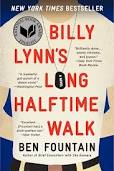
Iraq War Novel Triple Crown: BILLY LYNN'S LONG HALFTIME WALK, THE YELLOW BIRDS, and FOBBIT


On a recent trip to NYC, I stopped in at the Barnes & Noble on Fifth Avenue and picked up a copy of Ben Fountain’s BILLY LYNN’S LONG HALFTIME WALK, a title that I have been meaning to read for some time. All of the superlatives used to describe this debut novel are utterly deserving. This is the 1st in the triple crown of Iraq War novels I read in January. It's smart, funny, and moving and until Beyonce’s appearance last night at Superbowl LXVII, it would have also provided renewed enthusiasm for Destiny’s Child at a fictional half-time show.


Kevin Powers’s THE YELLOW BIRDS is the second Iraq War novel I read this year and the first by a soldier who actively served; Powers was deployed as a machine gunner in the U.S. Army in 2004 and 2005. I became aware of this startling debut through prize-winning novelist Chris Cleave’s twitter feed where he kvelled about it as the best book he’d read in a long time. (Follow him @chriscleave.) Because Powers is a poet, there are lines on every page that will make you gasp at their beauty. THE YELLOW BIRDS is a harrowing, heartbreaking, healing read.


FOBBIT by David Abrams ( @ImDavidAbrams) was the third jewel I found my way to in this Iraq War novel triple crown. And, Abrams, like Powers, was deployed to Iraq in 2005 where he served as part of the U.S. Army’s public affairs team. I found FOBBIT to be the novel with the most verisimilitude of the three and its fine satire to be reminiscent of early John Irving. When you finally have a copy between your hands, be prepare to be gobsmacked.

Sunday, February 03, 2013

THE WORLD ACCORDING TO GARP by John Irving (1976), Random House, 609 pages


The older I get the more I read early John Irving in gob-smacked wonder. He writes such humanity in these frangible, indelible characters.

Recently I struggled with a decision to leave a job that had brought me tremendous joy in the classroom for fifteen years, because of an incident that I simply could not stomach. And, for the first time in about two decades, I returned to The World According to Garp for solace and discovered that Garp’s thoughts mirrored my own: “Not for awhile. Maybe never again. At least not for awhile.”

Irving was so young when it was published in 1976, but he already understood so much about human frailty and dignity—a quality equally vibrant throughout his most recent novel In One Person. As I read, I raged alongside Jenny Fields, cheered Roberta, and wept with Garp, heaving hiccupping sobs of recognition. The Under Toad. Jesus. Such insight. A gasping punch to my solar plexus.

As Garp insists, "Read the work. Forget the life." 

John Irving’s work matters. And, I love knowing that each of his narratives unfurls from its final sentence, which never alters once he has committed it to the page. If you’ve never read The World According to Garp, you must add it to your TBR pile, because you will recognize yourself between its pages. For, “in the world according to Garp, we are all terminal cases.”


Saturday, February 02, 2013

MOVING

Over the next few weeks I will be moving my bookish blog posts to http://janetsomerville.wordpress.com where I'm also blogging about film and theatre. I hope you'll join me there.

Saturday, December 22, 2012

2012 Reading Round-up

Inspired by novelist Elliott Holt's list of titles in the order in which she read them throughout the year, here's mine. I've put in bold my favourite reads of the 75 I finished, the books that made my life richer in both real time and in my imagination. 

The Selected Works of T.S. Spivet by Reif Larsen 
 A Trick of the Light by Louise Penny 
 Then Again by Diane Keaton 
 Rin Tin Tin: The Life and the Legend by Susan Orlean 
 The Art of Fielding by Chad Harbach 
Beastly Things by Donna Leon
 The Impossible Dead by Ian Rankin  
Blue Nights by Joan Didion (the rhythm and pacing of each perfect sentence) 
Vertical by Rex Pickett (a deeper, darker, more redemptive journey for Miles and Jack) 
I Am Half-Sick of Shadows by Alan Bradley 
Sideways by Rex Pickett  
Puppy Love by Frauke Scheunemann 
The Wild Beasts of Wuhan by Ian Hamilton 
Why Men Lie by Linden MacIntyre 
All My Friends Are Superheroes by Andrew Kaufman 
The Uninvited Guests by Sadie Jones 
Live Wire by Harlan Coben 
Why Not? Fifteen Reasons to Live by Ray Robertson 
The Ten-Year Nap by Meg Wolitzer 
The Weird Sisters by Eleanor Brown (her affection for Shakespeare matches my own) 
 This is How by Augusten Burroughs 
Indian Horse by Richard Wagamese (harrowing, heartbreaking, healing) 
Unquenchable by Nathalie Maclean 
The Unfinished Work of Elizabeth D. by Nichole Bernier 
 The Baker’s Daughter by Sarah McCoy
The Key by Simon Toyne 
The Things We Fear Most by Gloria Vanderbilt 
Tigers in Red Weather by Liza Klaussmann 
Seating Arrangements by Maggie Shipstead 
 Inside by Alix Ohlin 
 Famous Builder by Paul Lisicky 
The Newlyweds by Nell Freudenberger 
The Unlikely Pilgrimage of Harold Fry by Rachel Joyce
A Wanted Man by Lee Child 
Hemingway’s Girl by Erika Robuck 
 Laura Lamont’s Life in Pictures by Emma Straub 
The Red Pole of Macau by Ian Hamilton
Arcadia by Lauren Groff 
The Lola Quartet by Emily Mandel (inheritor of Chandler, which is why I adore all of her writing)
The Next Best Thing by Jennifer Weiner 
 A Prayer for Owen Meany by John Irving (re-read) 
The Great Gatsby by Scott Fitzgerald (re-read) (stunning, make your heart skip-a-beat prose
A Moveable Feast by Ernest Hemingway (re-read) 
 The Long Goodbye by Raymond Chandler (the noir-master's best--Banville's Marlowe cannot possibly measure up) 
Book of Souls by Glenn Cooper 
Beautiful Ruins by Jess Walter (the book I gifted more than any other 2012 title) 
Canada by Richard Ford (master craftsman provides such a rich interior life--and the chapter about loneliness snagged my breath) 
Gold by Chris Cleave 
The Sportswriter by Richard Ford
Trust Your Eyes by Linwood Barclay 
The Fault in Our Stars by John Green 
The Selected Letters of Raymond Chandler (his love for his wife Cissy Pascal is enviable) 
Mortality by Christopher Hitchens (these exquisite essays make me miss a man I never knew) 
The Emperor of Paris by C.S. Richardson 
The Beautiful Mystery by Louise Penny 
Who's Afraid of Virginia Woolf? by Edward Albee (Albee's finest play--such a brilliant study in character)
The Bat by Jo Nesbo 
Whirl Away by Russell Wangersky 
The Lay Of The Land by Richard Ford (my favourite of the Bascombe books in which I felt as if Frank were speaking directly to me)
Dear Life by Alice Munro (these stories are the Grande Dame of short fiction's most personal to date) 
Standing in Another Man’s Grave by Ian Rankin (Rebus is back!)
Malarky by Anakana Schofield
In One Person by John Irving  
One Good Hustle by Billie Livingston (true, dark, redemptive narrative voice)
Swimming Home by Deborah Levy (reminded me of Francoise Sagan's Bonjour Tristesse)
The Headmaster’s Wager by Vincent Lam 
Faithful Place by Tana French 
Drawing Conclusions by Donna Leon 
Here is New York by E.B. White (a brilliant billet-doux to NYC)
Until the Night by Giles Blunt 
Stay Close by Harlan Coben 
 Z: A Novel of Zelda Fitzgerald by Therese Fowler (a richly imagined, finely detailed perspective that will have you yearning for 1920s NYC and Paris due April 2013 from St. Martin’s Press)
Gone Girl by Gillian Flynn
The Demonologist by Andrew Pyper (smart, taut, terrifying thriller featuring a Milton scholar due March 2013 from Simon and Schuster) 
Wave by Sonali Deraniyagala (due March 2013 from McClelland & Stewart and A.A. Knopf--I fully expect this unflinching, harrowing, stunning memoir to win the National Book Award)


Currently reading The Richard Burton Diaries, Cathy Marie Buchanan's The Painted Girls and the ARC of Life After Life by Kate Atkinson (due April 2013 from Bond Street Books)

Thursday, October 25, 2012

WHIRL AWAY by Russell Wangersky (2012) Thomas Allen Publishers, 207 pages


Wangersky's WHIRL AWAY is dark, taut, masterful. Shortlisted for the 2012 Scotiabank Giller Prize, these stories explore our frangible humanity and the ordinary complications of daily lives. Wangersky is unflinching in each narrative. And, every word matters. He has followed Hemingway's dictum to "write the truest sentence that you know" time and time again. These carefully crafted stories make me think of Richard Ford's suggestion that "literature is good for taking you back to life with an enhanced sense of life's possibility and importance."

It will be interesting to see if this year's Giller Prize jury of Roddy Doyle, Anna Porter and Gary Schteyngart will anoint this gritty collection on Tuesday evening.

Saturday, October 06, 2012

THE BAT by Jo Nesbo, trans. Don Bartlett (2012) Random House Canada, 374 pages


Norwegian crime fiction darling Jo Nesbo first published THE BAT in 1997 and Detective Harry Hole was an instant hit. It's appearing in English for the first time, translated by Don Bartlett.

In Australia a beautiful Norwegian girl taking a gap year has been murdered and Harry has been sent on behalf of the embassy to assist in any way he can. He soon discovers that Inger Holter's rape and strangulation may be connected to others, where all of the victims have been young blondes. Partnered with an affable indigenous cop with a heroin addiction, Andrew Kensington, Harry finds himself befriending hookers, thugs, a cross-dresser whose day job is as a clown in a demented circus, and a pimp as he inches closer to the truth.

Rife with aboriginal lore that gives the novel its title, backstory that reveals Harry's emotional vulnerability, the potential love of a good woman, and a cast of intriguing supporting characters who contribute to the adrenaline rush and misdirection of a whip-smart plot, Nesbo's debut novel will hook you. There's no doubt about it.

Sunday, September 16, 2012

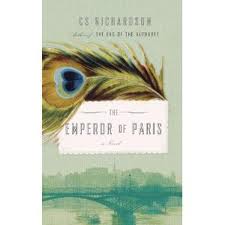
THE EMPEROR OF PARIS by C.S. Richardson (2012) Doubleday Canada, 276 pages


Book designer Scott Richardson set tongues a-wagging about his writing talent with his stunning debut novel THE END OF THE ALPHABET, which won the Commonwealth Writers' Prize for Best First Book. This second one proves that he's not merely a "one-hit wonder."

THE EMPEROR OF PARIS is a gorgeous billet-doux to Paris, to baking, to books, to art, to the tenacity of love. Richardson's great gift in storytelling is his exquisite ability to place you directly in the moment, peering over each character's shoulder. His prose style is filmic, creating a visual intimacy with time and place. Consider, for example, this description of a fire that devastates a Parisian bakery:

"Smouldering flakes begin to blossom in the heavy air, sliding over slumped shoulders, resting for a moment on shoe tops, dying tiny shrivelled deaths in the street. There are glimpses, here and there: a sentence, a phrase, a doomed word drifts by. Among the singed white bits are shards of red leathers and blue cloths, the curled and blackened edges of marbled papers, melted strands of silk ribbon, everything spinning slowly to the ground."

Flip to any page in the story and you will find a sentence so perfectly formed that it will snag your heart. As a prose stylist Richardson seems to me to be a direct inheritor of Scott Fitzgerald, where the beauty of a phrase makes it stand equally alone and apart as it is integral to the narrative.

I'm pleased that this year's triumvirate of Giller Prize judges--all celebrated writers themselves--(Roddy Doyle, Anna Porter and Gary Shteyngart) has named THE EMPEROR OF PARIS to the 2012 long list and hope to see it make the leap to the short listed titles on October 1st.


Wednesday, August 29, 2012

MORTALITY by Christopher Hitchens (2012) McClelland & Stewart, 104 pages


This new collection of Hitchens's personal essays from his year of "living dyingly" is a perfect wee tome, rife with his legendary candour and fierce intelligence. It was on my doorstep when I arrived home from work yesterday and I sat down immediately to thumb through it and couldn't stop.

Several of the pieces were familiar to me as previously published in Vanity Fair where he was a contributing columnist for years. Its managing editor Graydon Carter provides the foreword in which he notes, "Christopher was one of life's singular characters--a wit, a charmer, a trouble-maker, and a dear and devoted friend. He was a man of insatiable appetites--for cigarettes, for scotch, for company, for great writing, and, above all, for conversation. That he had an output to equal what he took in was the miracle in the man."

Mortality includes seven full essays, an eighth instalment of a selection of final scribblings and an incredibly moving afterword by Hitchens's widow Carol Blue, the directness of which had me weeping for her great lost love. What an extraordinary love theirs was. It puts me in mind of Chandler's remarkable affection for his wife Cissy Pascal, who "for thirty years, ten months and four days," he claimed, "was the light of my life, my whole ambition. Anything else I did was just the fire for her to warm her hands at."

Read Hitchens again in his own voice. It is good and true and as familiar as the rhythm of your own heart.

Thursday, August 23, 2012

THE SELECTED LETTERS OF RAYMOND CHANDLER, Edited by Frank MacShane (1981) Columbia University Press, 483 pages


Reading these Chandler letters has been one of the great delights of my Lit Nerd life. His correspondence is candid, revealing, witty and beautiful in equal measure. Even as he was writing them, he was aware that that particular insomniac's coping strategy--carrying on a conversation in his head with the "other"--was already outdated, replaced then by the telephone. Albeit, for him, those missives were essential.

The correspondence ranges between 1937 and the year of his death 1959 and he writes to friends, agents, editors, fellow novelists, publishers and Hollywood moguls with passion and aplomb. Because I am teaching his noir masterpiece THE LONG GOODBYE this semester, I was especially interested in the letters referring to its evolution and Chandler's writing process. How he struggled with that book. Rewrote and rewrote until he got it right. And, boy, did he get it right.

What moved me most was his gorgeous affection for his wife Cissy Pascal and how devastated he was by her death:

"She was the beat of my heart for thirty years. She was the music heard faintly at the edge of sound. It was my great and now useless regret that I never wrote anything worth her attention, no book that I could dedicate to her. I planned it. I thought of it, but I never wrote it....Saying goodbye to your loved one in your mind is not the same thing as closing her eyes and knowing they will never open again....For thirty years, ten months and four days, she was the light of my life, my whole ambition. Anything else I did was just the fire for her to warm her hands at....All us tough guys are sentimentalists at heart."

To have lived a love like theirs must have been something.

When I turned the final page in the collection I found myself wishing I'd been lucky enough to have known Chandler and to have been engaged in an ongoing, stimulating, life-affirming correspondence with him. He was a generous spirit.

Wednesday, August 22, 2012

THE FAULT IN OUR STARS by John Green (2012) Dutton Books, 303 pages


"The fault, dear Brutus, is not in our stars, but in ourselves." ~Shakespeare, JULIUS CAESAR

Spending my workdays talking about literature in the exclusive company of teenaged boys, I am always looking for new titles that will engage even the most reluctant adolescent reader and woo them with beguiling characters and narrative drive. That THE FAULT IN OUR STARS has both and also opens the opportunity to rattle on about Shakespeare and T.S. Eliot and the book that changed your life makes it an undeniable fit for my @TeenBoyLitCrit classroom.

Rife with sarcasm and dark humour that is essential to the way teens communicate with each other, Green's novel reminds me of David Mitchell's brilliant coming of age story BLACK SWAN GREEN, a similar tale involving believable dialogue and totally engrossing characters.

All I will tell you about what happens in THE FAULT IN OUR STARS is that Hazel Grace Lancaster and Augustus Waters meet in a Cancer Support Group in "the basement of a stone-walled Episcopal church" where they "all sat in a circle right in the middle of the cross...where the heart of Jesus would have been" and their leader Patrick tells them over and over again how "cancer took both of his nuts but spared what only the most generous soul would call his life." Each week all of the current cancer survivors follow his testimony with what 17-year-old Hazel calls "the circle jerk of support: everyone talking about fighting and battling and winning and shrinking and scanning." At his inaugural meeting August tells Hazel that she looks just like Natalie Portman in V for Vendetta and if that isn't an open sesame for a nod to Mae West's come up and see me some time, I don't know what is.

THE FAULT IN OUR STARS is mordantly funny, tender and true. Pick it up. Go along for the journey that will leave you feeling moved and lucky to spend your reading hours in the company of such real characters.

Today I'm giving a copy to friends whose own fiery-spirited daughter Cassie died from cancer in her teens. They will see so much of her in Hazel Grace and Augustus. John Green has such a gift.


Thursday, August 09, 2012

TRUST YOUR EYES by Linwood Barclay, forthcoming September 2012 from Doubleday Canada, 498 pages


I've been a longtime fan of Linwood Barclay's thrillers including THE ACCIDENT, NEVER LOOK AWAY, FEAR THE WORST, TOO CLOSE TO HOME and NO TIME FOR GOODBYE. In each he creates characters that seem so real and situations that are terrifying yet plausible that you believe what befalls his fictional folk could very well happen to you or to people you know just down the street or only a block away.

In his forthcoming novel TRUST YOUR EYES, Barclay is a storyteller at the height of his powers. The set up feels like a heady cross between RAIN MAN and Hitchcock's REAR WINDOW. The Kilbride brothers--men in their mid-thirties--have just lost their father to a sudden accident. One of them, Thomas, is a schizophrenic who seems to also be an agoraphobic, rarely leaving the security of his bedroom in the home in which he was raised. He's got important work, as he sees it: memorizing the maps of the world, city by city, street by street, so that one day when the CIA needs him because the online world implodes, those patterns will have been imprinted in his remarkable brain. And, he will be their essential resource. Thomas spends his days and nights on a website, Whirl360 (Google maps, anyone?), where he witnesses what he thinks might be a murder of a woman in a New York City apartment. Hitch is nobody believes him. Not even his brother Ray, an illustrator, and his caretaker. It takes a woman from their shared past, a local journalist who has always treated Thomas kindly, to help convince Ray that there is definitely something rotten that has been accidentally captured and posted online for the entire world to see.

Ray's journey leads him not only to the scene of the crime but also unwittingly among political spin masters who will stop at nothing to protect their candidate.

Barclay had my heart thumping with suspense and gasping with unexpected tenderness. If you haven't yet found your way to his books, TRUST YOUR EYES is a heady place to begin.


Monday, July 30, 2012

GOLD by Chris Cleave (2012) Bond Street Books, 321 pages


Random House of Canada's Scott Richardson (a novelist himself who writes as C.S. Richardson--read his THE END OF THE ALPHABET, for starters) designed this gorgeous cover for Chris Cleave's extraordinary novel about competition, compassion, love and loss.

With the London 2012 Games having begun on the weekend (with that hilarious parody during the Opening Ceremony of James Bond, starring Daniel Craig and Her Majesty Queen Elizabeth II and her corgis), my timing to read GOLD couldn't have been more perfect. In it two British women cyclists, Kate Argall and Zoe Castle, are training for their places on Great Britain's cycling team for these very games.

Kate and Zoe met when they both made the cut for the national cycling team when they were just nineteen years old. There, one of their teammates, Jack--handsome, swaggering Jack--falls for each of them, one a passion in passing, the other lifelong. Twelve years later, Zoe is the face of Perrier and living a wild single life, while Jack and Kate, now married, are focused on their daughter Sophie, who is a tomboyish eight, obsessed with Star Wars, and has leukaemia--a reality the little family has been dealing with for a couple of years.

All three adults are in the top condition of their sporting lives, each hoping for a seat on the GB cycling team for London 2012.

There are conflicts aplenty and secrets kept then shared that risk everything. And, it's clear that Cleave understands what it must feel like to train so obsessively, through ongoing physical and emotional pain. He knows, as he shows through Tom, the aging coach and former Olympian, that our bodies are bound to betray us: through illness, through injury, over time.

Cleave is a stunning prose stylist. I found myself turning down the corners of pages to return to contemplate the beauty of the thought and the weight of the sentence. Consider this passage where Kate is watching a televised race where she should have been competing: "Her leg muscles twitched and her awareness sharpened, dilating every second. Kate hated the way her body still readied itself to race like this, hopelessly, the way a widow's exhausted heart must still leap at a photo of her dead lover." Or this one where Zoe contemplates a life other than the one she's living: "Just beyond your sight, life might be moving in ways that were moments away from being revealed to you. It was a mistake to take disappointments at face value. You were only a tap at the door and a dozen fresh-cut blooms away from happy."

And, the denouement is perfect. What a read. What a ride.

I cannot wait to give a copy of GOLD to my friend Helen, a former GB Olympian who competed in '72 & '76 Summer Games in Munich and Montreal as a diver, who is currently a physician at a children's hospital here in Toronto. She will certainly feel as if Cleave's story were written especially for her.

GOLD is not only model Sports Lit, but also a story that will feed your heart and mind. Treat yourself to a copy. Soon.

Follow @chriscleave on Twitter, or drop by his website to see if he's doing an event near you http://www.chriscleave.com/.


Friday, July 27, 2012

CANADA by Richard Ford (2012) Harper Collins Canada, 418 pages


Two years ago when I co-chaired the PEN Canada event that opened Toronto's International Festival of Authors I had the surreal pleasure of speaking with Richard Ford directly. In addition to his well-known Southern charm, what left an indelible mark was his comment: "Literature made me believe in a better place."

Every sentence in CANADA is written with care. The title, itself, he admits "makes a commotion in my chest when I say it." He's a writer who respects the sound and rhythm of words. Part of his process includes reading the manuscript aloud, a step that essentially contributes to the final copy in your hands.

Although Del Parsons, the narrator, did not resonate with me the way Ford's Frank Bascombe continues to, his thoughts made me consider Ford not only one of the finest social satirists writing today, but also someone verging on philosopher king. Consider these two passages, both of which are so exquisitely expressed that reading them in isolation would be enough to lure me to read the book:

"Loneliness, I've read, is like being in a long line, waiting to reach the front where it's promised something good will happen. Only the line never moves, and other people are always coming in ahead of you, and the front, the place where you want to be, is always farther and farther away, until you no longer believe it has anything to offer you."


"What I know is, you have a better chance in life--of surviving it--if you tolerate loss well; manage not to be a cynic through it all; to subordinate, as Ruskin implied, to keep in proportion, to connect the unequal things into a whole that preserves the good, even if admittedly good is often not simple to find. We try. All of us. We try."

Literature makes me believe in a better place. It does. It will.


(Richard Ford, Eleanor Wachtel, and Mark Kingwell in Fleck Dance Theatre green room, October 2010, before PEN Canada's benefit, THE LAY OF THE LAND, opening night IFOA)


Tuesday, July 24, 2012

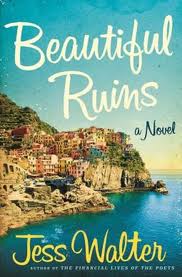
BEAUTIFUL RUINS by Jess Walter (2012) HarperCollins Canada, 338 pages


In a recent interview (which I encourage you to listen to at Other People: http://otherpeoplepod.com/archives/970 ) Jess Walter said, "I think all of my books are about a wistful longing for connection." And, if "reading fiction is immersive, then writing fiction is even moreso." He knows.

An epigraph to the novel, attributed to Louis Menand's "Talk Story" in The New Yorker, explains "Cavett's four great interviews with Richard Burton were done in 1980.... Burton, fifty-four at the time, and already a beautiful ruin, was mesmerizing." Trust Menand. And watch for yourself. Burton was all that and more--about to embark on a revival tour of Camelot, playing King Arthur, opposite Christine Ebersole's Guinevere, a performance I happened to see at Toronto's O'Keefe Centre, where he'd previously christened the house with Julie Andrews in 1960.

A sleepy Italian fishing village circa 1962, smart satire of contemporary Hollywood, a drug-addicted musician, and the charismatic Richard Burton on and off the set of Cleopatra are the defining elements of Walter's beguiling novel that for me will remain THE read of Summer 2012.

Consider the entrancing opening paragraph set in April 1962, Porto Vergogna, Italy:

"The dying actress arrived in his village the only way one could come directly--in a boat that motored into the cove, lurched past the rock jetty, and bumped against the end of the pier. She wavered a moment in the boat's stern, then extended a slender hand to grip the mahogany railing; with the other she pressed a wide-brimmed hat against her head. All around her, shards of sunlight broke on flickering  waves."

Gorgeous, right?

Walter masterfully moves from that 1960s microcosm where the lives of local Pasquale Tursi, visiting American actress Dee Moray, hopeful novelist Alvis Bender and the inimitable Richard Burton temporarily intertwine to the studio lots and pitch rooms of contemporary Hollywood which he brilliantly satirizes through Claire Silver and her producer boss Michael Deane. Deane, author of the "memoir/self-help classic, The Deane's Way" makes outrageous statements like, "Ideas are sphincters. Every asshole has one. Your take is what counts. I could walk into Fox today and sell a movie about a restaurant that serves baked monkey balls, if I had the right take." Deane's cynicism may be worthy of your scorn, but it also feels right on the money.

There are sentences in this novel that made me catch my breath as well as moments so perfectly imagined that I knew I was in the care of a master craftsman who knows how it feels to be human and fallible. Here's one, early on, where past and present collide during a visit Pasquale makes as an old man to California, following up on an offer made fifty years before:

"Claire feels a tug in her chest, some deeper shift, a cracking of her hard-earned cynicism, of this anxious tension she's been fighting. The actress's name means nothing to her, but the old guy seems utterly changed by saying it aloud, as if he hasn't said the name in years. Something about the name affects her, too--a crush of romantic recognition, those words, moment and forever--as if she can feel fifty years of longing in that one name, fifty years of an ache that lies dormant in her, too, maybe lies dormant in everyone until it's cracked open like this--and so weighted is this moment she has to look at the ground or else feel the tears burn her own eyes...the name hanging in the air...and then floating to the floor like a falling leaf, the Italian watching it settle..."

Over and over again, I felt connected to Walter's characters in a visceral way. And, he is a sophisticated storyteller who layers narrative upon narrative--from the omniscient third person narrator to Bender's stab at his post-war novel to Deane's rejected draft of his memoir to a pitch for a cannibal film to a scene from another character's play.

Immerse yourself in this world of BEAUTIFUL RUINS. You will be richly rewarded.