Monday, July 30, 2012

GOLD by Chris Cleave (2012) Bond Street Books, 321 pages


Random House of Canada's Scott Richardson (a novelist himself who writes as C.S. Richardson--read his THE END OF THE ALPHABET, for starters) designed this gorgeous cover for Chris Cleave's extraordinary novel about competition, compassion, love and loss.

With the London 2012 Games having begun on the weekend (with that hilarious parody during the Opening Ceremony of James Bond, starring Daniel Craig and Her Majesty Queen Elizabeth II and her corgis), my timing to read GOLD couldn't have been more perfect. In it two British women cyclists, Kate Argall and Zoe Castle, are training for their places on Great Britain's cycling team for these very games.

Kate and Zoe met when they both made the cut for the national cycling team when they were just nineteen years old. There, one of their teammates, Jack--handsome, swaggering Jack--falls for each of them, one a passion in passing, the other lifelong. Twelve years later, Zoe is the face of Perrier and living a wild single life, while Jack and Kate, now married, are focused on their daughter Sophie, who is a tomboyish eight, obsessed with Star Wars, and has leukaemia--a reality the little family has been dealing with for a couple of years.

All three adults are in the top condition of their sporting lives, each hoping for a seat on the GB cycling team for London 2012.

There are conflicts aplenty and secrets kept then shared that risk everything. And, it's clear that Cleave understands what it must feel like to train so obsessively, through ongoing physical and emotional pain. He knows, as he shows through Tom, the aging coach and former Olympian, that our bodies are bound to betray us: through illness, through injury, over time.

Cleave is a stunning prose stylist. I found myself turning down the corners of pages to return to contemplate the beauty of the thought and the weight of the sentence. Consider this passage where Kate is watching a televised race where she should have been competing: "Her leg muscles twitched and her awareness sharpened, dilating every second. Kate hated the way her body still readied itself to race like this, hopelessly, the way a widow's exhausted heart must still leap at a photo of her dead lover." Or this one where Zoe contemplates a life other than the one she's living: "Just beyond your sight, life might be moving in ways that were moments away from being revealed to you. It was a mistake to take disappointments at face value. You were only a tap at the door and a dozen fresh-cut blooms away from happy."

And, the denouement is perfect. What a read. What a ride.

I cannot wait to give a copy of GOLD to my friend Helen, a former GB Olympian who competed in '72 & '76 Summer Games in Munich and Montreal as a diver, who is currently a physician at a children's hospital here in Toronto. She will certainly feel as if Cleave's story were written especially for her.

GOLD is not only model Sports Lit, but also a story that will feed your heart and mind. Treat yourself to a copy. Soon.

Follow @chriscleave on Twitter, or drop by his website to see if he's doing an event near you http://www.chriscleave.com/.


Friday, July 27, 2012

CANADA by Richard Ford (2012) Harper Collins Canada, 418 pages


Two years ago when I co-chaired the PEN Canada event that opened Toronto's International Festival of Authors I had the surreal pleasure of speaking with Richard Ford directly. In addition to his well-known Southern charm, what left an indelible mark was his comment: "Literature made me believe in a better place."

Every sentence in CANADA is written with care. The title, itself, he admits "makes a commotion in my chest when I say it." He's a writer who respects the sound and rhythm of words. Part of his process includes reading the manuscript aloud, a step that essentially contributes to the final copy in your hands.

Although Del Parsons, the narrator, did not resonate with me the way Ford's Frank Bascombe continues to, his thoughts made me consider Ford not only one of the finest social satirists writing today, but also someone verging on philosopher king. Consider these two passages, both of which are so exquisitely expressed that reading them in isolation would be enough to lure me to read the book:

"Loneliness, I've read, is like being in a long line, waiting to reach the front where it's promised something good will happen. Only the line never moves, and other people are always coming in ahead of you, and the front, the place where you want to be, is always farther and farther away, until you no longer believe it has anything to offer you."


"What I know is, you have a better chance in life--of surviving it--if you tolerate loss well; manage not to be a cynic through it all; to subordinate, as Ruskin implied, to keep in proportion, to connect the unequal things into a whole that preserves the good, even if admittedly good is often not simple to find. We try. All of us. We try."

Literature makes me believe in a better place. It does. It will.


(Richard Ford, Eleanor Wachtel, and Mark Kingwell in Fleck Dance Theatre green room, October 2010, before PEN Canada's benefit, THE LAY OF THE LAND, opening night IFOA)


Tuesday, July 24, 2012

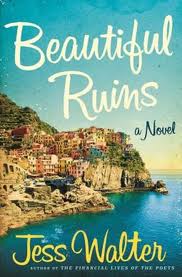
BEAUTIFUL RUINS by Jess Walter (2012) HarperCollins Canada, 338 pages


In a recent interview (which I encourage you to listen to at Other People: http://otherpeoplepod.com/archives/970 ) Jess Walter said, "I think all of my books are about a wistful longing for connection." And, if "reading fiction is immersive, then writing fiction is even moreso." He knows.

An epigraph to the novel, attributed to Louis Menand's "Talk Story" in The New Yorker, explains "Cavett's four great interviews with Richard Burton were done in 1980.... Burton, fifty-four at the time, and already a beautiful ruin, was mesmerizing." Trust Menand. And watch for yourself. Burton was all that and more--about to embark on a revival tour of Camelot, playing King Arthur, opposite Christine Ebersole's Guinevere, a performance I happened to see at Toronto's O'Keefe Centre, where he'd previously christened the house with Julie Andrews in 1960.

A sleepy Italian fishing village circa 1962, smart satire of contemporary Hollywood, a drug-addicted musician, and the charismatic Richard Burton on and off the set of Cleopatra are the defining elements of Walter's beguiling novel that for me will remain THE read of Summer 2012.

Consider the entrancing opening paragraph set in April 1962, Porto Vergogna, Italy:

"The dying actress arrived in his village the only way one could come directly--in a boat that motored into the cove, lurched past the rock jetty, and bumped against the end of the pier. She wavered a moment in the boat's stern, then extended a slender hand to grip the mahogany railing; with the other she pressed a wide-brimmed hat against her head. All around her, shards of sunlight broke on flickering  waves."

Gorgeous, right?

Walter masterfully moves from that 1960s microcosm where the lives of local Pasquale Tursi, visiting American actress Dee Moray, hopeful novelist Alvis Bender and the inimitable Richard Burton temporarily intertwine to the studio lots and pitch rooms of contemporary Hollywood which he brilliantly satirizes through Claire Silver and her producer boss Michael Deane. Deane, author of the "memoir/self-help classic, The Deane's Way" makes outrageous statements like, "Ideas are sphincters. Every asshole has one. Your take is what counts. I could walk into Fox today and sell a movie about a restaurant that serves baked monkey balls, if I had the right take." Deane's cynicism may be worthy of your scorn, but it also feels right on the money.

There are sentences in this novel that made me catch my breath as well as moments so perfectly imagined that I knew I was in the care of a master craftsman who knows how it feels to be human and fallible. Here's one, early on, where past and present collide during a visit Pasquale makes as an old man to California, following up on an offer made fifty years before:

"Claire feels a tug in her chest, some deeper shift, a cracking of her hard-earned cynicism, of this anxious tension she's been fighting. The actress's name means nothing to her, but the old guy seems utterly changed by saying it aloud, as if he hasn't said the name in years. Something about the name affects her, too--a crush of romantic recognition, those words, moment and forever--as if she can feel fifty years of longing in that one name, fifty years of an ache that lies dormant in her, too, maybe lies dormant in everyone until it's cracked open like this--and so weighted is this moment she has to look at the ground or else feel the tears burn her own eyes...the name hanging in the air...and then floating to the floor like a falling leaf, the Italian watching it settle..."

Over and over again, I felt connected to Walter's characters in a visceral way. And, he is a sophisticated storyteller who layers narrative upon narrative--from the omniscient third person narrator to Bender's stab at his post-war novel to Deane's rejected draft of his memoir to a pitch for a cannibal film to a scene from another character's play.

Immerse yourself in this world of BEAUTIFUL RUINS. You will be richly rewarded.


Monday, July 23, 2012

THE LOLA QUARTET by Emily St. John Mandel (2012) Unbridled Books, 279 pages


It pleases me perversely that I'm posting this review of THE LOLA QUARTET on Raymond Chandler's birthday. (Born July 23, 1888) 

In a noir style reminiscent of Chandler's THE LONG GOODBYE, Mandel unfurls her engrossing tale of journalist Gavin Sasaki with adept skill and a keen reverence for the genre in which she places her protagonist, who, clad in a trench coat and a fedora, doesn't "want to work at a newspaper per se," as his NYC copy editor chides but rather "to work in 1925." Gavin, whose favourite films are "all older than he was" and has seen Polanski's CHINATOWN "a dozen times," does not disagree. He'd like to be Philip Marlowe, sleuthing his way through other people's problems. Well, who wouldn't? Soon enough Gavin gets his wish. Sort of.

Set during the recent economic collapse when companies in all sectors had to downsize, Gavin loses his job, because he gets caught fabricating attributions for his articles. When asked about his choice, he readily admits, "Yeah, I lied. I made up people who gave me quotes because real people are so goddamned disappointing...they're pitiful." Fate takes control and Gavin ends up moving back home to Florida to live with his sister Eilo whose real estate foreclosure business is burgeoning. There, a chance encounter with a familiar-looking child leads to some complicated truths in Gavin's life.

Moving masterfully back and forth in time between the halcyon final days of high school, when Gavin played in a jazz quartet with his friends Daniel, Jack and Sasha named "after a German film they'd all liked with Lola in the title," and the present of 2009, Mandel is unafraid to plumb each time's darkness and attendant vulnerability for each of the players.

Toss in an unintended connection to the drug trade that requires payment in full, the threat of Burmese pythons in the Florida swamps, "seven-foot-long two-hundred-pound Nile monitors with eerily intelligent eyes...perfectly capable of eating a small dog," an ex-girlfriend on the lam, a gambling addict, and a guitar player as fine as Django Reinhardt, and you've got layer upon narrative layer that will keep your head spinning and your heart pumping right on through to the story's resolution.

Like Chandler-- perhaps the acknowledged master of the genre before her-- Mandel knows as her protagonist Gavin reveals as he heads "toward the north star and morning" that, "to say goodbye is to die a little." 

Monday, July 16, 2012

THE RED POLE OF MACAU by Ian Hamilton (from the ARC, forthcoming Sept 2012) House of Anansi Press, 304 pages


Ian Hamilton's Ava Lee novel series is fast becoming a favourite of mine in the crime fiction genre. Ava Lee is a contemporary heroine. She's a forensic accountant who happens to be trained in bak mei, a sophisticated, violent martial art, typically taught one-on-one, a mentor passing on its secrets to his student. She is also a private school-educated, stunning lesbian, as comfortable in her bespoke blouses, pencil skirts, stilettos, chic chignon and Chanel lipstick as she is in her running gear.

Although you can read any of these books in isolation, Hamilton threads the series together by referring back to the previous one in the opening pages of the newest one. So, you will know that Ava has recently (only a few days ago) completed a job with her Hong Kong business partner Uncle for the "most powerful business team in Wuhan City," Changxing and May Ling Wong. The deal involved pursuing "people who had foisted more than a dozen forged Fauvist paintings on them, paintings with a value of close to $80 million." How Ava managed to find the perpetrators and persuade them to return the money they had stolen is the heart of The Wild Beasts of Wuhan. And, although the fee Ava and Uncle receive is a generous 30% of what they recover, she seems unaffected by her burgeoning bank account.

In The Red Pole of Macau, the stakes are raised for Ava when her half brother Michael calls her and pleads for her help. It seems he and his Millennium Food partner Simon To have gotten themselves in a real fix with corrupt investors at Ma Shing Realty Corporation, and their bank has come calling, threatening to destroy everything they have worked so diligently to build. Soon, it becomes clear to Ava that negotiating with members of a triad is going to be more difficult than she had expected. So, she enlists Uncle's help as well as her steadfast muscle support in Sonny, Carlo and Andy, clever men she can trust with her life. May Ling Wong in her selfish need to broker a personal Taoist peace with Ava also becomes involved and her connections prove essential.

In addition to being a smart, entertaining, fast-paced read, each book is also part travelogue of an intimate section of south-east Asia. Go along for the ride. Cheer for feisty, fabulous, ass-kicking Ava Lee as she unloads perfectly timed bak mei on the bad guys. You'll be glad you did.

Follow Ian Hamilton on Twitter @avaleebooks. And, check out his website for upcoming appearances and forthcoming novels: http://ianhamiltonbooks.com/  The fifth in the series will be out in February 2013. Watch for Ava Lee in The Scottish Banker of Surabaya then. I know I will.

Wednesday, July 11, 2012

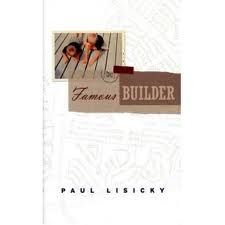
FAMOUS BUILDER by Paul Lisicky (2002) Graywolf Press, 274 pages


With a clean, clear prose style that evokes both Mary Karr's unflinching memoir THE LIAR'S CLUB and August Kleinzahler's encomium to his elusive gangster brother CUTTY, ONE ROCK, Paul Lisicky's series of personal essays collected in FAMOUS BUILDER made me catch my breath in wonder and envy.

Like Karr, Lisicky is direct and unselfconscious in his portrayal of his relatives and himself. Consider this haunting description of his father from "New World":

My father is a storm. His presence charges the air with abstract particles: guilt, duty, fear of failure, fear of death. If he were a painting, he'd be a Jackson Pollock, all splash and squiggle, no open spaces, no room to breathe. If he were a piece of music, he'd be a Shoshtakovich symphony, brash, shot through with bursts of timpani and horns.

Great, right?

What about this matter-of-fact exchange between young Paul and his unflappable mother from "Luck Be A Lady:"

"What's a whooore?" I say later. I stand with my mother in the tiny kitchen, high on my tiptoes, and stir chicken Rice-A-Roni while she empties a brick of frozen peas into a saucepan.
"Whore," my mother says, correcting me.
"Whore."
"A woman who sells dances," she says without missing a beat.
I cock my head. Selling dances: I cannot think of anything more delightful.


Later, as a young man, making his way in Provincetown, Lisicky contemplates the idea of a loving relationship in "Same Situation:"

I wake up in the morning, groggy, a bar of sunlight blinding my eyes. I feel hope--what will happen today?--before the melancholy settles: dust beaten from a mop. If only someone's face were on the pillow next to mine. If only to watch another man sleeping, his mouth twitching as he dreams.

Who hasn't thought those very thoughts?

I gulped Lisicky's personal essays down in a day and plan to seek out his other work, too: LAWNBOY, THE BURNING HOUSE and UNBUILT PROJECTS. Follow him on Twitter @paul_lisicky.

Saturday, June 30, 2012

SEATING ARRANGEMENTS by Maggie Shipstead (2012) AA Knopf, 299 pages


Maggie Shipstead's debut novel is one of those books that reads as if it were fully formed in some ethereal stylistic heaven, waiting for the proper storyteller to be the medium to transcribe it.

Over the course of three days that lead up to the marriage of the winsomely pregnant Daphne Van Meter and the affable east coast scion Greyson Duff, you'll meet and get to know intimately father-of-the-bride Winn and his wife Biddy, weekend hosts to a gaggle of nubile bridesmaids and an interloping oft-married sister-in-law on their New England island. Hormones unhinge just about everyone and there is merely a veneer of propriety as several of the characters are swept along into an irresistible swirling vortex of lust. Past and present secrets are revealed, tempers flare and folks are damaged. In the end, by exposing the dangers fraught with living an inauthentic life, each of those flawed and deeply human characters inches their way to redemption.

Maggie Shipstead has emerged out of the social satire tradition of Philip Roth, Richard Ford and Lorrie Moore. I hope the uncompromising, smart and searing SEATING ARRANGEMENTS is the first of many novels to come from this marvellous new voice in contemporary American letters.

Sunday, June 24, 2012

INSIDE by Alix Ohlin (2012) House of Anansi Press, 258 pages


Ohlin's engrossing novel effortlessly shifts between time and place and character to reveal through four distinct narrative threads vulnerable lives that intertwine in unexpected ways. Grace, Tug, Annie and Mitch's stories will lure you, each a hook catching your heart, tearing it a little as it finds purchase.

Spanning over a decade that begins chronologically on the front lines in Kigali during the Rwandan genocide in 1994 where "Aid workers" like Tug "were romantics who pretended not to be, their personalities swinging like pendulums between idealism and pragmatism," Inside follows these four flawed, deeply human characters as they struggle to make meaning in their lives.

Both Grace and Mitch are therapists accustomed to probing the inner lives of their clients, though less-inclined to face their own troubles until their hands and hearts are forced to the task. Troubled teen Annie, raised in privilege in Montreal, begins to find herself when she abandons everything she knows and tries to make a career as an actress while inviting a desperate stranger inside her tiny, bare New York apartment. When John "Tug" Tugwell's attempt to kill himself fails one winter's day in Montreal, it is the kindness of a stranger that sets him upon an unexpected path toward redemption.

Like me, you will follow these complex characters on their fraught journeys, as Ohlin masterfully explores through each of them the risk of making oneself emotionally available and responsible for those closest to us.

Inside is poignant. It is also harrowing, and ultimately healing.

Friday, June 22, 2012

THE THINGS WE FEAR MOST by Gloria Vanderbilt (2012) Exile Editions, 139 pages


When Gloria Vanderbilt was in Toronto earlier this month to present the Carter Cooper Prize for Short Fiction to an emerging Canadian writer and an established Canadian writer at the tony Turf Lounge, I was seated at her table by her publisher Barry Callaghan, a long-time friend of mine who figured I was a sure bet for unabashed, lively conversation. Sweet of him, really.

I sat across from Ms. Vanderbilt--who at 88 is proof positive that age is just a number--and one of the winners, the equally lovely Sean Virgo, and beside one of her travelling companions, her long-time friend Marti Stevens, a theatre actress who stood up for Elaine Stritch at her marriage to John Bay at the Savoy in London when they were both in a touring production of Company. Well...what unfurled that evening was a series of extraordinary anecdotes about the creative life, including ones about John Gielgud, Noel Coward and Stephen Sondheim, each of whom Marti mimicked brilliantly.

Two nights later I went to the Brigantine Room to hear Gloria read from her most recent book The Things We Fear Most, a collection of flash fiction narratives and short stories that seize upon a situation, moments rife with the static of quotidian disaster. Her prose is spare, measured, beautifully calibrated. She is grounded. Unspoiled. Honest. And, I don't say this lightly, but her presence is a balm. Consider her opening comment: "I was born into a sense of loss," or the equally philosophical, "I have many dark moments, but they pass. And, here we are. I always think that the best is yet to come." What an attitude.

Each of the narratives in The Things We Fear Most is a polished gem. She knows about tone and audience and how to make the weight of every word matter. That night she read "The Gold Dust Twins," a story about close childhood friends Daisy Balfour and Sally Wentworth who "although they had recently avoided one another for years, when they ran into each other by chance on Madison Avenue, there were cries and hugs, which is how they find themselves at the Carlyle, talking about old times and getting poodled." Doesn't that sound like an irresistible way to spend an afternoon? I plan to do just that when I'm next in New York.

Find your way to these stories, written by someone who prefers the slow intimacy of pen to paper and fusses over each draft until each punctuation mark earns its place. Gloria Vanderbilt is a marvel, trust me.

Wednesday, June 20, 2012

THE KEY by Simon Toyne (2012) HarperCollins Canada, 433 pages


Simon Toyne caught my attention with his richly-imagined, page-turning debut thriller SANCTUS, a book that went on to be published in dozens of countries and become an international bestseller. A loyal fan, I was delighted to receive a cherished ARC of its sequel THE KEY, now widely available in the UK and North America.

As THE KEY opens American journalist Liv Adamsen wakes in hospital in Ruin, having only a vague memory of trespassing inside the closeted Citadel religious community to try to solve the mystery of her brother-the-monk's unexpected and very public death. As the tag line on the novel's cover ominously suggests, "the fate of man lies in the hands of one woman." Liz is that woman. She has intimations of her haunting power and it takes the belief and understanding of charity worker Gabriel Mann to not only honour that potential and figure out what it means, but also to keep her safe from the factions invested in destroying her. 

Since Liz escaped from the Citadel, a terrifying, contagious disease has plagued the secretive brotherhood tucked within its centuries' old walls. And, those in charge--with connections to the mafia and the highest echelons of the Catholic Church--are determined to facilitate her return therein to provide the healing they believe only she possesses. To complicate matters there's a shadowy figure who prowls the desert, a mercenary known as The Ghost, a man who knows that Liv could very well be the key to unlocking a potent, long-kept secret he has helped to protect.

Written with intelligence, and a talent for revealing mind-bending plot twists at breakneck speed, Simon Toyne's THE KEY will have you gasping, your heart thumping a tattoo, hoping beyond hope that Liv will fulfil the prophecy with which she unwittingly became entangled when her investigative instincts put her in peril.

Read the tantalizing opening pages for yourself. You will be hooked.


Tuesday, June 19, 2012

THE UNFINISHED WORK OF ELIZABETH D. by Nichole Bernier (2012) Crown Publishing, 305 pages


For discerning readers who yearn for character-driven stories rife with verisimilitude, look no further than Nichole Bernier's luminous and tender debut novel THE UNFINISHED WORK OF ELIZABETH D.  As New York Times bestselling author J. Courtney Sullivan remarks, it is "a compelling mystery and a wise meditation...in an age of great anxiety."

Protagonist Kate Spenser has been both gifted and burdened with her friend Elizabeth's journals after Elizabeth's sudden death in an August plane crash, a "confluence of bad things--bad wind, bad rudder, a bad call by the pilot...quickly overshadowed by all that came in September." It is the spectre of that particular September 2001 that hides like a watermark beneath Kate's anxieties as she thumbs through the decades of Elizabeth's life confided between the pages of her trunkful of well-worn diaries.

Since Elizabeth leaves behind her widowed husband and three small children, including a toddler who surely won't remember her, it is not surprising that Kate, a happily married wife to Chris and mother to James and Piper, projects her imagined loss on them. And, it is in these imaginings that you see Bernier's emotional strength as a novelist who writes about real characters: "Loss would hang on James and Piper like poorly fitting clothes as they moved through town, people touching their hair and saying hello more attentively than they ever had, some even offering small gifts, which would cause the children to confuse death with a holiday. The kids would walk to school with their father, his vacant eyes an open door to a corridor of endless tomorrows." She's in John Irving terrain here, holding up the mirror to our greatest human fears.

Bernier builds tension masterfully throughout the novel. An obvious source is between Kate and Elizabeth's husband Dave, both trying to come to terms with why Elizabeth would bequeath the journals to a friend she's known for only a time instead of to her family as part of her legacy. There are secrets, of course. Indeed, ones that will catch your breath as you read them over Kate's shoulder. Consider the truth in this heartbreaking observation about the relationships between women: "A sister...best understood the crucible in which you were formed. One of the few capable of completing you, and if lost, of cleaving you cleanly in half."

Wisdom and emotional truth teem from these pages. And, you will surely feel as I did that you have spent the restorative seven weeks on Great Rock Island in the company of Kate and Chris and their children, unravelling thread by thread the great mystery of what it is to be human through love and loss and the redemptive power of both.

Friday, June 01, 2012

UNQUENCHABLE by Natalie MacLean (2011) Doubleday Canada, 333 pages

With a structural nod to fellow oenophile Rex Pickett's Pinot-centric SIDEWAYS, Natalie MacLean maps out her tours of vineyards around the world through the days of a week. She is an engaging guide from Sunday through Sunday from Australia to Germany to the nascent Niagara region in Ontario to South Africa to the south of France.

What amused me most about the book--in addition to her palpable wine geek joy on her journey--were her portraits of the industry people she meets. Wolf Blass, for one, the gregarious German-born, Australian transplant whose name and brand are indistinguishable and who sells seventy million bottles/year, relying on marketing "driven toward women." Unsurprisingly, he calls his Red Label Shiraz Cabernet Sauvignon affectionately "the leg opener." He'd know, with four wives behind him, all "smashing crackers." Canadian literature icon Timothy Findley was partial to Wolf Blass Yellow Label, a hearty red that his protagonist in SPADEWORK relished so much that Wolf Blass sent him cases of the nectar for such munificent product placement.

One of my favourite anecdotes comes with a visit to Penfolds, a winery originally established by a medical doctor in 1844 who recommended the "wine cure" for his patients. There, in 1948, Helen Keller visited and was so fascinated by the girth and texture of one of the vats that "someone told her its height and she took less than a minute to correctly calculate that it held 10,774 gallons of wine."

Another character you'll spend time with is Cape Town, South Africa's Charles Back, "a winemaker who loves to butt heads with French authorities." His labels Goats do Roam and Goat-Rotie are "puns on France's famous wine regions, Côtes-du-Rhône and Côte-Rôtie."

What entrances me about MacLean's book is the way that she makes every person and place come to life with verisimilitude. Each winemaker's passion is clear and with such varied backgrounds in journalism, medicine and real estate, you can see how their reverence for the grape has become a vocation. On the slopes of Mount Etna in Sicily, Marco de Grazia speaks for all of them when he suggests, "people will recognize these wines the way they recognize the sentences of certain writers. This is what me mean by terroir." Jose Alberto echoes this sentiment in Argentina: "Terroir is as much about people as soil. Making wine isn't just farming with fancy adjectives; it's about the deep connection between people and vines."

Although MacLean obviously knows her territory as a consumer and critic, it's her ability to tell a story that kept me reading UNQUENCHABLE. Sip your way through. You'll be glad of her warm company and wit.


Thursday, May 31, 2012

THIS IS HOW by Augusten Burroughs, St Martin's Press (2012), 230 pages


Last night I was among the ebullient crowd of hundreds assembled in the Brigantine Room at Harbourfront Centre to hear Augusten Burroughs in conversation with Toronto's Bert Archer about his most recent memoir THIS IS HOW. Already predisposed to like his style, having read RUNNING WITH SCISSORS, DRY and MAGICAL THINKING and already having some sense of Burroughs's accomplished self-deprecating humour, I was not quite prepared for the grace and candour with which he presented himself. As I said to him during while he was signing the copies I acquired as book prizes for my @TeenBoyLitCrit students, spending that ninety minutes in his munificent, frank company was better than therapy.

The full title of the book is as entertainingly rambling as Burroughs's stream-of-consciousness both on stage and on the page: THIS IS HOW: HELP FOR THE SELF: PROVEN AID IN OVERCOMING SHYNESS, MOLESTATION, FATNESS, SPINSTERHOOD, GRIEF, DISEASE, LUSHERY, DECREPITUDE & MORE FOR YOUNG AND OLD ALIKE. Unsurprisingly, he waxes eloquently and frankly on all of these subjects, from his unique survivor's perspective.

The two epigraphs couldn't be more apt. First, there's George Orwell's suggestion that "To see what is in front of one's nose requires a constant struggle." And next, there's Galileo's wisdom: "All truths are easy to understand once they are discovered; the point is to discover them." Becoming yourself requires work.

You can dip in to any chapter of THIS IS HOW and lift a gem, like, "The truth is humbling, terrifying and often exhilarating. It blows the doors off the hinges and fills the world with fresh air." (HOW TO RIDE AN ELEVATOR) Or, what about this welcome slap upside the head: "The truth behind the truth is this: even if you are a victim, you must never be a victim. Even if you deserve to be one. Because while you wait for somebody to come along and set things right, life has moved forward without you." (HOW TO FEEL SORRY FOR YOURSELF) On every page you'll find a thought or phrase that you may have begun to form in your own head, that Burroughs has so beautifully articulated.

When addressing his past alcoholism from the stage last night, Burroughs said, "I liked writing more than I liked drinking. It was a raft to sobriety." That raft saved his life and by extension through his books might just save someone else's. What is indelible is this caveat: "The truth is expensive. But all of the best things are."


Wednesday, March 28, 2012

THE WEIRD SISTERS by Eleanor Brown (2011) Penguin, 318 pages


Even before I began thumbing through the pages of this sparkling debut novel, I knew I would be smitten, having made the assumption that Brown would rely on the Bard's plots, characters and memorable lines since she references MACBETH'S witches in her title. And, for those of you who know me, all references to Shakespeare, whose prose rides the beat of my anxious heart, make my Litnerd heart swell. Though I do not pretend to have any prophetic powers like those weird sisters in the Scottish play, I do know what it feels like to fail, over and over again, just as our protagonists Rose, Bean and Cordy do as they navigate their way to belonging.

When your father is a professor of Shakespeare at a local college, and you and your sisters are named for female characters in birth order (Rosalind aka Rose 1st born from AS YOU LIKE IT; Bianca aka Bean 2nd born from THE TAMING OF THE SHREW; Cordelia aka Cordy 3rd born from KING LEAR), it is not terribly surprising that he tells you of your mother's cancer through a page copied from The Riverside Shakespeare: "Come, let us go; and pray to all the gods/For our beloved mother in her pains." Or that your oldest sister announces her intent to marry by quoting lines from ROMEO AND JULIET.

What matters, however, is that you all flock home. And, that your not-so-weird secrets of self-worth, theft, and pregnancy will be aired in good time.

There are worlds in Eleanor Brown's words and each of them entranced me.

THE TEN-YEAR NAP by Meg Wolitzer (2008) Riverhead Books, 383 pages


I tumbled headlong into Meg Wolitzer's keen-eyed universe with her most recent satiric novel THE UNCOUPLING and am determined to thumb my way leisurely through her backlist, beginning here with THE TEN-YEAR NAP.

For the group of women friends who gather at Golden Horn to catch up on their lives over a leisurely breakfast, the past decade has been rather a blur of wifely duty and stay-at-home-motherhood, not the future they had been told would be so different from the one their own mothers embraced.

Like Richard Ford or Philip Roth before her, Wolitzer creates characters who breathe, argue and occasionally apologize for their all-too-human fallibility. I am hooked on her lived-in fictional folk who make me believe every word.

Monday, March 26, 2012

WHY NOT? FIFTEEN REASONS TO LIVE by Ray Robertson (2011) Biblioasis, 177 pages


This collection of personal essays was short-listed for the Hilary Weston Writer's Trust of Canada Prize for Nonfiction in 2011.

I've long been a fan of Robertson's clean, visceral prose in his novels MOODY FOOD, GENTLY DOWN THE STREAM and WHAT HAPPENED LATER (a brilliant dual narrative featuring a fictional seventeen-year-old Ray discovering Jack Kerouac and a middle aged Kerouac making the journey to his Quebec roots in the novel he always intended to pen after ON THE ROAD).

In WHY NOT? Robertson lays himself bare, revealing a longtime struggle with OCD and depression by creating a rosary of essays based on issues that matter and motivate him to not only choose but embrace life. Each piece is a worry bead with philosophic grace notes that touched me deeply. From "Work" to "Art" to "Humour" to "Friendship" to "Solitude" to "Duty" to "Death," Robertson held me in his thrall, with prose so direct and resonant that I found myself needing to scribble down his phrasing to return to later.

I especially enjoyed Robertson's munificent reference to poetry throughout the collection, including perfectly placed gems by Baudelaire, William Blake, Raymond Carver, Emily Dickinson, Philip Larkin, John Updike, W.B. Yeats and this tanka contemplating love by an unknown Japanese poet: "If from your mouth/there hung a hundred-year old tongue/and you would babble/I still would not cease to care/but indeed my love would grow."

The essay that broke me was "Friendship" and the unexpected (though I ought to have expected it) encomium to the canine companions that have shared Ray's life. Like him I have known how it feels to "work side by side for hours without the slightest sense of self-consciousness or unease," and to have one so "unfailingly affirmative, enthusiastic, and energetic" to stand by me. Anyone who doesn't consider the unquestioned love from a dog, the devotion faithfully until his/her end, lacks not only "an understanding of canines, but of friendship. It's not the number of legs that makes a friend."

Take your time with these essays. Your emotional life will be all the richer for it.

LIVE WIRE by Harlan Coben, (2011) Penguin, 421 pages


Chatting with my colleague this morning who introduced me to Myron Bolitar a year ago has me all fired up again about the thriller I read on a recent trip to NYC, a perfect place, in fact, to be immersed in the landscape of a Coben novel. I had just strolled along Central Park West to enter the park across from The Dakota, where not only Yoko Ono shared her life with John Lennon, but also where Bolitar's best friend Windsor Horne Lockwood has a tony pied a terre in which Bolitar flops on nights he's too tired to make the commute home to New Jersey.

In addition to the moral satisfaction of witnessing the bad guys and dolls be suitably punished by tale's end, what especially keeps me hooked to Coben's books are his fully formed eccentric characters and the popular culture references that make me feel like one of the cool kids, albeit one who came of age with showtunes and bad '80s hair.

In LIVE WIRE, Bolitar's clients--former tennis star Suzze T and her rock star husband Lex--receive an anonymous Facebook post questioning the paternity of their unborn child and Lex disappears. In his search for Lex, Myron also unexpectedly finds his long-estranged sister-in-law Kitty who seems tied to a nefarious underworld that she is unable to escape. Supporting Myron on his quest to set things right are his best friend Win, his business partner (and former wrestler) Esperanza and their dutiful office assistant, Big Cyndi, whose predilection for outrageous makeup lands "somewhere between nineties goth and seventies KISS."

"The ugliest truth, a friend once told Myron, is better than the prettiest of lies." That aphorism and opening gambit is the moral crucible that Myron faces over and over again in LIVE WIRE as he puzzles out the ugly truths he is forced to face about his clients, his family and himself.

If you haven't yet found your way to Harlan Coben's smart, sassy, and satisfying thrillers, well, what are you waiting for?

Monday, March 12, 2012

THE UNINVITED GUESTS by Sadie Jones (from the ARC, forthcoming April 2012) Knopf Canada, 260 pages


Consider this forthcoming novel from Sadie Jones a delectable hybrid of DOWNTON ABBEY meets SUPER 8 set in provincial England in the early years of the 20th Century at Sterne, a dilapidated manor house owned by Charlotte Torrington by way of her dead husband Horace. Charlotte has three children, Emerald, Clovis and Smudge, all of whom are emotionally attached to the place, especially now that their mother has remarried the doting, one-armed Edward Shift, and their paternal legacy is seemingly up for grabs.

On the occasion of Emerald's birthday, a terrible train wreck nearby propels an undesirable group of strangers to Sterne for temporary succor and with outrageous consequences as the household is thrown into complete disarray. Add to the uninvited guests a shady figure from Charlotte's past, Charlie Traversham-Beechers, determined to join in Emerald's birthday revels, who turns everything topsy turvy with his insane and irresistible challenges and there is an evening that no one will soon forget.

Although THE UNINVITED GUESTS begins like a traditional 19th Century novel, the journey Jones takes you on is anything but conventional. Be prepared to be surprised at each plot twist and to enjoy the ride just as much as Smudge's beloved pony Lady.

ALL MY FRIENDS ARE SUPERHEROES by Andrew Kaufman (2011) Coach House Books, 106 pages


Kaufman's satiric romp is like THE INCREDIBLES for sardonic grownups.

Protagonist Tom is the only one of his friends who is not a superhero. He even married one: the Perfectionist, whom he affectionately calls, "Perf." Problem is that on their wedding day her previous paramour Hypno (who had, during their courtship, hypnotized her into believing "that sex with him would be the best of her life") out of spite or jealousy hypnotized the Perfectionist again insuring that her new husband would be invisible in her eyes.

The trick works and the novel opens with the Perfectionist onboard a flight from Toronto to Vancouver, six months after her nuptials, believing Tom has left her, when, really, he is sitting in the seat beside. Tom has the duration of the flight to convince "Perf" that he exists. Can he do it?

Pick up ALL MY FRIENDS ARE SUPERHEROES and find out.

Friday, February 10, 2012

PUPPY LOVE by Frauke Scheunemann (2012) ARC from House of Anansi Press, 296 pages


Carl-Leopold von Eschersbach is a 6-month-old dachshund mix ("the product of Mummy's affair with a very dashing terrier") who finds himself at the local animal shelter with a bunch of other curs where he is luckily adopted by a human who smells "like a beautiful summer's day...Very much like flowers, a bit like strawberries, with a hint of peppermint." This gorgeous-scented woman is Caroline, a violin-maker, who will turn out to need the puppy she calls Hercules more than he needs her.

After meeting Caroline's current boyfriend Thomas, Hercules wonders, "Could a love of animals be something that raises the value of a human male?" And, he begins to plot with his feline friend, Mr. Beck, a way to bring a more desirable mate into Caroline's life. When all of their matchmaking plans seem futile, Hercules begins to see the light about the only real option for Caroline, and he couldn't be more delighted for it to work out, but he needs to let the fates find their way.

Frauke Scheunemann has added another adorable voice to the growing pantheon of canine narrators that includes Virginia Woolf's FLUSH and Garth Stein's Enzo in THE ART OF RACING IN THE RAIN.