Sunday, February 27, 2011

LAST NIGHT IN MONTREAL by Emily Mandel (2009) Unbridled Books, 247 pages


Emily Mandel is another writer whose work has come to me through Twitter (where you too should follow her @emilymandel). That is a pretty impressive pantheon so far that includes Rosanne Cash, Amy MacKinnon, Harlan Coben, Angie Abdou, Andrew Shaffer and Robin Black. Since I read about 150 books/year, I am always keen to find a new-to-me narrative voice. Mandel's debut novel LAST NIGHT IN MONTREAL simply knocked my socks off.

Like my current favourite movie, WINTER'S BONE, LAST NIGHT IN MONTREAL comes at you quietly, and with intelligence. It is perfectly structured and the prose is luminous. In it, absence is poetic.

Lilia Albert has been on the run since she was abducted by her father when she was only seven. She is unable to remember her early childhood before that winter's night when her estranged father scooped her off her feet, out of the snow and into the safety of his arms. Now in her twenties and in a loving relationship with Eli, Lilia realizes that it just may be impossible for her to stop running, because that is what she has known.

Flight is a recurring motif in the novel, symbolized by paintings of Icarus by Matisse and Bruegel, by the feathery costume wings Michaele dons and by mariposa--the Spanish word for butterfly. Several characters are in flight: sometimes from their past, other times from their present and from the idea of their future.

In reading Mandel's elegiac LAST NIGHT IN MONTREAL you will learn that coming to terms with sacrifice and abandonment may be the only way to find your way home.

Saturday, February 26, 2011

AS LONG AS THE RIVERS FLOW by James Bartleman (2011) Random House Canada, 247 pages


I heard James Bartleman read from this novel on Wednesday night at the Harbourfront Reading Series. I am predisposed to like his work, having enjoyed RAISIN WINE, his memoir of growing up Native in Muskoka and admiring the real work he has engaged in following his tenure as the Lieutenant Governor of Ontario--promoting literacy and mental health.

Throughout his travels to fly-in Native communities in the far north, Bartleman discovered the suicide epidemic of children who hanged themselves "to show how worthless they were; how fundamentally deserving of pain." AS LONG AS THE RIVERS FLOW is a composite portrait of such a place that has inherited the residential school legacy of previous generations and the shame and pain that entails with the younger generation of children who need to re-establish a cultural identity in order to heal.

Martha Whiteduck, the protagonist, remembers what it was like to be raised with respect for the land and the old ways before she was flown away to residential school from age 6-16 where she was beaten by the nuns and molested by the priest, Father Antoine--damaged emotionally in ways from which she would never heal. Returning to the reserve partially educated and distrusting, Martha runs wild. She gets pregnant and gives birth to a son, a boy she names Spider because of the birthmark on his brow.

Unable to stop drinking, Martha loses Spider to the Children's Aid and he is raised by a loving White family in suburbia who try to honour his Native traditions, but cannot begin to understand his temper. Spider's trajectory is a predictable one, where, as a victim of Fetal Alcohol Syndrome, he ends up storming out of his adoptive parents' lives and finding belonging in a homeless community in Toronto, living rough under the Gardiner Expressway, stopping in at Evergreen on Yonge Street for a warm meal and panhandling to feed his addictions.

Meanwhile, Martha becomes pregnant again and gives birth to a daughter she names Raven. Her mother begs her to leave Raven with her to be raised in the traditional ways on the reserve and Martha agrees, because it gives her the opportunity to try to find Spider.

Years pass and Raven finds herself pledging a suicide pact with her pre-adolescent peers who feel so desperate about their futures that they plan to kill themselves on their thirteenth birthdays. Only when Raven confides in the chief does she get the support that she needs and he arranges for a Healing Circle for the community to face the horrors of their past and present and to find their way to forgiveness where actual healing may begin.

Bartleman does not shy away from ugly realities that continue to plague Native communities nor does he excuse anyone from their culpability. That Martha manages to offer forgiveness as a true gift is what is remarkable to me in this story and a reminder that the work of Truth and Reconciliation is essential.

FINDING THE WORDS, ed. Jared Bland (2011) McClelland & Stewart, 297 pages


This FINDING THE WORDS anthology celebrating WRITERS ON INSPIRATION, DESIRE, WAR, CELEBRITY, EXILE AND BREAKING THE RULES is a fundraiser for PEN Canada, one of the organizations I have supported for years. PEN centres around the world defend freedom of expression and support writers who have been silenced because of their work. As the editor explains in the introduction, "To ensure that as much of the anthology's cover price will go directly to PEN Canada, McClelland & Stewart is contributing all of its resources in the publication of the book and Random House of Canada is contributing its warehousing and shipping costs. Friesens is also providing its printing services at a significant discount."

Between these carefully curated pages you'll find pieces by Canadian luminaries including David Bezmozgis, Emma Donoghue, Steven Heighton, Lisa Moore, Alice Munro, Heather O'Neill and Michael Winter. There is even a transcription of the conversation between legendary British editor-turned-memoirist Diana Athill and Alice Munro from the Opening Night International Festival of Authors event that I co-chaired in October 2009.

What strikes me about each of the pieces included is their intimacy. You'll read about one author's father who struggled to become literate as an adult and another who confesses that "the solitude of writing is nothing compared to the emptiness of being between books."

Using language is a right that must be defended. Please do your part and purchase a copy of FINDING THE WORDS and check out other ways to support PEN Canada by visiting its website: www.pencanada.ca

Friday, February 25, 2011

CRIME MACHINE by Giles Blunt (2010) Random House Canada, 294 pages


What a delight to return to the sane company of Detective John Cardinal, Algonquin Bay's contemplative and fair-minded investigator.

CRIME MACHINE finds Cardinal working on cold-case files during the day and spending platonic evenings with his work partner Lise Delorme a year after his beloved wife Catherine's unexpected death (Read BY THE TIME YOU READ THIS for her emotionally complicated story). Cardinal has moved out of the home he shared with Catherine and their daughter and now lives in a cramped apartment that's walking distance from Delorme's place.

The winter quiet that has enveloped Algonquin Bay like a blanket is soon fractured by the deaths of two out-of-towners who are discovered beheaded in a summer property that had been on the market. As lead investigator on the case, Cardinal soon realizes that appearances are deceiving. Puzzling his way through this case, Cardinal becomes entangled with the FBI, allegedly upstanding members of the local community, the press, the fur industry, a young Native woman and possibly the Russian mafia. And, though Cardinal does solve the current crime and one of his cold cases, it's not before both his and Delorme's lives are put at risk.

What is remarkable to me about this novel is how Blunt so flawlessly inhabits the minds of all of his characters, so you not only feel sympathy for the victims, but also for the monstrous villains as well.

Wednesday, February 23, 2011

THE WILDWATER WALKING CLUB by Claire Cook (2009) Hyperion, 239 pages


Noreen Kelly takes a buyout from her long-time employer and is dumped by her clandestine boyfriend in one fell swoop. With a trunk full of staff-discounted top-of-the-line running shoes, Noreen decides to reclaim her health, both physically and mentally by striding towards it one step at a time. She is soon joined by her neighbours Tess and Rosie and the three women pledge to clock 10,000 steps/day and plan to reward themselves with a long weekend getaway once they've met their goal.

As part of her package, Noreen attends a weekly group session with a career coach who encourages her to define herself in ways that do not relate to her professional identity and by doing just that she is able to make breakthroughs in other aspects of her life, including in her romantic relationships. Noreen's awakening is helped along by observing Rosie's chickens (nicknamed The Supremes) and their loyal protector, the rooster Rod Stewart. I am not kidding here, folks. The chickens have it all figured out before Noreen does. They don't tolerate disloyalty, and, in fact, had previously pecked to death a former rooster due to his transgressions. As Noreen quips, there's a lot to be learned from chickens.

The three women finally agree on a reward destination: west coast lavender farms, where Rosie is sure to pick up tips to improve her own family-run lavender business and all three of them will enjoy touring local vineyards like the characters in Sideways.

THE WILDWATER WALKING CLUB shows middle-aged women coming to terms with their own identities and contemplating, then accommodating, the balancing act that the responsibility of aging parents and young adult children requires.

Monday, February 21, 2011

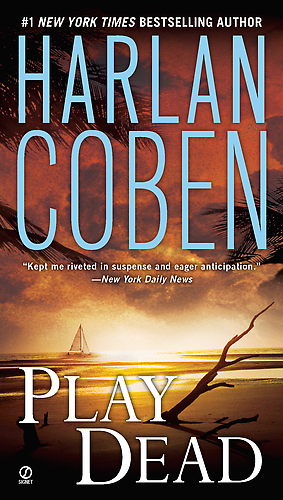
PLAY DEAD by Harlan Coben (1990) Penguin


Are you a diehard basketball fan of the Boston Celtics? Have you ever fantasized about having a supermodel as a spouse? Do you like to read thrillers where past mistakes stick to present circumstances like stink on skunk? If you've nodded yes to any of these questions, then chances are PLAY DEAD is your kind of book.

After eloping in Australia, newlywed Laura Ayers finds herself mourning on her honeymoon the unexpected loss of her husband, Celtics superstar David Baskin who appears to have drowned near the Great Barrier Reef. Laura turns to David's best friend, former college roommate and current cop TC for help to uncover the final hours of David's previously charmed life. And, when some of the details just don't add up, Laura discovers she's just not sure who she can trust. Not her family nor her closest friends, it seems, will be able to help Laura inch closer to the truth. And, it's a truth about an horrific incident in the past that threatens to cleave Laura's heart even more in the present.

Coben adds tension to Laura's journey by introducing David's long lost brother Stan, an obvious degenerate who pretends to woo Laura's equally troubled sister Gloria and revealing moment by moment troubling secrets that bind Laura's parents Mary and James, who from the outside appear to be upstanding members of Boston society.

Although I found the ongoing reference to Laura's current beauty and previous ugly duckling adolescence more than a tad tiresome, it didn't deter me from flipping through this well-paced thriller, eager to discover who the true villain was. There are plenty of red herrings to mislead and as a result I felt connected to Laura and her own frustration as she puzzles out the truths about the past and her present.

Friday, February 18, 2011

THE CANTERBURY TRAIL by Angie Abdou (2011) Brindle and Glass


CBC radio devotees like me will recognize Angie Abdou's name from the recent Canada Reads competition where her first novel THE BONE CAGE (an allusion to BEOWULF, by the way) was championed by Georges Laraque.

From the outset, her new novel THE CANTERBURY TRAIL is about a group of west-coast snow enthusiasts who try to finish out the season with one final spectacular run. Completed as part of a PhD program, the story also appeals to literature geeks like me who will recognize both broad and specific allusions to Chaucer's THE CANTERBURY TALES, a series of competitive stories told by pilgrims to amuse themselves and each other along their journey. So, for example, if you are aware of the "misdirected kiss" and Chaucer's predisposition for lewd and licentious detail, you will happily discover Abdou's contemporary appropriation of it in her savvy detail.

Just as Thomas King has each narrator embellish and one-up the previous storyteller in GREEN GRASS RUNNING WATER, so does Abdou move from Hermit to Ski Bum to Mother to Urbanite to Redneck to Hippy to Miller layering scatological detail and sexual tension until both resolve in unavoidable eruptions that are equal parts amusement and prurient disgust.

When all of the characters find themselves sharing a not-so-idyllic space at Camelot, tempers flare. And, although many of the disgruntled folk manage to make amends, it's only Mother Nature herself who can truly clear the air.

In THE CANTERBURY TRAIL Abdou walks a tightrope, balancing elements of comedy and tragedy with equal poise and shows herself an able inheritor of ribald Chaucerian tradition.

Tuesday, February 15, 2011

HOLD TIGHT by Harlan Coben (2008) Penguin Books


Mike and Tia Baye realize that they are losing touch with their increasingly secretive teenaged son Adam. Since the suicide of his best friend Spencer, Adam has become predictably moody and withdrawn. In a paradoxically responsible and desperate step, Mike and Tia decide to have spy software installed on their son's computer to try to monitor his online behaviour and to figure out what he might be struggling with that simmers just below the surface and beyond their ken.

The Bayes aren't the only family with secrets, though. A neighbourhood family, the Lorimans, is also struggling with the upsetting reality of their 10-year-old son Lucas's rare degenerative disease (FSGS) and without a kidney transplant Lucas is not likely to see his next birthday. Mike is involved in Lucas's case tangentially because he referred the Lorimans to his medical partner Dr. Ilene Goldfarbe at New York Presbyterian, one of the finest transplant surgeons in the country. Time is running out for Lucas as it is difficult to find a matching donor and since Lucas is an only child, his best hope, a sibling, is out of the question. And, there are other complicating factors that involve high stakes secrets of their own.

With prescient heartache just below the pulse of daily life in the community there is also a pattern of gruesome killings of women and an apparent stalker/serial killer who threatens to destroy any remaining sense of security.

In order to try to save his son, Mike finds himself entwined in a dark underworld that involves prescription drugs (to which he has ready access as a medical doctor) and pursued by the FBI.

In HOLD TIGHT, Coben probes parental fears about abduction and loss and leads you along the twisted path to redemption. There were moments during my reading that I felt my pulse quicken and my heart pound as I worried what could possibly come next.

Like Alafair Burke, Harlan Coben creates a world that is immediately recognizable and all the more terrifying because of those knowable details. And, so far, I can trust him to mete out suitable punishment to those whose inhumanity to man is sickening and to recognize the tenderness at the heart of most human relationships, messy though the journey may be.

Saturday, February 05, 2011

BETTER LIVING THROUGH PLASTIC EXPLOSIVES (2011) from the Penguin Canada ARC


Forthcoming from Penguin Canada in April, ZsuZsi Gartner's new collection of short stories is as smart, satiric, playful and wicked as her previously acclaimed and bestselling book ALL THE ANXIOUS GIRLS ON EARTH. In BETTER LIVING THROUGH PLASTIC EXPLOSIVES (perhaps the most provocative title of 2011), Gartner opens with a gentle Horatian approach in the Darwinian "Summer of the Flesh Eater" where unisex-named Kim may have contemplated a "crack wax" during his spa day and and we learn alongside the nosey neighbours that "Boys who can burp the Lord's Prayer at age eight retain the ability, like a vestigial limb flaring to life, well into their thirties."

Each story has a shadow self and with precision Gartner deftly reveals the dark potential in us all, especially in "Investment Results May Vary," and her Juvenalian take on adoption in "The Adopted Chinese Daughters' Rebellion," which was for me the most heart-breaking piece in the collection.

What impressed me in each of the stories is Gartner's remarkable talent for unique analogies. Witness a "tortoise, heavy lidded and benign...a little like Sinatra in his later years." Or in "Floating Like a Goat," where a mother kvetches in a missive to her daughter's uncreative art teacher and suggests that synesthesia may well be an antidote: " 'Your voice is damaged swimwear,' I told a stranger waiting for the bus.....'You sound like fresh cement,' I said to a waitress midway through her recitation of the daily specials."

Above all Gartner is an accomplished social satirist. Don't be surprised if you don't like what you see when she holds the mirror up to your face for reflection.

COMPOSED by Rosanne Cash (2010) Viking Penguin


As a beloved songwriter and previously published author of a children's book Penelope Jane: A Fairy's Tale and the adult short fiction collection Bodies of Water there's no doubt that Rosanne Cash is an accomplished writer. With this memoir Composed, her most intimate book, Cash mines her life's work so far and reflects on the paths that have led her to where she is today as a mother, a musician, a wife, a sister, a daughter and a friend.

The great strength of this book is the frankness with which Cash expresses herself, a daring boldness that never borders on arrogance or entitlement, though at times she was certainly spoiled as the daughter of an American icon who was happy to take care of her and her siblings both financially and emotionally. It's heartening to discover that her father especially savoured their company in his challenging final years, when even the idea of family meant so much to him.

As an eldest child myself I could relate to the young Rosanne's innate sense of responsibility for her younger siblings, especially when they lived in the desert north of L.A. in Casita Springs where rattlers where commonplace and she "developed a near-psychotic fear of snakes that resonates to this day" after watching her mother chop off their heads with a garden hoe and "hurl their writhing bodies like a javelin onto the fence."

Throughout COMPOSED I felt as though I were being invited to bear intimate witness to Rosanne's life in all its joys and sorrows--and there are plenty of both. What impressed me, though, was the genuineness with which she approached each moment with gratitude and oftentimes infused it with her permeating dark humour. COMPOSED is an eloquent testimony to a life well lived and an acknowledgement that the best may be yet to come.

Wednesday, February 02, 2011

DARKEST FEAR by Harlan Coben (2000) Dell


Edgar Award-winning novelist Harlan Coben writes another gripping Myron Bolitar tale in DARKEST FEAR.

When Myron's longtime ex-girlfriend Emily visits him at his parents' place, she brings news that makes Myron feel that he's been chopped at the knees. Her 13-year-old son has contracted a rare degenerative disease that is fatal without a bone marrow transplant. Problem is that the equally rare matching donor, registered through a bone-marrow bank, has disappeared without a trace. Emily appeals to Myron's decency and professional acumen to help track down the donor and confesses that Myron has more than helping a past paramour at stake.

In spite of the unconditional support of his trusted friend Win, Myron finds himself entangled in a dark mystery that involves the FBI and a history of brutal kidnappings. Forced to face truths about the past and himself, is it possible that Myron has done too little too late?

Harlan Coben is my new favourite thriller writer, joining my particular pantheon of crime writers including Kate Atkinson, Alafair Burke, James Lee Burke, P.D. James, Denise Mina and Ian Rankin.

Tuesday, February 01, 2011

THE SALT ROAD by Jane Johnson (2011) Doubleday Canada


Isabelle Treslove-Fawcett, a successful investment banker living a comfortable life in London, is given an enigmatic gift from her cryptic estranged father following his sudden death. There is a box with her name on it in the attic of his home and inside is an exquisitely carved amulet, something in her father's letter that he refers to as a waymarker for her life. In his long overdue apology from the grave, Isabelle's father confesses, "I know I have been a great disappointment to you, as a father and as a man. I do not ask for forgiveness or even understanding." The legendary archeologist abandoned Isabelle and her mother when Izzy was only 14 and from that time forward her mother openly blamed her only daughter for ruining their great love affair.

Determined to discover for herself the history of the amulet, Isabelle travels with her best friend Eve to Morocco to try to find out more about the charm as well as dig up clues to her archeologist parents' past. There, on a risky rock climbing adventure, Isabelle has a fall, damages her ankle and finds herself depending on the kindness of a stranger, Taib, a knowledgeable and handsome antiques trader who introduces Izzy to the heady culture of the resilient Tuareg people. Through Taib, Izzy learns that eventually you can go home again.

Izzy's narrative is interwoven with the story of Mariata, an independent Tuareg woman descended from the legendary Tin Hinan in the not-so-distant past who traveled across the desert alone after she believes her husband has been savagely murdered. Through the kindness of an intersexed blacksmith, Tana, Mariata feels strengthened to continue her dangerous journey in the company of her unborn child and an obstinate camel. Time after time Mariata faces obstacles both natural and human and each time she prevails, even when it means she must embrace a life of solitude to survive.

In a tender scene where Izzy finds herself preparing for burial the body of an elderly Tuareg woman, I was momentarily irked by the serenity of the woman's passing because, "her expression was beatific, her eyes closed, her mouth curved up in a smile." In the deaths I have witnessed of people I've loved, no mouth has ever curved up in a smile. All mouths have been left agape at odd angles after the final breath escapes. So, while I was more than prepared to suspend my disbelief about nomadic desert life, this one romantic description of an extraordinary death, became a chink in the believability.

Nevertheless, Johnson is clearly passionate and knowledgeable about the landscape and the rigors of a nomadic lifestyle and I found myself envious of Mariata's unwavering connection to all that binds her to both. And, as Izzy moves closer to the emotional truth about her own sense of belonging, abandoning her previous allegiance to materialism at the feet of fine furniture and designer labels, I cheered for her every inch of the way.

Sunday, January 30, 2011

GONE FOR GOOD by Harlan Coben (2002) Dell Publishing


Eleven years ago Will Klein's first love, Julie Miller, was murdered in the basement of her parents' home, in the New Jersey neighborhood where they grew up. The suspected killer: Will's beloved older brother Ken. Then 24, Ken disappeared, managing to evade an international search. Will has never believed that Ken was capable of such violence, plus he happened to see another figure lurking about the Millers' home the night of the murder and he's pretty sure he knows who it was.

Now Will's mother Sunny is dying of cancer and confides to him on her deathbed that she knows Ken is alive. Will is perplexed by his mother's insistence, but when he discovers a hidden photograph in her bedside table drawer, he begins to think that perhaps his brother is not gone for good.

Will works at Covenant House in Manhattan, a respite for homeless youth. There he met the second love of his life, Sheila Rogers. Sheila has alluded to a difficult past of her own, but refuses to offer up any details. Shortly after Will's mom dies, Sheila disappears from Will's life, leaving a note that says "I will always love you."

After a threatening visit by a ghost from his past, John Asselta, Will turns to his friend "Squares," a hardened criminal turned Yogic guru, for help. Squares and Will embark on a journey that leads them to explore the darkness in Sheila's past and her apparent ties to Will's missing brother Ken. The FBI gets involved as well as a coterie of threatening thugs from Will's past. With heart-pounding speed and adrenaline-stoked narrative twists and turns, Coben spirits you along the perplexing path to Will's complicated future.

Friday, January 28, 2011

THE FATES WILL FIND THEIR WAY by Hannah Pittard (2011) Ecco


Told in the bewildered third person plural, THE FATES WILL FIND THEIR WAY contemplates the disappearance of 16-year-old Nora Lindell one Halloween, from the perspective of the teenaged boys in her life, not only at the time of Nora's likely abduction, but also later in their lives as young married men with children of their own. Their collective guilt at not being able to find Nora and keep her safe leads to magical thinking about the life she may well have found without them.

Because the imagined reality of Nora's abduction and subsequent torture is too painful to conceive, the boys spin an alternative life for her where she is pregnant with twin girls and waiting tables at a restaurant in Arizona. There she's hired without any previous experience because she tells the manager "I'm a blank slate. Teach me and I'll do exactly what you say." Nora falls for the old Mexican cook, a man so unlike the boys in his tenderness and desire to care for Nora and her babies.

The boys keep secrets, or at least try to, as they grow up with Nora's absence a haunting presence in their lives. Like the time Danny Hatchet accidentally killed the Wilsons' lab or the creepy shenanigans of the Junior year boys in the balcony at the film night that especially traumatized a group of girls. They also confide in each other about terrible truths including a mom's suicide and an adult friend's Lolita-fueled fantasy about one of their own daughters.

We ride side by side with these boys from their confusing Senior year in High School to the cusp of their 45th birthdays and attend the funerals of parents and classmates along the way. All the while we wonder, like them, if Nora could have possibly found an alternative life blossoming with love, even though the cold hard facts reveal a life snuffed out at its height of promise.

THE FATES WILL FIND THEIR WAY will remind you of your own adolescence in its heady confusion and equal dreaminess: a shared belief in the possibility of a fantastic future that will be realized in spite of any obstacles that may come your way. Through Pittard's masterful narrative I am haunted by a disappearance from my own childhood in the 1970s. Sally Ann Hanson, a country schoolgirl, disappeared when I was in Grade 4. Other than the imagined terror of her fate befalling any one of my classmates, I never considered a future for her. Until now.

This book has traction. I think it's going to be 2011's ROOM.

Monday, January 24, 2011

GREAT PHILOSOPHERS WHO FAILED AT LOVE by Andrew Shaffer (2011) Harper Perennial


Writer Andrew Shaffer is another Twitter find. You'll spot him there as himself @andrewtshaffer and also as the amusingly wicked aliases @EvilWylie and @EmperorFranzen, having outed himself in Galley Cat and then revealed more in a wonderful interview by @ninatypewriter. You don't need to be a big book geek like me, however, to enjoy Shaffer's fascinating debut GREAT PHILOSOPHERS WHO FAILED AT LOVE.

Anyone who has taken a philosophy 020 course as an undergrad will remember the names Aristotle, St. Augustine, Descartes, Engels, Goethe, Hegel, Hume, Locke, Rousseau and Sartre, but scratch the back of your brain and try to come up with something lasting that one of these guys has thought or said. Fret not. Their pithy remarks about love and women are conjured here in tantalizing entries. And, if you think you've made your fair share of mistakes on the love parade, be prepared to sit in the rumble seat, because the errors these great thinkers have made will push you further than a back-seat ride.

According to Diogenes the Cynic, Aristotle would "walk up and down discussing philosophy with his pupils until it was time to rub themselves with oil" while women were confined to the home and barred from public functions. After he indulged in "hellish pleasures" with his lover for more than a dozen years, St. Augustine's mother set HIM up with a "respectable woman" (a 10-year-old girl). And, then he converted to Catholicism. Camus was clear about his inability to love his wives or any other woman for that matter: "to love someone means to be willing to age with that person. I am not capable of such love." John Locke claimed that his "health...is the only mistress." Such a romantic.

The craziest, to me, however, is Ayn Rand, who when abandoned by her much younger lover (who happened to be heating it up with a fashion model at the same time) insisted, "The man to whom I dedicated Atlas Shrugged would never want anything less than me! I don't care if I'm ninety years old and in a wheelchair!" You see? Capital C-Crazy. Take solace. You may drink and dial, but you'll never be as mad in love as Ayn Rand.

Pick up GREAT PHILOSOPHERS WHO FAILED AT LOVE , sit back, relax and enjoy the deliciously lascivious and often kooky ride. Besides, it'll make you look good.

Sunday, January 23, 2011

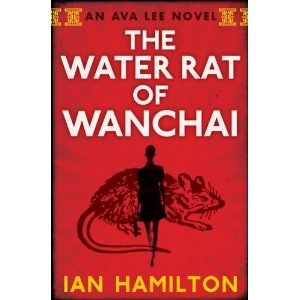
THE WATER RAT OF WANCHAI: AN AVA LEE NOVEL by Ian Hamilton (ARC, forthcoming February 2011) House of Anansi Press


Ava Lee is a feisty, intelligent, resourceful and polite 30-year-old forensic accountant from Toronto who happens to be business partners with a septugenarian "Uncle" in Hong Kong who works unofficially on white collar crime and who may or may not have connections to the Chinese Triads.

At first glance, the petite, glamorous Ava seems physically unthreatening (immaculately groomed and fashionably dressed in Chanel), but as someone trained in the ancient and secret martial art of bak mei by Grandmaster Tang, she is her own lethal weapon.

When one of Uncle's old friends persuades him to help his nephew Andrew Tam, Ava is enlisted to find the missing money, a whopping five million dollars. The money trail takes Ava from the comfort of her Toronto condo to Hong Kong and into the arms of katoey culture and corrupt, but helpful, law enforcers. From Hong Kong Ava travels to Guyana where she meets her wily match in Captain Robbins, who also happens to have daughters back in Toronto, attending Havergal College, Ava's boarding school alma mater. Robbins, a former Bajan cop, and one of the few white men in Georgetown, looks and behaves like a mafia godfather. And, Ava is in the precarious position of needing to trust "The Captain" at his word.

Just as Ava is closing the deal with a bank in the British Virgin Islands and hoping to return the missing funds in full to her client in Hong Kong, Captain Robbins, through his equally corrupt and menacing younger brother Jack, turns the tables on her and she finds herself needing to access all of her resources with the hope of making it off the island without her Canadian passport and returning home to Toronto where she'll contemplate taking Uncle's next great case.

In Ava Lee, Ian Hamilton has created an appealing and memorable heroine with a voice as fresh as Alan Bradley's Flavia de Luce in his debut novel THE SWEETNESS AT THE BOTTOM OF THE PIE.

As the first mystery in House of Anansi's SPIDERLINE imprint, THE WATER RAT OF WANCHAI has introduced me to an intelligent, feisty and impeccably polite woman who is sure to have my attention with each subsequent adventure in the Ava Lee series. And, I'll only have to wait until July 2011 to join Ava on her next journey, all of her resources in tact. How clever of Senior Editor Janie Yoon to see the promise in this series. It is sure to become a beloved blockbuster.

Saturday, January 22, 2011

TETHERED by Amy MacKinnon (2008) Random House


Has a book ever made its way to your hands and then inched its way into your heart, leaving an indelible mark?

After hearing about TETHERED from the Friday Reads meme on Twitter I special ordered a copy from one of my favourite independent booksellers here in Toronto and I picked it up on Thursday after work. Because Nicholas Hoare Books is down at the foot of the city, I ended up taking the Queen streetcar home which gave me almost an hour to immerse myself in the exquisitely created broken lives of Amy MacKinnon's characters, characters who seemed so frankly familiar to me.

The tenderness with which protagonist Clara, a mortician, prepares the corpse of a cancer victim in the opening scene had me weeping openly, not only from the care with which the moment is rendered but from the recognition of such an imagined kindness performed on the bodies of my brother and my grandparents after their deaths. Those unfamiliar with the business of preparing bodies for burial or cremation might find the visceral description almost untenable, but as the title implies, as a reader you will be tethered to that moment.

There were revelations throughout this sensitive and shocking novel that I felt as if MacKinnon were peeling back secrets of my past, my family's history. Like Clara, my mother lost her mother as a young child. In fact, her only distinct memory is approaching the open casket, with violets gripped in her furled three-year-old hand, made to put the flowers in with her mother's cancer-ridden chilled corpse, grazing those frozen fingers. And, like Clara, I too tore out clumps of hair as a child (apparently in my sleep), leaving spongy patches, scalp tattoos barely hidden by skillful parts. Something I had entirely forgotten until I read about it here and recognized myself with horror.

In funeral home director Linus, MacKinnon has created someone immediately knowable to me: a man who understands the privilege of his position and his role as pragmatic comforter in chief to the recently bereaved. A man who can reassure those in acute emotional distress because he has walked the walk himself through the unexpected loss of his only son.

When Clara discovers Trecie, a neglected little girl who seeks refuge in the funeral home, she reluctantly befriends her, wary of the emotional truths that will be revealed, both about Trecie and about herself. And, when Detective Mike Sullivan, no stranger to loss himself, starts prodding Clara about an unidentified child's corpse she prepared three years' previous, she finds her life shift in a profound way.

From the opening gambit to the immensely satisfying end, with life-threatening and life-changing detours along the way, TETHERED is a haunting debut, rife with man's inhumanity to man and the determination of those who are essentially good and true to abide by what is right.

THE MIDWIFE OF VENICE by Roberta Rich (from the ARC, on sale February 2011) Doubleday Canada


THE MIDWIFE OF VENICE is Roberta Rich's glorious debut novel.

Hannah Levi, a young married Jewish woman, is known for her midwifery skills throughout 16th century Venice. When a Christian nobleman arrives at her ghetto door under the cloak of night, imploring Hannah to aid his dying wife, believing that she is their only true hope of a safe delivery, Hannah's faith is tested. As her aging rabbi reminds her, for a Jew to minister to a Christian is not only against the law, but also punishable by torture and death.

Then the Conte offers Hannah an unthinkable sum of money, an amount so generous that Hannah could possibly buy back her husband's life from the Knights of St. John by whom he has been captured and forced into slavery in Malta months before. Hannah is willing to take the risk of not being able to save the Contessa's and her baby's life and being caught ministering to a labouring Christian woman in order to live with the real hope that she will be reunited soon with Isaac, her true love.

Complicating Hannah's journey are the toxic younger brothers of the Conte who are threatened by the idea of an heir to their brother's estate (let alone a living, breathing one) and the sweeping presence of the plague that fills barges daily with diseased corpses of old and young alike.

Written with an eye for relevant historical detail and a capacity for rich sensory experiences exquisitely rendered, THE MIDWIFE OF VENICE surprised me at every narrative turn. Robert Rich is a novelist to watch.

Tuesday, January 18, 2011

TELL NO ONE by Harlan Coben (2001) Random House


Harlan Coben is a new-to-me crime fiction writer. I have become familiar with his name through Twitter where his fellow novelist Alafair Burke (with whose work I am happily familiar and utterly committed as a reader) has commented about his writing and what a swell guy he is and where I also follow his 140-character tweets @HarlanCoben. Last week I was talking up Alafair Burke's books to a colleague and he just happened to recommend Coben and offered to loan me his favourite: TELL NO ONE.

As part of the Criminal Plots Reading challenge, Coben's TELL NO ONE serves as the book by an author who has blurbed a crime novel I've already read--in my case the overexposed Stieg Larsson's THE GIRL WITH THE DRAGON TATTOO.

TELL NO ONE follows Dr. David Beck, a widower who continues to grieve the loss of his wife Elizabeth eight years after the traumatic evening he heard her piercing screams and she was abducted, the last night he saw her alive. His friends worry about Beck and encourage him to accommodate Elizabeth's loss in his life and move on. Beck immerses himself in his work as a pediatrician who serves a slum community where many of the parents he sees are children themselves.

However, one day Beck receives an enigmatic message on his work computer and the content of that message opens up a sliver of hope that perhaps Elizabeth isn't dead after all. Beck becomes obsessed with the idea that Elizabeth's death was a hoax and he enlists his sister's partner Shauna (his university roommate and most trusted friend) to help him puzzle out the truth.

In a story that Dennis Lehane calls "an exhilarating, bang-up, Porsche turbo of a novel," Coben unravels a narrative with twists and turns that take you to the precipice at Beck's side wondering how he will ever possibly elude the gangsters and federal officers who now pursue him with equal zeal.

This first exposure to Coben's style has me convinced to read my way through all of his novels, looking forward to what I expect to be gripping, intelligent, morally-driven stories that matter.

Saturday, January 15, 2011

THE GUARDIANS by Andrew Pyper (2011) Doubleday Canada


The launch of a new Andrew Pyper title is cause for excitement for fans of smart literary thrillers. I've been shoving copies of Pyper's books into the hands of discerning readers for years: LOST GIRLS, THE TRADE MISSION, WILDFIRE SEASON, THE KILLING CIRCLE and now THE GUARDIANS. Each time I wonder, baited-breathedly, if the new novel will match the excitement, intelligence and sensitivity of the previous one and each time I am relieved and delighted to see that it does. And then some.

Trevor, Ben, Randy and Carl are boyhood friends and hockey teammates who grew up in a small Ontario town in the 1970s and are bound by ties that they don't yet fully understand. Now, in their early 40s, the four come together again on the sad occasion of Ben's accidental death. Trevor, recently diagnosed with early onset Parkinson's Disease, has already come face to face with the idea of his own mortality through his trembling limbs. When he reunites first with Randy, and later with Carl, the unspoken specter from their past becomes prescient in their present.

With breathtaking tension and a capacity to reveal human frailty, Pyper leads you by the hand alongside these broken men towards their path of redemption.

As someone who believes that Pyper is already writing at the top of his game, there simply aren't enough superlatives to shout from the rooftops about THE GUARDIANS. If you haven't already found your way to Andrew Pyper's books, well, isn't it just about time?