Sunday, January 30, 2011

GONE FOR GOOD by Harlan Coben (2002) Dell Publishing


Eleven years ago Will Klein's first love, Julie Miller, was murdered in the basement of her parents' home, in the New Jersey neighborhood where they grew up. The suspected killer: Will's beloved older brother Ken. Then 24, Ken disappeared, managing to evade an international search. Will has never believed that Ken was capable of such violence, plus he happened to see another figure lurking about the Millers' home the night of the murder and he's pretty sure he knows who it was.

Now Will's mother Sunny is dying of cancer and confides to him on her deathbed that she knows Ken is alive. Will is perplexed by his mother's insistence, but when he discovers a hidden photograph in her bedside table drawer, he begins to think that perhaps his brother is not gone for good.

Will works at Covenant House in Manhattan, a respite for homeless youth. There he met the second love of his life, Sheila Rogers. Sheila has alluded to a difficult past of her own, but refuses to offer up any details. Shortly after Will's mom dies, Sheila disappears from Will's life, leaving a note that says "I will always love you."

After a threatening visit by a ghost from his past, John Asselta, Will turns to his friend "Squares," a hardened criminal turned Yogic guru, for help. Squares and Will embark on a journey that leads them to explore the darkness in Sheila's past and her apparent ties to Will's missing brother Ken. The FBI gets involved as well as a coterie of threatening thugs from Will's past. With heart-pounding speed and adrenaline-stoked narrative twists and turns, Coben spirits you along the perplexing path to Will's complicated future.

Friday, January 28, 2011

THE FATES WILL FIND THEIR WAY by Hannah Pittard (2011) Ecco


Told in the bewildered third person plural, THE FATES WILL FIND THEIR WAY contemplates the disappearance of 16-year-old Nora Lindell one Halloween, from the perspective of the teenaged boys in her life, not only at the time of Nora's likely abduction, but also later in their lives as young married men with children of their own. Their collective guilt at not being able to find Nora and keep her safe leads to magical thinking about the life she may well have found without them.

Because the imagined reality of Nora's abduction and subsequent torture is too painful to conceive, the boys spin an alternative life for her where she is pregnant with twin girls and waiting tables at a restaurant in Arizona. There she's hired without any previous experience because she tells the manager "I'm a blank slate. Teach me and I'll do exactly what you say." Nora falls for the old Mexican cook, a man so unlike the boys in his tenderness and desire to care for Nora and her babies.

The boys keep secrets, or at least try to, as they grow up with Nora's absence a haunting presence in their lives. Like the time Danny Hatchet accidentally killed the Wilsons' lab or the creepy shenanigans of the Junior year boys in the balcony at the film night that especially traumatized a group of girls. They also confide in each other about terrible truths including a mom's suicide and an adult friend's Lolita-fueled fantasy about one of their own daughters.

We ride side by side with these boys from their confusing Senior year in High School to the cusp of their 45th birthdays and attend the funerals of parents and classmates along the way. All the while we wonder, like them, if Nora could have possibly found an alternative life blossoming with love, even though the cold hard facts reveal a life snuffed out at its height of promise.

THE FATES WILL FIND THEIR WAY will remind you of your own adolescence in its heady confusion and equal dreaminess: a shared belief in the possibility of a fantastic future that will be realized in spite of any obstacles that may come your way. Through Pittard's masterful narrative I am haunted by a disappearance from my own childhood in the 1970s. Sally Ann Hanson, a country schoolgirl, disappeared when I was in Grade 4. Other than the imagined terror of her fate befalling any one of my classmates, I never considered a future for her. Until now.

This book has traction. I think it's going to be 2011's ROOM.

Monday, January 24, 2011

GREAT PHILOSOPHERS WHO FAILED AT LOVE by Andrew Shaffer (2011) Harper Perennial


Writer Andrew Shaffer is another Twitter find. You'll spot him there as himself @andrewtshaffer and also as the amusingly wicked aliases @EvilWylie and @EmperorFranzen, having outed himself in Galley Cat and then revealed more in a wonderful interview by @ninatypewriter. You don't need to be a big book geek like me, however, to enjoy Shaffer's fascinating debut GREAT PHILOSOPHERS WHO FAILED AT LOVE.

Anyone who has taken a philosophy 020 course as an undergrad will remember the names Aristotle, St. Augustine, Descartes, Engels, Goethe, Hegel, Hume, Locke, Rousseau and Sartre, but scratch the back of your brain and try to come up with something lasting that one of these guys has thought or said. Fret not. Their pithy remarks about love and women are conjured here in tantalizing entries. And, if you think you've made your fair share of mistakes on the love parade, be prepared to sit in the rumble seat, because the errors these great thinkers have made will push you further than a back-seat ride.

According to Diogenes the Cynic, Aristotle would "walk up and down discussing philosophy with his pupils until it was time to rub themselves with oil" while women were confined to the home and barred from public functions. After he indulged in "hellish pleasures" with his lover for more than a dozen years, St. Augustine's mother set HIM up with a "respectable woman" (a 10-year-old girl). And, then he converted to Catholicism. Camus was clear about his inability to love his wives or any other woman for that matter: "to love someone means to be willing to age with that person. I am not capable of such love." John Locke claimed that his "health...is the only mistress." Such a romantic.

The craziest, to me, however, is Ayn Rand, who when abandoned by her much younger lover (who happened to be heating it up with a fashion model at the same time) insisted, "The man to whom I dedicated Atlas Shrugged would never want anything less than me! I don't care if I'm ninety years old and in a wheelchair!" You see? Capital C-Crazy. Take solace. You may drink and dial, but you'll never be as mad in love as Ayn Rand.

Pick up GREAT PHILOSOPHERS WHO FAILED AT LOVE , sit back, relax and enjoy the deliciously lascivious and often kooky ride. Besides, it'll make you look good.

Sunday, January 23, 2011

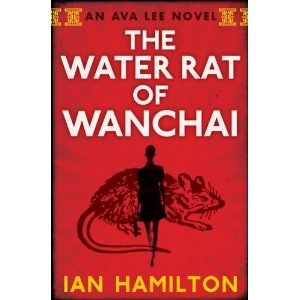
THE WATER RAT OF WANCHAI: AN AVA LEE NOVEL by Ian Hamilton (ARC, forthcoming February 2011) House of Anansi Press


Ava Lee is a feisty, intelligent, resourceful and polite 30-year-old forensic accountant from Toronto who happens to be business partners with a septugenarian "Uncle" in Hong Kong who works unofficially on white collar crime and who may or may not have connections to the Chinese Triads.

At first glance, the petite, glamorous Ava seems physically unthreatening (immaculately groomed and fashionably dressed in Chanel), but as someone trained in the ancient and secret martial art of bak mei by Grandmaster Tang, she is her own lethal weapon.

When one of Uncle's old friends persuades him to help his nephew Andrew Tam, Ava is enlisted to find the missing money, a whopping five million dollars. The money trail takes Ava from the comfort of her Toronto condo to Hong Kong and into the arms of katoey culture and corrupt, but helpful, law enforcers. From Hong Kong Ava travels to Guyana where she meets her wily match in Captain Robbins, who also happens to have daughters back in Toronto, attending Havergal College, Ava's boarding school alma mater. Robbins, a former Bajan cop, and one of the few white men in Georgetown, looks and behaves like a mafia godfather. And, Ava is in the precarious position of needing to trust "The Captain" at his word.

Just as Ava is closing the deal with a bank in the British Virgin Islands and hoping to return the missing funds in full to her client in Hong Kong, Captain Robbins, through his equally corrupt and menacing younger brother Jack, turns the tables on her and she finds herself needing to access all of her resources with the hope of making it off the island without her Canadian passport and returning home to Toronto where she'll contemplate taking Uncle's next great case.

In Ava Lee, Ian Hamilton has created an appealing and memorable heroine with a voice as fresh as Alan Bradley's Flavia de Luce in his debut novel THE SWEETNESS AT THE BOTTOM OF THE PIE.

As the first mystery in House of Anansi's SPIDERLINE imprint, THE WATER RAT OF WANCHAI has introduced me to an intelligent, feisty and impeccably polite woman who is sure to have my attention with each subsequent adventure in the Ava Lee series. And, I'll only have to wait until July 2011 to join Ava on her next journey, all of her resources in tact. How clever of Senior Editor Janie Yoon to see the promise in this series. It is sure to become a beloved blockbuster.

Saturday, January 22, 2011

TETHERED by Amy MacKinnon (2008) Random House


Has a book ever made its way to your hands and then inched its way into your heart, leaving an indelible mark?

After hearing about TETHERED from the Friday Reads meme on Twitter I special ordered a copy from one of my favourite independent booksellers here in Toronto and I picked it up on Thursday after work. Because Nicholas Hoare Books is down at the foot of the city, I ended up taking the Queen streetcar home which gave me almost an hour to immerse myself in the exquisitely created broken lives of Amy MacKinnon's characters, characters who seemed so frankly familiar to me.

The tenderness with which protagonist Clara, a mortician, prepares the corpse of a cancer victim in the opening scene had me weeping openly, not only from the care with which the moment is rendered but from the recognition of such an imagined kindness performed on the bodies of my brother and my grandparents after their deaths. Those unfamiliar with the business of preparing bodies for burial or cremation might find the visceral description almost untenable, but as the title implies, as a reader you will be tethered to that moment.

There were revelations throughout this sensitive and shocking novel that I felt as if MacKinnon were peeling back secrets of my past, my family's history. Like Clara, my mother lost her mother as a young child. In fact, her only distinct memory is approaching the open casket, with violets gripped in her furled three-year-old hand, made to put the flowers in with her mother's cancer-ridden chilled corpse, grazing those frozen fingers. And, like Clara, I too tore out clumps of hair as a child (apparently in my sleep), leaving spongy patches, scalp tattoos barely hidden by skillful parts. Something I had entirely forgotten until I read about it here and recognized myself with horror.

In funeral home director Linus, MacKinnon has created someone immediately knowable to me: a man who understands the privilege of his position and his role as pragmatic comforter in chief to the recently bereaved. A man who can reassure those in acute emotional distress because he has walked the walk himself through the unexpected loss of his only son.

When Clara discovers Trecie, a neglected little girl who seeks refuge in the funeral home, she reluctantly befriends her, wary of the emotional truths that will be revealed, both about Trecie and about herself. And, when Detective Mike Sullivan, no stranger to loss himself, starts prodding Clara about an unidentified child's corpse she prepared three years' previous, she finds her life shift in a profound way.

From the opening gambit to the immensely satisfying end, with life-threatening and life-changing detours along the way, TETHERED is a haunting debut, rife with man's inhumanity to man and the determination of those who are essentially good and true to abide by what is right.

THE MIDWIFE OF VENICE by Roberta Rich (from the ARC, on sale February 2011) Doubleday Canada


THE MIDWIFE OF VENICE is Roberta Rich's glorious debut novel.

Hannah Levi, a young married Jewish woman, is known for her midwifery skills throughout 16th century Venice. When a Christian nobleman arrives at her ghetto door under the cloak of night, imploring Hannah to aid his dying wife, believing that she is their only true hope of a safe delivery, Hannah's faith is tested. As her aging rabbi reminds her, for a Jew to minister to a Christian is not only against the law, but also punishable by torture and death.

Then the Conte offers Hannah an unthinkable sum of money, an amount so generous that Hannah could possibly buy back her husband's life from the Knights of St. John by whom he has been captured and forced into slavery in Malta months before. Hannah is willing to take the risk of not being able to save the Contessa's and her baby's life and being caught ministering to a labouring Christian woman in order to live with the real hope that she will be reunited soon with Isaac, her true love.

Complicating Hannah's journey are the toxic younger brothers of the Conte who are threatened by the idea of an heir to their brother's estate (let alone a living, breathing one) and the sweeping presence of the plague that fills barges daily with diseased corpses of old and young alike.

Written with an eye for relevant historical detail and a capacity for rich sensory experiences exquisitely rendered, THE MIDWIFE OF VENICE surprised me at every narrative turn. Robert Rich is a novelist to watch.

Tuesday, January 18, 2011

TELL NO ONE by Harlan Coben (2001) Random House


Harlan Coben is a new-to-me crime fiction writer. I have become familiar with his name through Twitter where his fellow novelist Alafair Burke (with whose work I am happily familiar and utterly committed as a reader) has commented about his writing and what a swell guy he is and where I also follow his 140-character tweets @HarlanCoben. Last week I was talking up Alafair Burke's books to a colleague and he just happened to recommend Coben and offered to loan me his favourite: TELL NO ONE.

As part of the Criminal Plots Reading challenge, Coben's TELL NO ONE serves as the book by an author who has blurbed a crime novel I've already read--in my case the overexposed Stieg Larsson's THE GIRL WITH THE DRAGON TATTOO.

TELL NO ONE follows Dr. David Beck, a widower who continues to grieve the loss of his wife Elizabeth eight years after the traumatic evening he heard her piercing screams and she was abducted, the last night he saw her alive. His friends worry about Beck and encourage him to accommodate Elizabeth's loss in his life and move on. Beck immerses himself in his work as a pediatrician who serves a slum community where many of the parents he sees are children themselves.

However, one day Beck receives an enigmatic message on his work computer and the content of that message opens up a sliver of hope that perhaps Elizabeth isn't dead after all. Beck becomes obsessed with the idea that Elizabeth's death was a hoax and he enlists his sister's partner Shauna (his university roommate and most trusted friend) to help him puzzle out the truth.

In a story that Dennis Lehane calls "an exhilarating, bang-up, Porsche turbo of a novel," Coben unravels a narrative with twists and turns that take you to the precipice at Beck's side wondering how he will ever possibly elude the gangsters and federal officers who now pursue him with equal zeal.

This first exposure to Coben's style has me convinced to read my way through all of his novels, looking forward to what I expect to be gripping, intelligent, morally-driven stories that matter.

Saturday, January 15, 2011

THE GUARDIANS by Andrew Pyper (2011) Doubleday Canada


The launch of a new Andrew Pyper title is cause for excitement for fans of smart literary thrillers. I've been shoving copies of Pyper's books into the hands of discerning readers for years: LOST GIRLS, THE TRADE MISSION, WILDFIRE SEASON, THE KILLING CIRCLE and now THE GUARDIANS. Each time I wonder, baited-breathedly, if the new novel will match the excitement, intelligence and sensitivity of the previous one and each time I am relieved and delighted to see that it does. And then some.

Trevor, Ben, Randy and Carl are boyhood friends and hockey teammates who grew up in a small Ontario town in the 1970s and are bound by ties that they don't yet fully understand. Now, in their early 40s, the four come together again on the sad occasion of Ben's accidental death. Trevor, recently diagnosed with early onset Parkinson's Disease, has already come face to face with the idea of his own mortality through his trembling limbs. When he reunites first with Randy, and later with Carl, the unspoken specter from their past becomes prescient in their present.

With breathtaking tension and a capacity to reveal human frailty, Pyper leads you by the hand alongside these broken men towards their path of redemption.

As someone who believes that Pyper is already writing at the top of his game, there simply aren't enough superlatives to shout from the rooftops about THE GUARDIANS. If you haven't already found your way to Andrew Pyper's books, well, isn't it just about time?

Friday, January 14, 2011

THE SENTIMENTALISTS by Johanna Skibsrud (2009) Gaspereau Press


Let me begin by confessing that I have an M.A. in English Literature and that the time I spent in graduate school has me predisposed to perhaps not only read fiction regarded dull by others, but also perversely to seem to enjoy it.

When Johanna Skibsrud was named the recipient of the 2010 Scotiabank Giller Prize (ostensibly the finest book of fiction published in Canada in a given year) by the three-member jury of broadcaster Michael Enright and novelists Claire Messud and Ali Smith, I was curious to read her novel THE SENTIMENTALISTS. Published by Gaspereau Press, a small east-coast firm that takes pride in its fine product, this novel was the talk of the town last fall because another house joined Gaspereau to keep up with the demand for copies after Skibsrud was crowned the Giller Princessa in November.

Before opening THE SENTIMENTALISTS I'd already read three of the other four short-listed titles: Kathleen Winter's ANNABEL, Sarah Selecky's THIS CAKE IS FOR THE PARTY and Alexander MacLeod's LIGHT LIFTING. Each of those three books impressed me both stylistically and in terms of engaging storytelling. I couldn't imagine, really, how the winner could be decidedly more accomplished.

Well, I was right about that.

THE SENTIMENTALISTS is clunky and dull and wants for narrative drive until page 109 (out of 218 pages) where the pace is at least lively and the characters temporarily engaging. The Epilogue is a tagged on interview that for me was an irritant and did not contribute to my greater understanding of the protagonist and his demons.

In a season in which there were such strong titles as Steven Heighton's EVERY LOST COUNTRY and Alison Pick's FAR TO GO that were neglected by the shortlist makers, I am truly baffled as to why this book made it to the top of the list.

If you disagree with me, please let me know. I would like to try to understand what I missed.

Wednesday, January 12, 2011

IN HER SHOES by Jennifer Weiner (2002) Simon and Schuster


If I happen to be online while Jennifer Weiner is live-tweeting episodes of THE BACHELOR, I am sure to be amused by her wit and snark, which is why I ordered this novel from her chick lit canon last week.

I have not seen the Hollywood movie adaptation starring Cameron Diaz and Toni Collette, so I happily leapt between these pages without any expectation other than being entertained by the story.

Rose and Maggie Feller are sisters with not much more in common than their shoe size and DNA. Rose is a Princeton-educated (like Weiner herself) attorney making her way in a Philadelphia law firm and her younger sister Maggie is a fly-by-the-seat-of-her-pants 20-something stunner who makes most hetero men's heads swivel when she enters a room.

When Maggie yet again oversteps her mark in Rose's life, this time her transgression is not so easily forgiven. Yet, Maggie is a survivor and manages to find her way into the Florida retirement community where her estranged grandmother Ella lives and there discovers truths about herself and a way back to the present where she is able to make amends with Rose after all.

I enjoyed witnessing Maggie's emotional growth through her service to Corinne, a blind woman who lives near the Princeton campus where Maggie is squatting in a library and through the rapport she builds with the retired folk in her grandmother's community. It is amazing what we are all capable of when we finally find the courage to be ourselves.

Friday, January 07, 2011

MORDECAI: THE LIFE & TIMES by Charles Foran (2010) Knopf Canada


MORDECAI: THE LIFE & TIMES is a brick of a book at 717 pages, but this exhaustive and engaging biography of the Canadian literary icon is worth every minute that you will spend in its heady company.

As Booker-Prize-winning novelist Yann Martel explains in his cover blurb, "Charles Foran vividly renders the life of Mordecai Richler, in all his complexity and with all his contradictions." Foran had unlimited access to Richler's archives both public and private thanks to the generosity of his widow Florence and this accessibility combined with Foran's own talent as a storyteller (he's published nine books of fiction/nonfiction) has produced the definitive biography of an indefinable character.

Foran is careful to balance Richler's public irascibility with the private tenderness of a father to five remarkably creative children (Daniel, Noah, Emma, Martha & Jacob) and the old-fashioned devoted husband to the woman he most respected and loved, Florence Mann. In understanding Richler's family history, and specifically those in-your-face coming-of-age years in Montreal, Foran has provided the falsework for all of the novels. And, in so doing has made me want to revisit THE APPRENTICESHIP OF DUDDY KRAVITZ, SOLOMON GURSKY WAS HERE & BARNEY'S VERSION for starters.

Travel to London and Paris with twenty-something Mordecai and mingle with legendary editor Diana Athill, expat fiction writer Mavis Gallant, fellow novelist Brian Moore and rising film star Sean Connery. Find out how Richler believed that Pierre Trudeau "could never be elected Prime Minister," how he championed THE WORLD ACCORDING TO GARP by a young novelist named John Irving, and why he regarded Brian Mulroney as one of the finest liars of all time "who lied even when it wasn't necessary just to keep in shape, his voice, a dead give-away, sinking into his Guccis whenever he was about to deliver one of his whoppers."

I really loved this book and hope that it will be named the recipient of this year's BC National Award for Canadian Nonfiction later this month as well as a contender for the Charles Taylor Prize for literary nonfiction not to mention make its way into the hands of grateful readers keen to read a real story well told.

GROWING UP JUNG: COMING OF AGE AS THE SON OF TWO SHRINKS by Micah Toub (2010) Doubleday Canada


I received this copy of Micah Toub's memoir from @cbcbooks for tweeting book reviews to their feed. Having recently taught Catherine Gildiner's SEDUCTION and introduced students to the theories of Freud and Jung, I was happy to thumb my way through GROWING UP JUNG and relieved that I hadn't shared Toub's coming-of-age experiences.

Toub admits that some of the time what his Jungian therapist parents shared with him and his half sister was often flaky, but also occasionally profound. However, I can't ever imagine the mental health benefits of discussing my sex life with my mother as Toub so readily did with his mom who insisted that he "BE the penis." Or, that pursuing an active "animus" could lead the "synchronicity" of a fiancé.

What I did enjoy about Toub's narrative was the frankness with which he wrote and the Jungian theory refresher that reminded me why I had at one time been drawn to Jung's ideas about dreams and the shadow self.

Micah Toub writes a biweekly column about relationships from a male perspective for THE GLOBE AND MAIL and may be followed on Twitter @MicahToub.

Wednesday, January 05, 2011

A COLD NIGHT FOR ALLIGATORS by Nick Crowe from the ARC (due Feb 8, 2011) Knopf Canada


First time novelist Nick Crowe, one of Random House/Knopf Canada's New Faces of Fiction for 2011, opens his tale with a scene that will be a familiar worry to many city commuters, at least those who travel to and from work as I do along the subterranean trail of the TTC. Our 20-something narrator Jasper observes with curiosity a man on the subway platform. And the scratch at the back of his brain tells him to be wary, but not before this stranger pushes him into the charging path of the incoming train.

Seven months later Jasper wakes up from a coma and becomes preoccupied with the disappearance of his older brother Coleman 10 years previous. On his birthday Jasper receives a phone call, but on the other end of the line there's only silence. Not ready to return to work, he embarks upon a southward journey with unconventional companions, Donny (Jasper's ex-girlfriend's devout new flame) and Duane who are planning to participate in a fishing derby en route to Florida where Jasper hopes beyond hope to get a trail on Coleman.

Eventually reunited with his mom's sister, Aunt Val, and her lazy, meth-addled and brutal husband Rolly Lee, Jasper begins to discover that his past perceptions that protected him through the lens of childhood memory are not necessarily reliable.

Through flashbacks of his family vacations to Florida where "watching the sunrise from the back of a station wagon... is a very fine thing indeed" and memories of Coleman's idiosyncracies before he disappeared, Jasper moves closer to the emotional truth and comes face to face with loss in his life.

A COLD NIGHT FOR ALLIGATORS made me squeamish at times with its moments of gratuitous violence, but I couldn't put the book down.

Tuesday, December 28, 2010

A VISIT FROM THE GOON SQUAD by Jennifer Egan (2010) Knopf


A VISIT FROM THE GOON SQUAD is my first exposure to Jennifer Egan, but it certainly won't be my last. I'll be shuffling through her backlist as soon as my local library branch can source each title. Her narrative is smart and her prose clean and sometimes startling.

The novel weaves together the stories of Bennie Salazar, a 60-something NYC record exec with a punk rocker past, with Sasha, his glamorous and competent assistant with a storied past of her own that includes kleptomania, anorexia and more than one attempt at suicide. And, although Bennie and Sasha are oblivious about the essential details of each others' complicated lives, we are party to every secret along the way from a family safari in Africa to getting lost and found in Naples, Italy to San Francisco's punk scene in the early 70s and New York City today.

There are supporting characters that move in and out of Bennie's and Sasha's lives and the gaps between their entrances and exits serve as musical rests in the symphony of each life. We come to understand that the silences are as resonant as the notes themselves. Sasha's 13-yr-old son Lincoln is obsessed with the pauses in songs and it is his obsession that leads Sasha to realize, "the pause makes you think the song will end. And then the song isn't really over, so you're relieved. But then the song does actually end because every song ends, obviously, and THAT. TIME. THE. END. IS. FOR. REAL."

Egan uses a variety of narrative techniques that embrace and satirize contemporary forms including texting and PowerPoint. For me, each page was a revelation, a pause on each character's path to redemption. Isn't that what we all yearn for?

Friday, December 24, 2010

STARTED EARLY, TOOK MY DOG by Kate Atkinson (2010) Bond Street Books


After another masterful turn with WHEN WILL THERE BE GOOD NEWS?, Kate Atkinson offers a new literary thriller featuring Jackson Brodie, her now retired detective who manages to find himself in the thick of it in Leeds while he's innocently researching a private client's mysterious past.

There are three narrative threads in STARTED EARLY, TOOK MY DOG: Tracy Waterhouse is a retired Police Superintendent now passing the time as the chief of security at a shopping complex; Tilly is a septogenarian actress suffering the early stages of dementia and playing the heart-throb's mother in COLLIER, a t.v. show; and, Jackson Brodie is the familiar rough around the edges divorced and retired detective, "drifting, as a tourist in his own country" when he witnesses the cruel and unusual punishment of a lively little terrier and decides that a "small,helpless dog seemed like a good place to draw the line" about violence.

When Tracy makes a Faustian deal with a known prostitute and her transaction is witnessed by both Tilly and Jackson, their trajectories become entwined and all three soon come to realize that no good deed goes unpunished.

Atkinson creates credible responses to incredible circumstances for each of her characters and her command of storytelling sets her up to rival the best writing today. In Kate Atkinson's world there is wit and wisdom and fierce moral intelligence. You will always be satisfied by the way she weaves her tale.

Wednesday, December 22, 2010

TOUCH by Alexi Zentner (from the ARC) due April 2011 from Knopf Canada


Alexi Zentner is one of Random House of Canada's 2011 New Faces of Fiction and if you are the kind of reader who yearns for a lyrical tale well told, this novel is for you. With such lush, sophisticated and haunting prose, it's hard to believe that this is Zentner's first one.

TOUCH opens in a logging village in Northern BC in the early 20th century where the narrator Stephen (now an Anglican priest with a family of his own) is his boyhood self watching his foreman father standing "at the top of the chute hollering at the men and shaking his mangled hand, urging them on." In that distant past Stephen shows us the heart of the loss of his childhood, an incident that resonates in every winter landscape. And, there we meet his grandfather Jeannot, a tough and mysterious giant in Stephen's memory, a man whose convictions hide behind Stephen's adult faith and doubt.

As I was reading, I couldn't help but think of Joseph Boyden's THREE DAY ROAD and the way that it honours Native spirituality and the healing power of stories through the tales Niska tells her nephew on their final journey home. Here Zentner does the same by giving equal measure to Jeannot's wild beliefs as he does to Stephen's more conventional ones, honed as a chaplain on the WWI Front from which he returned, "getting off the ship the day the Treaty of Versailles was signed."

The novel shifts seamlessly back and forth between past and present, a present wherein Stephen has returned to his childhood village to bear witness to his ailing mother's death, to deliver her eulogy, and to take over his stepfather's responsibilities as the pastor of the Anglican Church in Sawgamet. Stephen admits (and this is the heart of this marvelous book), "no matter how many times my thoughts returned to the winter I was ten, no matter how many questions I asked my mother as she lay dying, no matter how many stories I have heard about my father and grandfather, there are still so many things I will never know."

There are still so many things I will never know, but in reading TOUCH I am a little bit closer to their truth.

Tuesday, December 21, 2010

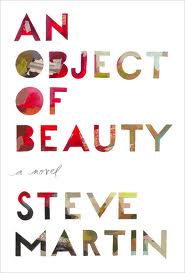
AN OBJECT OF BEAUTY by Steve Martin (2010) Grand Central Publishing


Is there anything this Renaissance man cannot do? He can go toe to toe with Alec Baldwin for Meryl Streep's affection in IT'S COMPLICATED, make a mean chocolate croissant from scratch, and date Liz Lemon as the pathological liar Gavin Velour in a guest starring spot on 30 ROCK. And, didn't he just win a Grammy for plinking his banjo and also publish a New York Times bestseller in the same year?

I've long admired Steve Martin's writing, having read both his fiction (PICASSO AT THE LAPIN AGILE, SHOPGIRL, THE PLEASURE OF MY COMPANY) and his nonfiction (BORN STANDING UP), so was excited to see that he had a new novel out this fall.

AN OBJECT OF BEAUTY transports you into the idiosyncratic world of art collectors and offers an Art History 101 course replete with colour panels of important paintings while you're along for the heady ride.

Daniel Franks, who is true to his family name, is our reliable narrator who tells the story of Lacey Yeager, a one-time lover and longtime friend who is a clever and captivating student of the NYC art world into which she hurls herself in the early 90s. Apprenticing in the dungeons at Sotheby's, cataloguing, Lacey soon finds a way to move up the corporate ladder and then out into the world of boutique Manhattan galleries frequented by both the rich and famous who are eager to add to their burgeoning collections. With a shrewd investment of a Warhol that she purchases for a song and then parlays into real money, Lacey makes her way, toppling romantic entanglements that seem to take up just too much of her time.

Lacey is plucky and intelligent and not often easy to like in her narcissism, but as her former lover Patrice explains near the end of the tale, "I think Lacey is the kind of person who will always be okay."

Three things I did not expect and was delighted to find in this wonderful romp: a John Updike cameo, an allusion to HAMLET, and a renewed interest in the paintings of Rockwell Kent. If you are looking for a smart, elegant read that immerses you in NYC's tony art community, AN OBJECT OF BEAUTY is the novel for you.

Sunday, December 19, 2010

COAL DUST KISSES: A CHRISTMAS MEMOIR by Will Ferguson (2010) Penguin Canada


Will Ferguson has been awarded the Leacock Medal for Humour for previous books, including his travelogue BEAUTY TIPS FROM MOOSEJAW which has some of the most hilarious situational pieces you will ever read.

I am always on the lookout for little Christmas stories to use as stocking stuffers and was pleased to find his COAL DUST KISSES to add to my preferred collection that includes Alistair MacLeod's exquisite holiday fare TO EVERY THING THERE IS A SEASON. Like the MacLeod book that includes hand drawn illustrations, Ferguson's Christmas memoir has lovely complementary pen & ink drawings by Marie-Eve Tremblay.

In this charming little tale, Ferguson traces the tradition of coal dust kisses that originated with his Scottish grandfather and travels through the generations and across the continents where Ferguson finds himself building his own life first in the North, then in Equador, in southern Japan and finally in Cape Breton. COAL DUST KISSES is just the right elixir of nostalgia, forgiveness and storytelling magic.

SKIPPY DIES by Paul Murray (2010) Hamish Hamilton


Paul Murray's boys' boarding school bildungsroman, SKIPPY DIES, has been on my must-read list for several weeks now and on my radar since it made the Man Booker Longlist alongside Emma Donoghue's ROOM earlier this year. It's a brick at 600+ pages, so I needed chunks of dedicated time to inch my way through it--the first few days of our school break have afforded me that luxury.

Since I teach at a school for boys, I expected to find familiar territory between the covers, but not so much that I would feel Murray were writing directly to me. How often do you pick up a book and feel the author reaching out from the pages to make your particular acquaintance? That is what Murray has done for me in this big, sad, boisterous, beautiful book about the idiosyncratic community of teachers and students and the Old Boy network that supports both.

As its title declares, Daniel "Skippy" Juster dies and that death is no surprise as we see it played out in the opening pages. What is more surprising is the palpable tension with which Murray reveals the circumstances that lead to this athlete's unexpected passing that unravel over the remaining 650 pages.

As much as the story had me in its thrall, and the characters felt astonishingly familiar, it was Murray's language play and observations about human frailty that captivated me throughout the novel. When you spend your days in the company of teenaged boys, you will catch gems like, "Mermaids don't have beavers, you clown. Even if you were amphibious you couldn't have sex with them." Or, "If James Clerk Maxwell had said, 'more beaver, less maths,' we wouldn't have electricity. Maths and the universe go hand in hand." The president of Dublin's tony Seabrook School for Boys is "one of those sleek, silver-haired, ageless men who manage to connote prestige and power without having expressed a single memorable thought." And, working for a school where the parents are also the clients, you might agree with snarky Father Green, "Ah yes. Go easy: the motto of the age. For these children, as for their parents, everything must be easy." And, when Old Boys return to their alma mater for events, "each reintroduction repeated a truth at once shocking and totally banal: people grow up and become orthodontists." Yet, "once you've seen someone firing peas out of his nostril, it's difficult to take him seriously as a hedge fund manager." I know this to be true.

One of the final thoughts is given appropriately to Lori (Skippy's own dying wish involved her) who is puzzling out her existence: "Maybe instead of strings, it's stories things are made of, an infinite number of tiny vibrating stories; once upon a time they all were part of one big giant superstory, except it got broken in a jillion different pieces, that's why no story on its own makes any sense, and so what you have to do in a life is try and weave it back together, my story into your story...until you've got something that...might look like a letter or even a whole word."

This novel is not for the weak of heart. There are genuinely loathsome characters that will make your smacking hand itch. But, the way that Ruprecht, Skippy and their peculiar coterie of boarding school chums struggle to find belonging will be familiar and make you grateful that that particular tumultuous time is decidedly in your past.

Saturday, December 18, 2010

THE GREAT GATSBY by F. Scott Fitzgerald (1925)


There are some books that bear rereading over and over again. THE GREAT GATSBY is one of them. It resonates with me now in ways that I never could have understood when I first read it at sixteen. And, I am gobsmacked by Fitzgerald's prose--its rhythm and beauty.

About the original cover (pictured above) Hemingway wrote in A MOVEABLE FEAST: "It had a garish dust jacket and I remember being embarrassed by the violence, bad taste and slippery look of it...for a book of bad science fiction. Scott told me not to be put off by it, that it had to do with a billboard along a highway in Long Island that was important in the story."

Read each of these passages and marvel at their grace and accuracy. Kissing Daisy for the first time is a religious rite/ communion for Gatsby: "He waited, listening for a moment longer to the tuning-fork that had been struck upon a star. Then he kissed her."

When Nick arranges for Daisy to drop by his little cottage for tea one afternoon in order to meet Gatsby, he wonders if "perhaps my presence made them feel more satisfactorily alone."

Of the multitude of strangers who find themselves the beneficiaries of Gatsby's outlandish summer parties, Nick explains, "they came and went without having met Gatsby at all, came to the party with a simplicity of heart that was its own ticket of admission." And during those very fetes, "laughter is easier minute by minute, spilled with prodigality, tipped out at a cheerful word." Isn't Fitzgerald's prose gorgeous?

Consider this Romantic notion chronicling Gatsby's reunion with Daisy: "A universe of ineffable gaudiness spun itself out in his brain...and the moon soaked with wet light his tangled clothes upon the floor." Or that, "No amount of fire or freshness can challenge what a man can store up in his ghostly heart."

Reading THE GREAT GATSBY with the subtext of Fitzgerald's complicated life with his wife Zelda (and Hemingway's portrayal of her in "Hawks Do Not Share" and "A Matter of Measurements") adds another layer to Gatsby's desperate yearning to repeat his past.