Monday, November 16, 2009

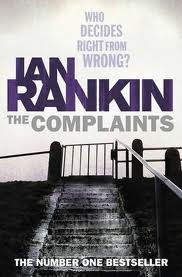
THE COMPLAINTS by Ian Rankin (2009)


Taking place over the course of 18 days in February in Edinburgh, this newest Rankin crime novel doesn't miss a note, even though I still pine for DI Rebus whom he stopped writing about two books ago in EXIT MUSIC.

Malcolm Fox is a more ordinary fellow, though like Rebus, he's not so lucky in love, having been divorced from his spouse after less than 2 years together. Malcolm has a sister who gets knocked about by her boyfriend and an aging father who is in a facility for which Malcolm foots the full bill without a grudge. Malcolm sees himself as the caretaker for both, though it's not until his sister's boyfriend shows up in a morgue that Fox acts on his genuine concern.

Because he is incapable of letting sleeping dogs lie, Fox finds himself on the wrong end of a promise and is suspended from the Complaints department with pay. He and another cop with a conscience, Jamie Breck, take the law into their own hands and get into even more trouble along the way to resolution.

I will read anything that Rankin pens and hope that this isn't the only time I'll be reading about Fox, though I do hope that he'll find more to do than alphabetize his exploding book collection in his spare time.

Tuesday, November 10, 2009

TIME WAS SOFT THERE by Jeremy Mercer


This was a dreamy little memoir of the English language bookshop with heart in Paris, originally founded by Sylvia Beach who famously loaned books to Hemingway and published Joyce when no-one else would look at his writing.

I especially loved meeting the current octogenarian owner George, a true Renaissance man, with the heart of ten thousand men.

Did you know that you could move in to Shakespeare and Company and work in the bookshop if you are a writer passing through?

TOO MUCH HAPPINESS by Alice Munro (2009)


You can't rush reading Alice Munro. I savoured each story and felt altered by every one of them. Violence shimmers under the surface, yet each flawed character draws attention to our own humanity.

Too Much Happiness is a collection not to be missed, nor is it for the weak of heart. Here is 78-year-old Alice Munro at the peak of her storytelling powers--until she dazzles with her next book, of course.

Sunday, October 18, 2009

ALICE MUNRO SELECTED STORIES (1997)

I picked up this collection in Paris at Shakespeare and Company at the end of June and rationed the stories while I was reading many other novels.

Nobody, and I mean nobody, writes such heart-stopping and utterly beautiful stories. Assembled here are the ones that Munro chose, stories that she believes have a "sturdy sense" of self, "built out of [their] own necessity, not just to shelter or beguile."

Dip in and then delve. You will change the way you read fiction.

THE STRANGER HOUSE by Reginald Hill (2005)


I can't get enough of good crime fiction and Hill is at the top of his game in this novel. A young Australian mathematician is on her way to graduate work at Cambridge, but en route she decides to visit Illthwaite, the village from which her paternal grandmother was displaced thanks to a child migrant scheme forty years ago. Samantha Flood discovers quite quickly that the villagers she asks about her gran are definitely not telling her the full shilling about the past and she is determined to find out the truth, in spite of the consequences.

Hill never insults his readers, rather assumes that you are up to the chase, both physical and mental.

THE DAY THE FALLS STOOD STILL by Cathy Marie Buchanan (2009)


First time novelist Cathy Marie Buchanan writes with precision and aplomb in this tale which begins in 1915 in Niagara Falls, the dawn of a new era of hydroelectric power. Seventeen year old Bess Heath has lived a life of privilege as the youngest daughter of a hydro executive; however, after graduating from her boarding school and returning to her family home, she discovers that nothing is as she'd remembered. Her father has been fired, her mother is working as a seamstress instead of managing her household staff and Bess's beloved sister Isabel has taken to her bed, her engagement to Boyce Cruikshank broken.

A chance meeting with Tom Cole on a trolley platform changes Bess's life. And, although her blossoming relationship with him causes friction with her family, Bess is determined to make it work because Tom is not only handsome, but also talented and kind and thoughtful. Prejudice makes life difficult for the two lovers, but they persevere and remain devoted to each other throughout the years that Tom serves in WWI and returns a broken man.

Archival photos of the era as well as news clippings interspersed throughout the story add a degree of verisimilitude, though Buchanan's telling is deft enough without them. I thoroughly enjoyed the journey along the shoals and eddies of this story and you will too.

Thursday, October 08, 2009

SWAN PEAK by James Lee Burke (2008)

Louisiana lawman Dave Robicheaux is taking a well-deserved and much needed break in Montana on his friend's ranch with his wife Molly and his bail-buddy Clete Purcel. They've left their Hurricane-ravaged New Orleans parish homes for respite in the mountains where they hope to spend their days fishing and relaxing.

However, the unusual and brutal murders of two college students on their friend's property pulls them into the whirl of a nefarious community run by a vicious and twisted oil tycoon.

Clete continues to be haunted by nightmares of a bloody episode in which the remains of a former mob boss had to be "combed out of the trees..." looking like "pulled pork somebody had dropped into a fire."

Dave and Clete and Molly have to keep their wits about them in order to get out of Montana alive.

Thursday, October 01, 2009

JAQUOT AND THE ANGEL by Martin O'Brien


This is the second Jaquot novel I've read and it is as equally satisfying as the first also set in Provence.

A German family is extinguished by close-range gunfire and the case is one of the most baffling of Inspector Danile Jaquot's career. Many of the villagers believe that the crime could be personal since they remember the atrocities committed by the Germans during WWII, crimes that included the execution of innocent civilians.

When a local son is arrested and charged with the murders because of his passing dalliance with the dead granddaughter, a young stranger comes to town to temporarily run the family's flower shop. Marie-Ange's talent as a horticulturist and a business woman means the shop flourishes, but it is her talent as a psychic that is even more important in helping Jaquot to solve the crimes as the corpses continue to pile up.

THE SUFFOCATING NIGHT by Andrew Taylor

Cameron Rouse, a right-wing freelance journalist from London, shows up in Lydmouth to do a piece on the "communist" squatters in a disused military camp outside of town. However, Rouse's working visit to Lydmouth is short-lived indeed. He's one of the corpses that mystifies Detective Richard Thornhill who is on a bit of a wild goose chase of "persons of interest" that includes local Philip Wemyss-Brown, the esteemed editor of the local newspaper, and dear friend to Thornhill's former lover Jill Francis.

Taylor weaves a tangled web that is supremely satisfying as the real criminals are unable to escape its sticky grasp.

Tuesday, September 08, 2009

JAQUOT & THE MASTER by Martin O'Brien (2007)


Having just been through Provence on some of the hottest days of the year this past June, the setting with Cavaillon yawning in the distance was especially appealing to me.

Dreamy Chief Inspector Daniel Jaquot is called to an artist's retreat in a luxury hill-top hotel near Luissac, an old Monastere, when one of the guests, a beautiful young woman, disappears, her bedclothes blood-damp. There are several guests easily suspect due to means and motive as well as having their own lecherous secrets to conceal.

In the Ivory Tower itself is a celebrated and reclusive painter who had been friends with Picasso and Matisse and whose current favour many of the guests are attempting to curry, among them an award-winning documentary filmmaker from Cannes, aspiring landscape painters, a rich patron of the arts and the artist's agent.

When two corpses are discovered, everyone's passion erupts.

Saturday, August 29, 2009

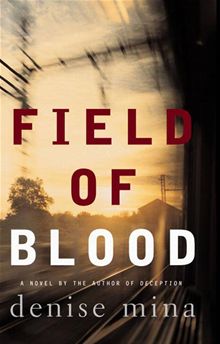
THE FIELD OF BLOOD by Denise Mina (2005)


When I learned that Ian Rankin would be hosting an evening with Denise Mina and Michael Connelly during IFOA here in Toronto in October, I was delighted to find one of her novels in a stack of cottage reading.

Rankin blurbs that Mina is "one of the most exciting writers to have emerged in Britain for years," and Connelly gushes, "really quite wonderful. I am a true fan." And these two know what they are talking about.

Set in Glasgow in 1981, a toddler goes missing from his garden and two young boys are subsequently arrested for beating the child to death and leaving him on the railroad tracks. Protagonist Paddy Meehan is working for the Scottish Daily News where she dreams of becoming an ace investigative journalist some day. When one of the boys turns out to be a cousin to Paddy's fiance, Paddy attempts to distance herself from the emerging story but finds herself all the more in the thick of things.

If you haven't already found Denise Mina and you devour mysteries, add her to your list.

GOOD MORNING, MIDNIGHT by Reginald HIll (2004)


Anyone who uses Emily Dickinson as a literary springboard has my attention.

Hill is an acknowledged master of the genre whose "intelligence, quick humour [and] compassion...blends elegance and grace." In this mystery, DS Andrew Dalziel is faced with what appears to be a copy cat suicide when Pal Maciver's corpse is discovered in a locked room where his father offed himself 10 years before.

Dalziel is determined to uncover the truths about both the past and the present and finds himself revealing curious connections beyond Yorkshire to London, NYC and even Iraq. Throw in a hooker who is actually the meek younger sister of the local vicar and you have a compelling web of deceit to unravel.

Monday, August 24, 2009

BLUE MOUNTAIN TROUBLE by Martin Mordecai (2009)

This YA novel follows twins Pollyread and Jackson as they complete their grade 6 year in a small country school in Jamaica where they are known and loved by their classmates and teachers.

Infused with local belief in duppies, colourful descriptive detail of the landscape and authentic dialect, this first novel is a revelation.

BLACK SWAN GREEN by David Mitchell (2007) Random House, 304 pages


This coming of age novel set in Warwickshire in the early 1980s reads more like a memoir from the point of view of 13-year-old Jason Taylor, who is a burgeoning poet, and adolescent outsider who is reconciling with his emerging sexuality as all teens do.

It is funny and warm and insightful and rife with pop cultural and political references. Anyone who suggests "Neil Young's voice sounds like a barn collapsing, but it's dead epic" [and that's a good thing] has my attention.

Saturday, August 15, 2009

TRAVELING MUSIC: THE SOUNDTRACK TO MY LIFE AND TIMES by Neil Peart (2004)

RUSH drummer and lyricist Neil Peart is a favorite creative nonfiction writer of mine. If you haven't stumbled onto Ghost Rider: Travels on the Healing Road, you must make the time for Peart's very personal account of his grief journey when his only daughter was killed in a car crash and he buried his longtime spouse a year later.

Traveling Music is lighter fare, though it has the same personal touches with letters to Brutus (a longtime dear friend to Peart) and actual journal entries from his 6-day 2500 mile round trip from Santa Monica to Big Bend National Park in southwest Texas in his dream car, a BMW Z-8. There are plenty of flashback sequences to Peart's formative years in St. Catharine's and then London, England and back to Toronto where he auditions successfully as the replacement drummer for RUSH.

What delighted me about this particular story is the breadth and intelligence with which Peart cultivates his burgeoning list of musical favorites which predictably includes Buddy Guy and not so predictably Frank Sinatra, Linkin Park, Patsy Cline and Madonna.

You'll find that Peart's narrative meanderings will lead you to your own nostalgia about the music of your youth.

Thursday, August 13, 2009

T.S. Eliot by Peter Ackroyd (1984)

I found this meaty biography on a cottage bookshelf and decided to dip in to remind myself why Eliot was considered such a great poet, albeit a supremely emotionally damaged man.

The youngest in the St. Louis-based Eliot family, Tom was educated at Harvard and moved to London where he became a banker and then an editor of The Criterion (where he published Ezra Pound)and at Faber and Faber where he published the esteemed American poet W.H. Auden among other notables of their generation.

Eliot spent fractious years with his first wife Vivienne who was institutionalized repeatedly for mental instability. They split with the encouragement of their common friends the Woolfs and Ottoline Morrel. In 1939, inheriting the lyric cloak of W.B. Yeats, Eliot gave the first speech in Dublin and in 1948 he received the Nobel Prize for Literature, an honour and a burden since he would no longer enjoy the privacy he so coveted.

It will turn me back to his great pieces including "The Waste Land," "The Four Quartets," "Sweeney Agonistes," "The Love Song of J. Alfred Prufrock" and his plays Murder in the Cathedral, The Cocktail Party and The Elder Statesman (the only one written when he was admittedly happy in his marriage to his second wife Valerie Fletcher in the decade before his death in 1965).

Wednesday, August 05, 2009

THE SELECTED WORKS OF T.S. SPIVET by Reif Larsen (2009)


Pick up this first novel that Stephen King blurbed: "It combines Mark Twain, Thomas Pynchon and Little Miss Sunshine. Good novels entertain; great ones come as a gift to the readers who are lucky enough to find them. This book is a treasure."

Twelve-year-old map-making obsessed genius Tecumseh Sparrow Spivet will grab you by the hand and pull you along his cross country journey from his family ranch in Montana to his mecca, the Smithsonian in Washington D.C.

Read Larsen's delightfully whimsical book and admit that fiction has no boundaries. You will slow down to read all of the marginalia, turning the novel to its side and upside down to examine all of T.S.'s sketches and musings.

Saturday, August 01, 2009

INDIGNATION by Phlilp Roth (2008)

I will read any title by Roth--one of the finest English language novelists working today.

INDIGNATION is set in the 1950s, the time of the Korean War. Protagonist Marcus Messner decides to transfer to an out-of-town college in his sophomore year, primarily to get away from the controlling hand of his father, a man whom he respects for his earnest work ethic.

There he meets Olivia, the daughter of a doctor alum who has a history of mental illness--a fact that eludes Marcus for some time as he is swept up by the whirlwind of new passion and sexual awakening. At the conservative campus of Ohio's Winesburg College, Marcus discovers that he is more of an outsider than he could even imagine.

WHERE WE HAVE TO GO by Lauren Kirshner (2009)


Lucy is eleven when we meet her in this "sparkling first novel" and we watch her find her way in her world through fantasy and reality. Through the unexpected kindness of "Crashing Wave" (a former exotic dancer) at Lucy's dad's AA meeting and the tension of her parents' temporary split, Lucy navigates her way messily through adolescence as an outsider and develops an eating disorder that has her institutionalized where she is known as "Bananas" rather than her name.

Set in Toronto in the 1990s rife with pop cultural cues and the angst that adolescence is for most of us, WHERE WE HAVE TO GO acknowledges that more often than not the most difficult journey we have to take is the one home.

Monday, July 27, 2009

THE WAY HOME by George Pelecanos (2009)


This thriller was on the "Best bets" shelf of my local library. I haven't read any of his other titles, but Pelecanos certainly writes convincingly from an insider's point-of-view. (His bio notes that he write for HBO's THE WIRE as his day job).

Chris Flynn is a sixteen-year-old with an attitude. Ironically, in an adolescent rush to avoid the law, he ends up incarcerated in a juvenile facility, the only white boy first offender among many coloured faces accustomed to spending time on the inside.

What is interesting about this book is not the relationships that Chris builds in prison or the loyalty he feels towards his fellow inmates, but rather the growing rapport with his father which for most of his life has been tense to say the least.

There are several graphic scenes that I would have closed my eyes for in the film adaptation--examples of man's inhumanity to man that are at once predictable and unforgivable.

With enough plot twists to keep you flipping the pages through to the end and a superb ear for the rhythm of the spoken word, THE WAY HOME is definitely worth a rainy afternoon.