Tuesday, May 24, 2011

UP UP UP: STORIES by Julie Booker (2011) House of Anansi Press, 219 pages


Lisa Moore's cover blurb for Julie Booker's debut collection promises that the "stories will transport you." And they do. You'll be transported in time and place.

In "Geology in Motion" you'll open water sea kayak alongside longtime friends Lorrie and Katie "where the glaciers calve all night like thunder;" then, take at turn at the piano bench in "Every Good Boy" (remember the mnemonic device drilled into you about the treble clef staff?) and meet the piano teacher's husband, Mr. Acker, the shoe man at Eaton's to whom "saying hello was as important as a size six pump, a size nine in black," and for whom each lady dangles "a shoe like an unlit cigarette."

Try your turn at "Breakup Fresh's" speed-dating in a "Singles' Night at the museum" and experience that "moment before possibility" with Tracy, riding the beat of her anxious heart. Prefer the rugged outdoors? Pull on your climbing gear and journey with Didi to Tibet where she lugs her backpack, called Bradley, "in and out of every truck and bus, infuriating our tour guide," filled as it is with "the Elgin Marbles of her upscale London life."

And there's more. So much more. You'll spend uncomfortable time in an eating disorder clinic, date a tree man "who abseiled from his upper loft bedroom, back down to the living room," experience a clowning workshop that "is nothing like real life," date a mod with "long eyelashes that signalled monarch migration with one flutter," steal tomatoes from an irascible neighbour, cutting them triumphantly "into slices as thick as medals," and finish your journey in Toronto's Don Valley where "the ending will surprise" you.

Each one of these stories is a workshop in how to write fiction. Whether it is two pages long or closing in on fifteen, the story has tension, narrative drive, believable diction and figurative language that will challenge the way you see your world.

Each story is a well-cut and polished gem to which you will return over and over again, breathless in admiration.

MR. CHARTWELL by Rebecca Hunt (2010) HarperCollins Canada, 217 pages


Winston Churchill is 89 years old and finally retiring from his vocation as a public official in July 1964. MR CHARTWELL chronicles the days leading up to his departure and the weight that that decision bears on him. It is no secret that Churchill struggled with depression and in fact often referred to it as a black dog. Here, in this remarkable debut novel, Rebecca Hunt personifies that dog in Black Pat and through the miracle of magic realism you will come to believe, as I did, in his palpable panting form.

When you first meet Black Pat, he's waiting impatiently for the elder statesman to wake up and when Churchill speaks "in a barely audible whisper....'Bugger off,'" it grins "filthily in the blackness...with unsuppressed relish, 'No.'" Miles away in Battersea, Esther Hammerhans, recently widowed is beginning to question the reason for her husband Michael's death when her thoughts are interrupted by a visitor, a Mr. Chartwell (aka Black Pat), come to rent a room as a lodger. Esther flinches, only barely when she realizes that "Mr. Chartwell was unmistakably a dog, a mammoth muscular dog about six foot seven high....the horror of him mesmerizing." No sooner has Mr. Chartwell offered Esther an extraordinary sum to board, than Esther shows him what will be his room, Esther's husband Michael's former study.

With their distinct forms of depression set against each other for cosmic balance, Churchill's lifelong determination to K.B.O., "keep buggering on," helps to provide a context for the circumstantial depression that Esther will temporarily suffer. And, when they meet when she is sent by the House of Commons to his Kent home to take dictation for his final public speech, he is able to provoke her into believing that she has a choice.

The sweet rapport between Winston and his wife Clementine is obvious throughout. They have pet nicknames for each other, "Mr Pug" and "Mrs. Pussycat," and after 55 years of marriage Clementine knows "when to leave him to the thorns of his solitude."

In the heart of the story, the repartee between Churchill and Black Pat is the stuff of Shakespearean comedy:
"The work you have done is the measure of you as a man..."
"I know what you are scavenging for, vulture."
"And you will be quantified accordingly."
"Are you listening, you rustic ignorant?"


Back at Esther's place Black Pat is performing his daily toilet with a tea towel and a wooden spoon that he has stolen from the kitchen to provoke her and to aspire to have "the smile of Tess of the D'Ubervilles...like roses full of snow." And, at the end of the work day, swigging the fetid water in a vase of wilting flowers, he sings, "with a crooning tilt to his forehead, 'A bone in the fridge may be quite continental, but diamonds are a girl's best friend.'"

Hours later he's back in Kent with Churchill and they parody the famous exchange Sir Winston allegedly had with Lady Astor:

"You're drunk!"
"And you're naked," Black Pat shouted through towels trying to remember the quote, 'But in the morning I will be sober.'
"Obnoxious guinea worm. In the morning I will be clothed....But you will always be a bastard."


Isn't this great stuff? Truly.

When Churchill is in fine form, good naturedly responding to questions from the press about his retirement during which he pledges to "delight my wife with my unabated company" and crush champagne grapes at the Pol Rogers' chateau in Epernay, Black Pat behaves like a petulant child, his power over Churchill for the moment waning.

MR. CHARTWELL feels like the genuine article. You will believe in this version of Churchill and admire the strength of his character when facing losses no parent ought to endure. Rebecca Hunt has written about depression from the inside out, scaffolding it through Black Pat's gestures and behaviour and both Churchill's and Esther's responses to him. This is a brilliant book and I am so grateful that it crossed my path.

Wednesday, May 18, 2011

THE BEAUTY CHORUS by Kate Lord Brown (2011) McArthur & Company, 430 pages


My grandmother's baby sister Elsie served in the Canadian Women's Army Corps during the Second World War, so I've been curious to read THE BEAUTY CHORUS because it focuses on the lives of three young women who meet because they volunteer, just as Elsie did, to make a unique contribution to the war effort by being trained by the Air Transport Auxiliary Unit to fly and ferry planes between the air bases in England, the existence of which I previously knew nothing about.

In selecting "High Flight" by 19-year-old Spitfire pilot John Gillespie Magee, Jr. to serve as the epigraph to THE BEAUTY CHORUS, Kate Lord Brown establishes the mood for the novel even before the narrative unfurls:

"Oh! I have slipped the surly bonds of Earth
And danced the skies on laughter-silvered wings;
Sunward I've climbed, and joined the tumbling mirth
Of sun-split clouds--and done a hundred things
You have not dreamed of...
"

It's New Year's Eve, 1940, and the lithe and winsome debutante Evie Chase finds it difficult to join in the celebratory fun at her father's annual fête while the war rumbles on about her. Raised in great privilege and provided the finest things her indulging father could offer, twenty-year-old Evie is beginning to understand the dissonance such a life provokes as bombs fall nightly in nearby London. Evie realizes that her life ought to be about more than parties and picnics and riding her horse Montgomery and she dreams of making a real contribution to the war effort. When her childhood friend Peter introduces her as "a very good pilot" to Captain Eric Bailey who helps to run the Air Transport Auxiliary at White Waltham just down the road, Evie is thrilled.

When Edie appears at the ATA training centre wearing her full length mink and high heeled shoes, she turns more than a few heads and assumptions are made about her character, but those assumptions are wrong. Edie is strong-willed and prepared to do what it takes to prove that she is worthy of the task, especially in the eyes of sexist men on the base. Edie suffers no fools and finds herself bunking with two other young women in a modest cottage close to White Waltham. Like Edie, Megan and Stella have an abiding desire to participate in the war effort. Megan's a hardworking Welsh farm girl who has suffered the loss of her only brother in the war and Stella says she's a widowed single mother whose only child has been evacuated to Ireland where he is staying with her in-laws for safety. All three young women are plucky and resourceful and totally supportive of each other, especially during difficult moments, of which there are many.

They have a model female pilot in Amy Johnson, an actual historical figure who ferried many planes for the ATA until she crashed into the Thames Estuary, as she does in a flashback sequence. Amy functions as a ghostly presence in the novel, the philosopher queen waxing about her passion for the skies and her mortal ingratitude for life's little pleasures and her intention to "not leave these girls" and "be their guardian angel, flying beside their Spitfires' wings. When they are looking for a break in the clouds, I shall be the wind that parts a safe course home." And, for the most part, you would do well to place your faith in the spectre of Amy Johnson. It is only when an engine is intentionally sabotaged that her ghostly presence is ineffective and the consequences are dire.

To keep the subplot sporting, Lord Brown includes love triangles for each of the girls. Megan has Bill and Peter angling for her affection; Stella is tethered to the idea of her dead husband Richard while she's also drawn to the artistic kindred spirit of Michael; Evie is engaged to Jack, an American pilot who adores every inch of her, yet also is drawn to "Beau," the complicated instructor who trained her.

I was impressed by Lord Brown's fanatical attention to the mechanics of flight and felt that although the girls were very comfortable with the idiosyncratic language involving gauges and dials, that I, by contrast, remained a dullard.

The final fifty pages of THE BEAUTY CHORUS are riveting. Through private letters Evie discovers some upsetting information not meant for her eyes that alters her perspective on what really matters, Beau's secret assignment leads him into dangerous territory both physical and psychological and Stella receives news that will change the course of the rest of her life. As each of these narrative threads resolves itself, your heart will be adrenaline-pumping alongside the characters, hoping beyond hope that they make it safely home.

Grab a copy of THE BEAUTY CHORUS and settle in to your favourite reading spot as you immerse yourself in this wonderful story, convincingly told about a group of women whose contribution to the war through their dedicated service to the Air Transport Auxiliary was essential in its support of the Allied effort.

Follow @katelordbrown on Twitter and be sure to visit the blog "Ask Evie" that provides news about the book at http://thebeautychorus.blogspot.com/ and to drop by Kate's personal blog to find out "What Kate Did Next": http://katelordbrown.blogspot.com/

Friday, May 13, 2011

STATE OF WONDER by Ann Patchett (from the ARC, on sale May 27, 2011) HarperCollins Canada, 353 pages


I've long admired Ann Patchett's prose from her memoir TRUTH AND BEAUTY about her extraordinary friendship with Lucy Greely to her Orange Prize and PEN/Faulkner award-winning novel BEL CANTO to her gem-of-a-graduation-address WHAT NOW? It seems to me that her literary star has already risen and secured itself in the heavens, but her most recent book STATE OF WONDER has proved me wrong. It is her most accomplished book to date and her apotheosis is yet to come.

Here's the brilliant, beguiling opening:

"The news of Anders Eckman's death came by way of Aerogram, a piece of bright blue airmail paper that served as both the stationery and, when folded over and sealed along the edges, the envelope. Who knew they still made such things? This single sheet had traveled from Brazil to Minnesota to mark the passing of a man, a breath of tissue so insubstantial that only the stamp seemed to anchor it to this world."

Years ago, Dr. Marina Singh traded a frenetic, tension-filled life as an ob-gyn for a less stressful life of research in a pharmaceutical lab. At Vogel, she met both Anders Eckman, her lab mate, and Mr. Fox, its CEO and her current lover, a liaison about which she remains guarded. When the letter arrives from Dr. Annick Swenson in the Brazilian jungle where Anders had been sent to report on the progress of an extraordinary drug in development and Swenson pens, "I will keep what little he had here for his wife, to whom I trust you will extend this news along with my sympathy," Mr. Fox knows he must be the one to break this devastating news to Anders' wife Karen. He is the one, after all, who put his life at risk by sending him to the Amazon on Vogel business.

Marina accompanies Mr. Fox to the Eckmans's home and recognizes right away that the family dog, Pickles, a golden retriever, "would have to stand in for their minister if they had one. The dog would be Karen's mother, her sister, whoever it was she wished was standing next to her when everything came down. The dog would have to be Anders." Later that same night Karen phones Marina and challenges the news: "But say he's not dead. I know you don't believe it but just say. Say that he's sick and needs me to come and find him." And, because Karen cannot leave her young sons, she asks Marina if she would go in her place. Marina agrees.

To prepare for her journey into a remote part of the Amazonian jungle, Marina takes antimalarial medication. The Lariam leads to recurring childhood nightmares of being separated from her father in a crowd in India when she was just a little girl: "the people around them rose up like a tide and she was then forced to let him go...her deepest fear, her father's hand slipping from her hand." Before Marina leaves, she visits Karen to read Anders' most recent letter to Karen for clues and it's then that Karen knowingly confides, "Hope is like walking around with a fishhook in your mouth and somebody just keeps pulling it and pulling it."

Arriving in Brazil, Marina is met by a local fixer called Milton who is gracious and welcoming and sets her up in a hotel room in Manaus where she must wait for either Dr. Swenson to come to town to pick up perishables or for Dr. Swenson's protectors, the Bovenders, a young married couple who seem to have the job of preventing access to the very person Marina needs to see. While waiting for either to appear, Marina immerses herself in Dr. Swenson's writing about the reproductive endocrinology in the Lakashi people, an isolated Amazonian tribe "whose women appeared to give birth well into their seventies" or she reads the Henry James novel she brought to distract herself from the upsetting business of finding out what actually happened to her friend.

In one of her few phone calls home to Mr. Fox, Marina learns that the Lakashi "chew some sort of bark while it's still on the tree" and that is why they remain fertile well past the expected years of any other women. With that information, we have a hint of what might be to come and why Vogel pharmaceuticals continues to pour an endless supply of money into the mind-blowing research that Dr. Swenson is conducting in the heart of the jungle.

Throughout STATE OF WONDER there are plenty of allusions to Conrad's HEART OF DARKNESS and Kingsolver's THE POISONWOOD BIBLE and your reading will be all the richer if you have those two novels in your mind's eye. However, the reverence for the natural world is the novel's watermark:

"The quiet that was left without her was layered, subtle: at first Marina only heard it as silence, the absence of human voices, but once her ear had settled into it the other sounds began to rise, the deeply forested chirping, the caw that came from the tops of trees, the chattering of lower primates, the incessant sawing of insect life. It was not unlike the overture of the opera."

And, there are equally terrifying scenes: one that had my heart thumping involved an anaconda. Yet, Patchett, being Patchett, pens this wondrous strange moment with grace.

So much of what happens at the heart of this remarkable book must not be revealed. You need to peel back the layers yourself and marvel moment to moment alongside Marina as she discovers truths about the jungle and herself.

When I first heard the title STATE OF WONDER, I immediately thought of Glenn Gould's landmark recording of the Goldberg Variations. And, it is a rather apt analogy for a book in which lives are improvised from variation to variation using humanity as the bass note.

STATE OF WONDER is sure to be one of the most talked about books of 2011. You must read it.

Sunday, May 08, 2011

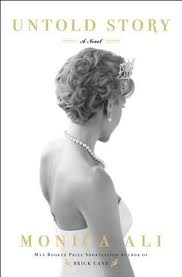
UNTOLD STORY by Monica Ali, from the ARC (forthcoming June 28, 2011) Simon and Schuster Canada, 259 pages


In a turn grounded in magical thinking, Monica Ali explores what might have happened had Diana, Princess of Wales, not been killed in the car crash in that Paris tunnel in August 1997, pursued by paparazzi as on every other day of her very public private life. What is the price of fame? What would a person desperate to reclaim more than a shred of her privacy be willing to do? Imagine having a secret so precious that you cannot disclose it, especially to those you love most.

The opening caveat, "Some stories are never meant to be told. Some can only be told as fairy tales," is the perfect set up for what follows as you peel back the layers of the death and rebirth of an individual as famous and charismatic as the former Lady Diana Spencer, Princess of Wales, at one time the most recognizable face on the planet.

Using a masterful mélange of third-person omniscient narration, private diary and personal letters, Ali forms a convincing portrait of her protagonist from those whom she has allowed to know her best. In the present, it is April 2007 and three girlfriends, Suzie, Amber and Tevis have opened a bottle of Pinot Grigio and are waiting for their friend Lydia to arrive to celebrate her birthday in one of their homes in sleepy little Kensington on the east coast of the USA. When Lydia's co-worker Esther arrives for the party and explains that Lydia took the day off from her job caring for dogs at the local shelter, the women are appropriately alarmed that Lydia has not shown up. The Lydia they know is always on time.

Flipping back the clock, Ali sketches in the details about Lydia's quiet domestic life in small town America and gestures to her much more lavish and demanding past life through the diaries of Princess Diana's Private Secretary Lawrence Standing, whom we quickly discover was responsible for organizing her "death" and "rebirth" a decade previous. Through his diaries and their conversations, we learn how committed he was to protecting her and how much she literally trusted him with her life. Even when Standing unavoidably disappears from Lydia/Diana's life, she continues to correspond with him in a series of letters that help her to make sense of the world around her.

The stakes are raised when she realizes she is being trailed by a photographer she recognizes from life before, John Grabowski, who through a stroke of extraordinary luck (because she had stopped wearing her brown contact lenses and he matches up images of her world famous baby blues) manages to trail her and capture her new life on film. Yet, Grabowski has his doubts, "for an instant it was hard to believe that she wasn't just what she seemed to be."

What I found compelling about the narrative was how Ali included so much of Diana's vulnerability. Lydia is paranoid, she's worried that she's simply not smart enough, she is especially kind to those weaker/needier, and she is at ease with the broken animals in the shelter, recognizing in them her own human frailty.

Reminiscent of Curtis Sittenfeld's AMERICAN WIFE that re-imagines an authentic sympathetic and fictional life for Laura Bush, Monica Ali's UNTOLD STORY convincingly portrays the possibilities of an alternate ending for a cultural icon who "broke all manner of rules," and "was a gorgeous bundle of trouble." Add this marvelous, heartening tale to your pile of summer reading. It will be out just in time.

THE PARIS WIFE by Paula McLain, 2011 audiobook, Random House


THE PARIS WIFE is Hadley Richardson's perspective on her life with Ernest Hemingway and what a fresh, compelling voice Paula McLain has created for her. We meet the dashing newspaperman as Hadley does at a party in Chicago in 1920. She is the archetypal older woman, though only by a handful of years. Through a courtship of letters and train journeys, they confide their dreams to each other and at times it feels as if you are eavesdropping on their lives, even moreso for me since I listened to the audiobook, convincingly read by Carrington Macduffie.

For anyone who has read either THE SUN ALSO RISES or A MOVEABLE FEAST, the life that the Hemingways share in Paris and in Pamplona will feel very familiar. McLain masterfully uses setting and circumstance to create the entirely credible backstory for both of those books, so I was not surprised to hear that Hemingway filled handwritten journals in 6 weeks with the first draft of the manuscript that offers the wistful sentiment, "isn't it pretty to think so." And, your heart will crack a little when thirty years later (when they're married to other people), "Tatie" calls up his true love and reminisces about those heady days they shared in Jazz Age Paris with "Mister Bumby," Miss Stein, Ezra Pound and Sylvia Beach as he tells Hadley about the collection of personal essays he's working on. They were published posthumously, after Hemingway killed himself with a shotgun in the same way that Hadley's own father had.

Hadley Richardson may indeed have been Hemingway's PARIS WIFE, and it seems here, in this rapt telling of her tale, that she's the one who mattered most.

Sunday, April 24, 2011

VACLAV & LENA by Haley Turner from the ARC (forthcoming May 31, 2011) The Dial Press (Random House), 285 pages


Do you remember your first crush? Mine was inexplicably on Scott Campbell, a neighbourhood kid in my Grade 4 class who stabbed me with his thick soft leaded pencil. I remember confiding to my little red diary with its tiny gold lock and key in my careful schoolgirl script, "I love Scott Campbell." It was the first of many unrequited loves and I am doomed to remember his name because I carry that piece of lead with me, under the pad of my ring finger on my left hand.

Vaclav and Lena meet when they are 10 and 9 years old at P.S. 238 in Brooklyn as ESL students who carry the immigrant burden of being obviously different among their American-born English-speaking peers because of their thick Russian accents and their stilted developing language. Vaclav is completely obsessed with the idea of becoming a magician like David Copperfield or Harry Houdini, expecting that Lena will be his assistant because she "is necessary for all the illusions." He is an inveterate list-maker and for me that is part of his charm:

"THINGS THAT ARE:
1. One day being a famous magician
2. Lena being lovely assistant
3. Perseverance towards those goals in spite of any and every obstacle"

At the beginning, Lena buys into Vaclav's fantasy and supports him as he practices simple acts of prestidigitation. However, Lena's troubled home life becomes all consuming: "Vaclav does not know that to Lena, he is a place to go instead of nowhere. If he knew, he might be happy to be her somewhere, but he does not know."

Vaclav's mother takes the two children to Coney Island and to Lena, for the first time in her young life, "it looked as if the world had been coloured in." In that moment there is such hope. But, there is little room for that yet in Lena's world and soon Vaclav's doting mother Raisa makes an alarming discovery and Lena vanishes from Vaclav's life without even a whisper.

Vaclav is devastated, but determined, and many years pass before Lena re-enters his life like a balm.

VACLAV & LENA is a genuine love story. Once you meet both of these quirky, resilient characters, you won't soon want to leave their remarkable world. Haley Tanner has penned a sparkling debut about trust, betrayal and enduring unconditional love.

Monday, April 18, 2011

THE LONG GOODBYE by Meghan O'Rourke (2011) Riverhead Books, 297 pages


As soon as read the excerpt from THE LONG GOODBYE in The New Yorker, I knew I would have to read this memoir. I had been carrying the excerpt around with me as a talisman, a charm to force me back to the pages of the manuscript I am revising about my only brother's accidental death many years ago.

In O'Rourke's epigraph she refers to an Iris Murdoch quotation, "The bereaved cannot communicate with the unbereaved," and nothing could be truer, except perhaps the one attributed to A.S. Byatt, who wrote, "grief turns you to stone."

This harrowing account opens gently with reminiscences about bucolic childhood summers spent as a family in Vermont where "the days seemed created for our worship" and "there were words even for the weeds: goldenrod and ragweed and Queen Anne's lace." Days that were "holy and lazy and boring." Remember those? Then there is O'Rourke's intimation of mortality: "When we are relearning the world in the aftermath of a loss, we feel things we had almost forgotten, old things, beneath the seat of reason." Like the time when her mom sent Meghan and her brother out to catch fireflies in jars with poked holes in the lids and she remembers,"the air was the temperature of our skin." Beneath the seat of reason.

O'Rourke's account of her mother's diagnosis, treatment and death as a result of metastatic colorectal cancer is not only frankly personal, but also a profound meditation on loss itself and how the rituals of public mourning have mostly fallen away. I found absolute belonging in her admission that, "In the months that followed my mother's death, I managed to look like a normal person. I walked down the street; I answered my phone; I brushed my teeth, most of the time. But I was not OK. I was in grief. Nothing seemed important. Daily tasks were exhausting....I felt that I had abruptly arrived at a terrible insistent truth about the impermanence of the every day." There is the public mask of coping and there is the private reality of feeling completely rudderless.

And, people become impatient with your grieving. Platitudes are dealt, and advice doled out, by well-meaning friends, relatives and neighbours who are invested in feeling better themselves about your sorry state rather than trying to understand why your loss is so profound and enigmatic to them. To try to make sense of her grief, O'Rourke, admittedly at her nadir, cuts herself, suggesting, "I did not want to hurt myself or die. I just wanted to create some embodiment of the heartbreak eating me up."

What moved me most about THE LONG GOODBYE were the moments remembered in flashes of brilliance like the time her mom gave her a Dick Francis novel when it wasn't Christmas saying, "Why do we wait for holidays to give gifts?" And O'Rourke writes, "her voice was shaky, and it was the first time as an adult that I really felt that one day she would be gone." Such flashes hurt. "They light up your stomach. Then you breathe, look out again. At a party you say my dead mother...It hurts...You are learning the narrative. You are establishing the catechism, responses to the questions."

The death itself was familiar to me, having witnessed as I have the final extended raspy, rattling breaths and pauses between them of both my grandmother and my friend Richard. It is both ordinary and extraordinary: a moment that is essentially awesome. Full of awe.

On Christmas Day 2008, Barbara Kelly O'Rourke died at home: "In the beginning was the wind, the wind made by breath, the word of the wind, and in our hearts we kept telling the story over and over of how we loved her and were there, there, there, once we were all there, and she took a breath like a gasp and her eyes opened and took us in, all of us there, and then she breathed once more, the last breath, and we were there and she was not..."

Her only daughter Meghan bore witness then and bears witness now in this heartbreakingly beautiful book that demystifies what it is to mourn fearlessly and well.

Sunday, April 17, 2011

EMILY, ALONE by Stewart O'Nan (2011) Viking Penguin, 255 pages


Even before I began the story proper, O'Nan's sweet nostalgic dedication, "For my mother, who took me to the bookmobile" and the Virginia Woolf epigraph: "Could it be, even for elderly people, that this was life-- startling, unexpected, unknown?" drew me in.

EMILY, ALONE explores the ordinary day-to-day intimacies of widow Emily Maxwell, now well into her seventies, whose remaining companions are her sister-in-law Arlene and her aging Springer Spaniel Rufus.

Under O'Nan's storytelling spell, each sentence seems like a prayer about aging and memory at once familiar and slightly foreign: "Often she searched for words, trailing off in midsentence, then waving away the incomplete thought, one hand flapping." Remembering formal occasions "trying to pinch open the clasp and marry it to the tiny eyelet" of her necklace, Emily is nostalgic about Henry, her dead husband, who when alive "would stand behind her like a valet...She'd find him admiring her in the mirror and while she discounted his adoration of her beauty--based as it was, on a much younger woman--she also relied on it, and as time past she was grateful for the restorative powers of his memory." Isn't that restorative power of memory what we all yearn for as we age, often messily, inconveniently, ungraciously?

Emily waxes philosophical too, especially during the bleak midwinter, resigning herself to the notion that the past is another country and admitting the paradox that "Time, which had her on the rack, would just as effortlessly rescue her. This funk was temporary. Tomorrow she would be fine."

I suppose the great appeal of this novel is that everyone can relate. Each one of us has an Emily in our lives, an aging mother, or sister or great aunt or grandmother who is determined to be independent and not a bother or a burden to daughters or sons, and determined to "wait through everything else to do the thing you wanted." In Emily's case that means "Easter, her garden, Chautauqua." Though, "she thought there should be more to live for."

As soon as she's able to get out and putter in her garden, Emily feels the relief of time lifting from her: "She and the bees and the worms--even the spiders--all had their jobs to do. Left to her work, she forgot everything but the task at hand, falling into reverie." Even now I know how that feels, to be completely absorbed and to be outside of time, totally immersed in place. For weeks Emily avoids visiting her husband's grave and "finally it was only by writing his name down on the calendar as if they had a date that she made herself go."

EMILY, ALONE is a beautiful beautiful book. Make time for it and O'Nan's spell in your busy life. You'll be glad you did.

Wednesday, April 13, 2011

TEN THOUSAND SAINTS by Eleanor Henderson from the ARC (forthcoming June 2011 from Ecco) 383 pages


Remember how Jennifer Egan's A VISIT FROM THE GOON SQUAD set book lovers abuzz in 2010? Well, get ready for Eleanor Henderson's TEN THOUSAND SAINTS to shake you up and leave you breathless in 2011.

It's the end of 1987 and full-time friends, frequent stoners and all-time slackers Teddy McNicholas and Jude Keffy-Horn are celebrating Jude's 16th birthday beneath the stadium seats of the football field in small-town Vermont, sharing "the dregs of last night's bowl" that they had stolen from the glove box of Teddy's mom's car. Although they only have $140 saved between them, the boys hope to "save some more money and when they were both old enough to drop out (Teddy would be sixteen in May), they were going to buy bus tickets to the Port Authority and stay with Johnny [Teddy's eighteen-year-old half brother] until they could find a place of their own."

Enter Eliza, the daughter of Jude's absentee father Les's Upper Westside girlfriend Diane. Eliza is on her way back to Manhattan from a holiday ski-cation with friends and she stops in Vermont ostensibly to meet Jude and his sister Prudence face to face. A party girl herself, Eliza not only gets Teddy high on cocaine, but also encourages him to have sex with her. And, it's the consequences of that decision that turn everybody's world upside down in a cascade of "what ifs" and drive the plot forward for the next three hundred pages.

Teddy's fatal overdose is not a secret-- you know from the opening page of his death--however, what happens as a result leads to the heart of the novel where there are secrets kept and told by all of the main players, secrets about paternity, true love, AIDS and abortion. Yet, being young, they continue to dream. Eliza imagines "Annabel Lee" growing inside her, Jude believes he can really form a good punk band that will get gigs, Johnny's determined to remain "straight edge" and do the right thing to honour his brother's memory, and Rooster hopes that he will live to see another day with his true love by his side.

There is not a misplaced thought or gesture in TEN THOUSAND SAINTS. With impeccable pacing and enviable prose, Eleanor Henderson has written a lasting portrait of two generations struggling to understand each other in the modern age. I believed every word.

Saturday, April 09, 2011

RAVEN STOLE THE MOON by Garth Stein (1998) HarperCollins, 441 pages


I came to Garth Stein through his most recent novel THE ART OF RACING IN THE RAIN, featuring Enzo, a canine protagonist with an obsession for race car driving and the uncanny ability to scent cancer. How I loved that book and wished that what transpires in it could possibly be true.

His earlier novel RAVEN STOLE THE MOON proves to me that Stein is not a one hit wonder. He's got storytelling legs. And, like literary thriller wunderkind Kate Atkinson, each book is different from the last, yet equally accomplished and satisfying.

On the anniversary of her young son's death, Jenna Rosen abandons her materially comfortable Seattle life by skipping out on a networking party she'd been barely tolerating with her ambitious husband Robert. She's tired of his tired jokes and decides on a whim to get in his car and drive until she can clear her head. That drive takes her to the ferry docks where she offers to buy a young couple a ticket to Skagway because they've lost one of theirs. Through this kindness of strangers gesture, Jenna finds herself also drawn to a northern journey back to Wrangell where her son Bobby disappeared two years previous. And, the young couple offer her a gift of a handmade necklace featuring an Indian spirit called a kushtaka. Jenna is both touched by their gift and intrigued by its enigmatic symbolism.

A mother's grief is fierce. Once Jenna returns to the site of her only child's death, she is determined to find a way to assuage his restless spirit. With the help of local strangers in the Alaskan wilderness, Jenna tries to sift through the terrifying beliefs of her ancestors, the Tlingit. What she must face is bone-chilling and Stein will have you believing that each heart-thumping turn is the genuine article. By mixing Jenna's emotions with her Native cultural inheritance, Stein challenges the power of grief to set things right.

RAVEN STOLE THE MOON is an engrossing tale about loss and redemption and the work essential to turn grief into something more lustrous.

BOSSYPANTS by Tina Fey (2011) Little, Brown and Company, 275 pages


Tina Fey's BOSSYPANTS is a collection of personal essays (some familiar if you read The New Yorker), lists, anecdotes, work advice as well as 30 ROCK and SATURDAY NIGHT LIVE script excerpts that will make you feel as if she were sitting in your living room blithely recounting the unexpected and remarkable trajectory of her life.

The cover artwork will either amuse you or creep you out. With perfect makeup and sporting a flattering haircut (both of which she defies in most of the other photos included in the book), Fey's head is photoshopped onto the torso of a middle-aged man. It would truly make me happy if those arms turned out to be Alec Baldwin's--Fey's inspiration for 30 ROCK's antithetical Baldwin: Jack Donaghy.

Tina Fey is at the top of her game. She was the youngest person to be given the Mark Twain award for Humour, has an armful of Emmys for 30 ROCK which she produces, co-writes and co-stars in on NBC, has been on the big screen with her pal Amy Poehler in BABY MAMA and Steve Carrell in DATE NIGHT, and written for the big screen (MEAN GIRLS) and SATURDAY NIGHT LIVE to which she returned to play Sarah Palin opposite Poehler's Hillary Clinton. What is obvious about all of these successes is that Fey takes none of them for granted.

Although I'm a bit older than Fey, I do share with her the horror of the YOU ARE A YOUNG LADY NOW pamphlet, secreted in my underwear drawer when I was ten and other mortifying coming-of-age milestones like publicly trying on a bra outside of my clothes in a department store. While I didn't work as YMCA receptionist as my first grown up job post-college, I did work as a temp for a social services agency in Toronto, where it was common place to witness tattooed street youth convulsing in heroin withdrawal while I answered the phones and set up appointments for them with their social workers.

At the end of the parody list "Remembrances of Being a Little Bit Fat," I could kiss Fey for writing, "We should leave people alone about their weight. Being chubby for a while (provided you don't give yourself diabetes) is a natural phase of life and nothing to be ashamed of. Like puberty or slowly turning into a Republican." Also, about surviving in the workplace, she sagely intones, "don't waste your energy trying to educate or change opinions...Do your thing and don't care if they like it."

By the end of BOSSYPANTS I was happy to know that Jack Burditt wrote the line from the episode "Rosemary's Baby" starring Carrie Fisher (herself surely a smartypants script doctor as well as the iconic Princess Leia) as a crazy former-era comedy writer about whom Donaghy snarks, "Never go with a hippy to a second location." Most of all, however, I would like to meet Don Fey, her dad, the man to whom powerful men like Lorne Michaels and Alec Baldwin "stand down." After meeting him Fey admits, "it rearranges something in their brain about me...What are they realizing? I wonder. That they'd better never mess with me, or Don Fey will yell at them? That I have high expectations for the men in my life because I have a strong father figure?" Right on both accounts, I hope.

The best advice before reading BOSSYPANTS: have a prophylactic pee. You'll need to read this romp on an empty bladder. Or else.

Sunday, April 03, 2011

MY DEAR I WANTED TO TELL YOU by Louisa Young (from the ARC, forthcoming May 2011) HarperCollins Canada, 325 pages


If you are already a fan of Pat Barker's REGENERATION trilogy and her novel LIFE CLASS about the confluence of visual art and emerging reconstructive facial surgery as a result of injuries on the World War One front, then you will be completely predisposed to be entranced by Louisa Young's MY DEAR I WANTED TO TELL YOU.

In 1907 as a young boy in working class London Riley Purefoy happens to be insinuated into the lives of the posh Waveney family when patriarch Robert Waveney suggests he be a face model for a painting by Sir Alfred: "He wants to put it in a painting, on top of a goaty-legged faun. What do you think? Could you sit still long enough for him to paint you? He'd probably give you a shilling." There, under Sir Alfred's tutelage over the course of 7 years, Riley goes from brush cleaner and occasional model to becoming a painter himself, one his patron refers to as "a miniature Roger Fry." In the studio, Riley meets Nadine Waveney, the educated and beautiful daughter and dreamily falls in love, half-knowing that theirs was an untenable one because of class.

Nadine and Riley are 18 when the war breaks out and both are determined to make a genuine contribution. Riley enlists and is an ideal soldier, ready to be told what to do and to do it. Nadine also does not shy away from what is required of her as a volunteer nurse; she applies herself with equal measure to both the drudgery and the emotional aspect of the work, admitting, "When no one was looking she kissed the dying, their cheeks, their foreheads, their mouths...They whispered, 'I love you.' 'I love you too, darling,' she whispered back. Because in the face of death, really, who cares about love?"

While serving on the Front in France, Riley sustains a ghastly injury and is invalided home to England where he comes under the care of the progressive physician, Major Dr. Harold Gillies. Gillies is a pioneer of plastic surgery and specializes in facial reconstruction. (See his seminal 1920 text, "Plastic Surgery of the Face" for actual details.) At the heart of this novel Young shows how Gillies not only rebuilt faces, but also lives. When he is strong enough to contemplate writing a missive to his mother and to Nadine, Riley lies about the severity of his wound--it is that form letter that gives the book its title.

In truth, Riley admits (in an inspired extended analogy), "he looked like a scarlet crater, rimmed with a half-formed pile of earthworks, a fallen-over pile of dirty sandbags. Grey bruising and purple swelling and black scab, hanging loose over nothing. The metal chin support, like revetting. Seams between pads of flesh running across his face like trenches, swelling like sandbags. A few loose stitches like barbed wire. I look like fucking no man's land."

Because of his deformity, Riley decides to protect Nadine from what he now perceives to be an impossible love. Yes, he is a decorated soldier, but he is a decorated soldier without a face. He enlists his nurse Rose Locke's (cousin of Riley's Commanding Officer Peter) help to perpetuate the lie; she willingly obliges. And, because Nadine believes the lie, she asks for a transfer out of London to France where, "Everything was as wrong as she felt. She was glad. She took all the dirtiest jobs. She didn't complain. She didn't join in...Night and work were her blankets...Death had a happy ending every time. Peace. She liked their poor corpses, safe on their way to a numbered grave, cosy within the system built and created for them. Not lying out there, in the dark, alone."

After many surgeries, when Riley has the opportunity to meet Mrs. Ainsworth, his fellow soldier Jack's widow, that moment is transformational. Her kindness and lack of judgement sets Riley on the path of real healing.

MY DEAR I WANTED TO TELL YOU held me in its thrall, even during moments that I felt squeamish from the brilliant surgical detail. In the end, you will realize that all of the characters bravely faced wars of their own.

Saturday, April 02, 2011

THE BIRD SISTERS by Rebecca Rasmussen (2011) Crown Publishing, 287 pages


Rebecca Rasmussen's debut novel (to be launched to the wider world on April 12th) will tug at your heartstrings. Guaranteed. The tenderness demonstrated by her characters had me weeping by page three when protagonist Twiss receives an injured goldfinch from a little girl after her mother's minivan "severed one of the goldfinch's wings and crushed the other one." Here is what started my tears:

"She'd offer the goldfinch a teaspoon of millet and peanut butter and hold him up to the window so he could see the sky. Once a bird lost his ability to fly, not much else could be done in the way of mending him. Losing a wing was a little like losing a leg and the freedom of movement, of spirit, it granted you; most people could live without the former but not the latter."

THE BIRD SISTERS is a fully formed narrative. From the beginning I thought of TO KILL A MOCKINGBIRD and how the summer that Dill came to Maycomb County, everything changed in Jem and Scout's lives. Something akin happens here when Twiss and Milly's older cousin Bett comes to stay in the summer of 1947 and changes the course of all of their lives forever. Each of the characters you will meet seems like flesh and blood relatives from a less complicated, albeit occasionally harrowing, time.

The spinsters, now in their seventies and still living together in the home in which they were raised, carry talismans with them as comfort: worn advice from their mother who repeatedly told them, "Bone china is like your heart. If it breaks, it can't be fixed," and a copy of The Curious Book of Birds, inscribed, "For Milly, Because."

Rasmussen carefully balances the heartache with moments of levity that surprise and delight, often found in comments from each of the teenaged girls who are 14, 16 and 18 or through their candid observations about the limited small-town world in which they live. Fourteen-year-old Twiss asks her 16-year-old sister Milly, for instance, "How would you like to be stuck with someone like Adam?" And, instead of waiting for Milly's response, offers up her own: "I would have eaten that apple too. Just to get away from him."

When Henry the parrot suffers a bout of insomnia before his musical debut at the town fair where he sings "Ave Maria" in Latin, his human companion Mrs. Bettle tells the girls that he "says the most appalling things after a night of no sleep." Of course, I imagine Henry swearing a blue streak and needing to go to confession to be absolved of his instinctive naughtiness. The faithless Father Rice would certainly be amused. When a pushy parishioner demands, "What if I refuse to live in a godless world?," he counsels, "Then, I'm afraid you'll have to shoot yourself, my dear. Either God doesn't exist or He's too busy to do it Himself."

Like Carol Shields, Rasmussen manages to show what is extraordinary in the ordinary lives lived by ordinary folk. There are well-placed stones along the narrative path that gesture towards what is to come: a fortune teller's advice; an almost drowning; the heady promise of first love; the agony of betrayal; an unexpected proposal; forged letters; a ride in an airplane; bars of lavender soap shaped like seashells; a tractor-shaped buttercream cake; purple prairie happiness tonic; secrets kept and told; a book shaped like forgiveness. With each deft reveal, the story will have you in its luminous thrall.

And, there is wisdom woven through. Teenaged Twiss realizes, "Maybe it was easier to tell your life to someone you didn't know than to tell it to someone you did." At the same time, from her perch atop the Ferris wheel at the county fair, her older sister Milly sees "that everything below her...was too good to be true and, like the Ferris wheel, would eventually have to come down." Most importantly they both know, and this knowledge binds them just as much as their blood, that "You can't always explain why you love the people you love." You can't.

In "Anthem" Leonard Cohen wrote, "there is a crack, a crack in everything. That's how the light gets in." Make room for the light in THE BIRD SISTERS. It will split you open and fill you up. It is a blindingly stunning debut.

Thursday, March 31, 2011

THE HIGH ROAD by Edna O'Brien (1988) Farrar Strauss & Giroux, 214 pages


Edna O'Brien is considered by Alice Munro to be perhaps the finest short story writer anywhere. THE HIGH ROAD is a mid-career novel set in a Spanish enclave where there is a circle of women who yearn for loves past and present.

You'll meet Charlotte, a former debutante who has chosen a life of withdrawal; Iris, an imperious aging self-absorbed harpy; and Anna, the narrator, who senses in hotel maid Catalina her chance to defy social expectations of suitable relationships and renew hope for true love.

It seems to me that O'Brien was trying to push conventions of the day aside and establish herself as a writer who experiments with boundaries both stylistic and sexual. Reading the novel almost 25 years later, it feels decidedly dated.

Monday, March 28, 2011

SANCTUS by Simon Toyne (from the ARC forthcoming May 2011 UK, Sept 2011 Canada) HarperCollins, 474 pages


Are you a fan of smart literary thrillers? Think of Andrew Pyper's LOST GIRLS, THE WILDFIRE SEASON, THE KILLING CIRCLE and THE GUARDIANS or titles by Kate Atkinson including CASE HISTORIES and STARTED EARLY, TOOK MY DOG. Well, Simon Toyne is a sparkling new voice in the genre. SANCTUS is his debut novel and has already sold to 40 countries, is due to be translated into 23 languages and the enthusiasm continues to build worldwide. It will be published by HarperCollins Canada in September 2011.

I am lucky enough to have been given an Advance Reading Copy. It arrived on a Friday and I shirked social commitments that night to read it in two sittings. Toyne's storytelling is seductive and addicting. You'll see.

Set primarily in contemporary Turkey on a mountaintop above a tourist destination, SANCTUS also travels to Rio de Janeiro and New York City to landscapes more familiar both physically and emotionally. The epigraph, "A man is a god in ruins," (Ralph Waldo Emerson) exquisitely gestures to the crux of the story. But, tempting though it is, I will not reveal that here.

What you may know, however, is that there is a secret society of monks who live a reclusive life in Ruin, Turkey where they protect their Sacrament with a ferocity and determination that borders on sociopathology. No one outside of their cloistered community knows exactly what the Sacrament is, though one brave soul, Brother Samuel, risks his life to show the world clues to the rebus preserved inside their Citadel. When his dangerous, symbolic act is witnessed not only by tourists milling about, but also through the transmission of that very act through hand-held devices and lurking media, the world soon knows about this extraordinary moment.

There are immediate rippling effects that only a few folks understand: development aid worker Kathryn Mann and a handful of her intimates dare to hope that a new beginning is at hand; New York City reporter Liv Adamsen wonders if perhaps what might be the reappearance of her long lost brother will help her to solve lifelong questions she's had about herself.

The chapters are short. The pace lightning-quick. I found myself putting off routines like preparing meals and walking the dog to keep reading.

Simon Toyne has penned a gripping, taut narrative that will have you questioning everything about the characters, about yourself, and about the true nature of faith. You don't want to miss this brilliant debut, the success of which will surely herald more books to come.

Friday, March 25, 2011

SONGS FOR THE MISSING by Stewart O'Nan (2008) Viking Penguin, 277 pages


What strikes more fear into a parent's heart than a missing child?

It's the summer of 2005 and for high school senior Kim Larsen, "It was the summer of her Chevette, of J.P. and letting her hair grow. The last summer, the best summer, the summer they'd all dreamed of since eighth grade... an extension of their best year." In what turns out to be their last conversation, on the day before Kim disappears, she takes her bookish younger sister Lindsay to Dairy Queen and tells her, "You know, dude, I'm really going to miss you." Lindsay, in typical teenish disbelief and pitch perfect mumbling monosyllables, retorts, "No you won't."

Once the police are contacted, Lindsay's mom bends under their constant questioning and admits out loud, "I think someone took her." At first it's the extended neighborhood and church community who gather and form teams to comb through areas that Lindsay was known to frequent. Their well-intentioned but limited searching soon gives way to a media frenzy and the investigative support that leads to real answers.

Throughout this harrowing ordeal, Lindsay's parents Fran and Ed don't sit passively waiting for her miraculous return. They turn their attention to schedules for the volunteers, make earnest pleas for radio and television audiences, appear at Lindsay's high school, trying to get her story out to the wider world any way they can. Months pass as the family tries to carve out a new normal--a life without Lindsay in it, though they dare yet to hope for her return.

In a Tennessee Williams turn, it is the kindness of a lonely stranger that finally offers the Larsens the only succor left to them.

SONGS FOR THE MISSING is my first exposure to Stewart O'Nan. His prose is powerful and rife with emotional resonance. Already, I've got his newest novel, EMILY, ALONE, lined up to read next. If it hadn't been for Washington Post Book Critic Ron Charles' enthusiasm for O'Nan's work, I may never have found my way to his books. And, what a shame that would have been.

Thursday, March 24, 2011

THE BIG WHY by Michael Winter (2004) House of Anansi Press, 374 pages


Abandon any preconceived notions you have about historical fiction and leap headlong onto the ride that Michael Winter provides in this richly realized imaginative portrait of American painter/engraver Rockwell Kent. (He provided the illustrations for Moby Dick) Although the father to young children and husband to the lovely Kathleen Whiting, Kent is totally feckless. He leaves his family in New York City because he has tired of the superficial art world that has become his bread and butter and travels to Brigus, Newfoundland just before World War One where he dreams of establishing an artists' colony. There he plans to get a house in order and to bring his wife and children from New York once the weather improves in this tiny coastal community.

Winter has breathed real life into Kent and all of his supporting characters, characters from an intimate community where everyone is sure to know each others' business and heartache as predictable as the tide that thrashes against the shore. Always suspicious of any outsider, especially one who dines out on a story of being invited by the Prime Minister, the locals keep a watchful eye on this suspect vegetarian womanizer even as his family settles in for a time.

Kent is surely his own worst enemy, something that he comes to realize after he has hurt those he has loved the most. It is Kent's friendship with Newfoundland's fabled explorer Bob Bartlett, however, that leads him to his existential heart when after disclosing a long-kept secret Bartlett insists, "the question is not were you loved. Or did you love. Or did you love yourself. Or did you allow love to move you, though that's a big one. Move you. The question, Rockwell, is did you get to be who you are. And if not, then why. That, my friend, is the big why."

Did you get to be who you are? It's a profound question. You might begin to form the answer to it by looking in the mirror with Rockwell Kent in Michael Winter's extraordinary novel THE BIG WHY.

Sunday, March 20, 2011

ALONE IN THE CLASSROOM by Elizabeth Hay (from the ARC) forthcoming from McClelland & Stewart, April 26, 2011


I am predisposed to like Elizabeth Hay's writing, having adored A STUDENT OF WEATHER (2000), GARBO LAUGHS (2003) and the Giller Prize-winning LATE NIGHTS ON AIR (2007). Plus, she is warm, engaging and attentive in person.

ALONE IN THE CLASSROOM flips back and forth in time between 1929, 1937, 1982, 1999 and 2007 as narrator Anne Flood, driven by curiosity and a need to define herself, explores the lives of the women in her family, especially her father's sister Connie whom she has always admired the most, because of her independence, intelligence and style.

In this early paragraph, Hay offers up the heart of the Anne's story:

"You touch a place and thousands of miles away another place quivers. You touch a person and down the line the ghost of relatives move in the wind....So interwoven are the strands of human life and so rich is the loam in which we lie that the same cemetery holds my grandmother and Ethel Weir and the man accused of her murder and the principal who knew them all, the bane of Connie's existence and therefore an abiding interest of mine."

Yet, we don't begin at the beginning. ALONE IN THE CLASSROOM opens in the Ottawa Valley in August 1937 when "the whole landscape was a painting come to life" on the day that 13-year-old Ethel Weir goes to pick chokecherries, berries "abloom with ghostly light that erased itself" and does not return home. Soon the town has picked a suspect, the young man who "almost stumbled over the corpse." Connie, now a journalist, has recently returned to Canada after working in Europe. In the town library she meets Hannah Soper (Anne's mother) who offers up her mother's boarding house when asked about renting a room. Click click. Part of the unknown future comes into focus.

Time travel back to Jewel, Saskatchewan in 1929 where Connie begins her career as a schoolteacher, working for a seemingly sophisticated but creepy principal, Mr. Ian Burns, known as "Parley." As Anne enigmatically hints, "Given what Parley Burns did and what happened to him in the end, Connie never tired of mulling over what kind of person he was deep down." You'll spend most of the novel puzzling out what Burns actually did in that prairie classroom and wondering whether or not what happened to him in the end is mete and just. Two things galvanize Connie's relationship to Jewel: a devastating fire and her blossoming trust from Michael Graves, one of her students who has been made to feel less than all of his young life. When Connie discovers in 14-year-old Michael what special talents he has and publicly praises him, he offers her a miniature gift: "One afternoon he pocketed a piece of blackboard chalk and returned it days later, setting on her desk a minute bird carved like the tiniest of lilies."

For those of you who have spent time in a classroom, you will know the following to be true as it is for Connie when she awakens in Michael a desire for learning: "A child lies like a grey pebble on the shore until a certain teacher picks him up and dips him in the water, and suddenly you see all the colours and patterns in the dull stone, and it's marvellous for the stone and marvellous for the teacher."

Flash forward to Christmas 1982 where Connie is visiting her brother Jimmy (Anne's dad) and his family in town from Boston where she is back teaching. On Boxing Day, Michael Graves drops by the house to visit with her. Connie's 71 and Michael's 67. Anne, herself married with young children, observes "I had never seen sex mow everything down before. His eyes stayed on her face, assessing, measuring, saying everything for her benefit, waiting." And, later, when Anne shows Michael her mother's paintings, he remarks, "They're beautiful, mysterious and full of meaning."

Many months later Anne and Michael reconnect and she is entranced by his way of interpreting the world."'We forget nothing,' he said. 'It's all there, waiting to be triggered...The facts don't matter....It all blurs and merges and contributes to a way of seeing the world.'" And a decade later at a funeral Michael explains, "A tender, tender thing comes over you when you get this old. It's a marvellous thing when you learn how to live. As my mother said, you give over."

Anne knows what Michael means: "A dead child becomes a flower. A gardener weaves her back into the tapestry of life. It doesn't lessen the tragedy, it makes it resurface every spring, a little shock to the heart."

That is what ALONE IN THE CLASSROOM is in its secrets kept and told. It is a sublime little shock to the heart.

PIGEON ENGLISH by Stephen Kelman (2011) House of Anansi Press, 263 pages


Narrator Harrison Opoku, a recent Ghanaian transplant to London, lives with his older sister Lydia and their mother in one of the housing projects that is bursting with new immigrants and native residents on the dole. Harri is only eleven, but, with his father back in Ghana supporting his grandmother and his baby sister Agnes, he feels he's the man of the house, responsible for the welfare of the women in his life.

PIGEON ENGLISH opens with the discovery of the corpse of a neighborhood boy familiar to Harri. Harri observes that "the dead boy's mama was guarding the blood. The rain wanted to come and wash the blood away but she wouldn't let it. She wasn't even crying, she was just stiff and fierce like it was her job to scare the rain back into the sky." Harri remembers another death he witnessed in Ghana: "An orange lady got hit by a trotro, nobody even saw it coming. I pretended like all the oranges rolling everywhere were her happy memories and they were looking for a new person to stick to so they didn't get wasted." The way Harri processes death is true to my experience with children his age puzzling it out through symbol and analogy that makes sense to them. However, in the projects, in spite of the police appeal for witnesses to come forward, the community responds with complicit silence.

Harri is wide-eyed and keen to absorb the world around him. As a kid, he feels the pressure to try to fit in culturally, so he draws Adidas stripes on his generic running shoes and tries to fill his head with unfamiliar slang: "In England there's a hell of different words for everything. It's for if you forget one, there's always another one left over. Gay and dumb and lame mean all the same. Piss and slash and tinkle meal all the same (the same as greet the chief.)"

Not much escapes Harri's curious gaze and he is as entranced by the idea of the CCTV cameras as extra help for God "for the places where the devil is very strong" as he is by the pigeons who make the housing estate their home, birds he plans to befriend because he admires their ability to fly. If he runs fast enough, he'll be "just like a spirit."

When it's his sister Lydia's birthday, Harri gives her the unexpected gift of being remembered in the future when he spots wet cement that they can jump in and make their mark, then sign their names: "The footprints are there to tell everybody we were here."

Throughout PIGEON ENGLISH, Harri's ebullient attitude towards the new world of which he is now a part reminded me of Baby's matter-of-fact wonder about her equally challenging life in Heather O'Neill's LULLABIES FOR LITTLE CRIMINALS.

The novel is broken down into five sections, marked by the months March through July and each of those sections is affiliated with an emblem that helps Harri interpret the significant changes in his life: airplane, fingerprint, closed circuit camera, waves, and pigeon. Those icons may seem enigmatic to you now, but when you read this tour de force fresh-voiced narrative, you will weep with their resonance.

If my word is not enough, consider what Emma Donoghue wrote about PIGEON ENGLISH. It's "a wonderful novel with a Ghanaian-Londoner child narrator you'll never forget. Simultaneously accurate and fantastical, this boy's love letter to the world made me laugh and tremble all the way through." It's a triumph.