Saturday, December 18, 2010

THE GREAT GATSBY by F. Scott Fitzgerald (1925)


There are some books that bear rereading over and over again. THE GREAT GATSBY is one of them. It resonates with me now in ways that I never could have understood when I first read it at sixteen. And, I am gobsmacked by Fitzgerald's prose--its rhythm and beauty.

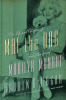
About the original cover (pictured above) Hemingway wrote in A MOVEABLE FEAST: "It had a garish dust jacket and I remember being embarrassed by the violence, bad taste and slippery look of it...for a book of bad science fiction. Scott told me not to be put off by it, that it had to do with a billboard along a highway in Long Island that was important in the story."

Read each of these passages and marvel at their grace and accuracy. Kissing Daisy for the first time is a religious rite/ communion for Gatsby: "He waited, listening for a moment longer to the tuning-fork that had been struck upon a star. Then he kissed her."

When Nick arranges for Daisy to drop by his little cottage for tea one afternoon in order to meet Gatsby, he wonders if "perhaps my presence made them feel more satisfactorily alone."

Of the multitude of strangers who find themselves the beneficiaries of Gatsby's outlandish summer parties, Nick explains, "they came and went without having met Gatsby at all, came to the party with a simplicity of heart that was its own ticket of admission." And during those very fetes, "laughter is easier minute by minute, spilled with prodigality, tipped out at a cheerful word." Isn't Fitzgerald's prose gorgeous?

Consider this Romantic notion chronicling Gatsby's reunion with Daisy: "A universe of ineffable gaudiness spun itself out in his brain...and the moon soaked with wet light his tangled clothes upon the floor." Or that, "No amount of fire or freshness can challenge what a man can store up in his ghostly heart."

Reading THE GREAT GATSBY with the subtext of Fitzgerald's complicated life with his wife Zelda (and Hemingway's portrayal of her in "Hawks Do Not Share" and "A Matter of Measurements") adds another layer to Gatsby's desperate yearning to repeat his past.

Sunday, December 12, 2010

APOCALYPSE FOR BEGINNERS by Nicolas Dickner, translated by Lazer Lederhendler (2010) Vintage Canada


"The future ain't what it used to be," provides Yogi Berra in the novel's epigraph.

High school student Hope Randall comes from a long line of magical thinkers who receive prophetic visions about the end of the world, and when those visions fail to materialize most go mad and find a way to end their own lives. In the summer of 1989, Hope and her mother Ann load up their Lada with ramen noodles and Bibles and head west until the little Russian car conks out near Riviere -du-Loup where they move into a former pet store that still stinks like the giant cage that it was.

Hope doesn't mind being an outsider (she's a mathematics and chemistry genius AND a girl) and it's while sitting alone on the stands at the local stadium, probably thinking about David Suzuki, her TV crush on The Nature Of Things, that Hope first meets Mickey Bauermann who intends to save Hope from her crazy situation.

Mickey and Hope become steadfast friends and predictably lovers, but when Hope's destiny is revealed by chance on a package of Captain Mofuku, she decides she needs to take charge of their future and seek out the source through a journey that leads her to New York City, Seattle and finally Tokyo, Japan.

APOCALYPSE FOR BEGINNERS is quirky fun, with a dash of melodrama and bildungsroman thrown in for good measure.

Saturday, December 11, 2010

YOU HAD ME AT WOOF: HOW DOGS TAUGHT ME THE SECRETS OF HAPPINESS by Julie Klam (2010) Riverhead Books


Carrie Fisher praises Julie Klam's writing by insisting, "if tragedy plus time equals comedy, [she] makes the most of that equation."

I knew I would find Julie Klam's memoir charming, predisposed as I am to champion canine narratives, but I did not expect to do such extensive time-traveling through my own life by her side.

At 30, Klam is single, working part time in a make-ends-meet kind of job, consulting psychics and tarot readers to assuage her fear that she might well end up alone since sitting on her sofa and watching tv seems to be her preferred way to meet eligible men. Enter Otto, stage left. Otto is a Boston terrier that Klam adopts as her first own canine companion who shows her that she just might be able to share her home and her life with another. Enter Paul, stage right. Six years later Klam is married and has a baby daughter, Violet, who completes her family with Paul and Otto. They become involved with a Boston terrier rescue organization and their modest one-bedroom NYC apartment becomes a revolving door for the needy and dispossessed dogs who are difficult to place.

As Klam reminisces about the mastiffs she grew up with and the lasting nicknames that her brother Matt gave each one, I remembered too our first family dog, Nikki, a real pet who at the local dog show earned the ribbon for "the dog that least resembled any known breed" (though she looked most like a little bouvier with a rusty beard) and was affectionately nicknamed "Stinkhead" abbreviated to "Stink" by my brother David because of her horrible breath. Then, Mad Max, another pound rescue who had "Springer's rage" and had to be euthanized because he bit our father's hand one New Year's Eve, damaging the nerves. Most beloved was Winston, raised from an 8-week-old pup, aka Mister/ Mist/ the Uncle/ Mon Oncle, David's constant companion who survived the crash that killed him and managed to get the rest of us through those early days of our keen untenable grief. You see what I mean about time travel?

Like Klam I dreamed the existence of my own dogs, too. Or, perhaps, realized them from a figurine that stood on a secretary in the entrance hall of my grandparents' Toronto apartment: two liver and white Springer Spaniels, their feathery tails uncropped. Along came Bronte and then Doolin, now both gone. And, now Finn, a darling of a chocolate lab with a heart the size of the Chrysler Building, stretches across the queen-sized bed, paws flicking, chasing dream squirrels.

I know exactly what Klam means when she writes: "From Otto, who showed me I could be in a reciprocal nurturing relationship, to Dahlia, who proved that life continues to surprise, each dog in my life has brought me something or taught me a lesson that improved the quality of my life. I am richer in every way because of the dogs I've known." There's even the scientific proof for the doubting Thomases/ Cranky McCranky's who just simply can't see the point of sharing a life in this way: "When a person interacts with a dog, the central nervous system releases several hormones that cause feelings of pleasure--included in that is oxytocin."

YOU HAD ME AT WOOF makes a wonderful stocking stuffer, even for the most curmudgeonly grinch on your list. Follow @JulieKlam on twitter or visit her website to learn more: http://julieklam.com/

Sunday, December 05, 2010

THIS CAKE IS FOR THE PARTY by Sarah Selecky (2010) Thomas Allen Publishers


THIS CAKE IS FOR THE PARTY caught the attention of this year's Giller Prize jury (Michael Enright, Ali Smith and Claire Messud) who shortlisted it in the excellent company of David Bergen, Alexander MacLeod, Joanna Skibsrud and Kathleen Winter.

I paced myself with this exquisite short story collection, sampling it slice by slice, and you should too. I know these characters. I am ashamed to admit that I've been some of these characters.

Selecky has a keen ear for conversational rhythm, both natural and forced and is able to draw attention to her characters' flawed attitudes through their gestures that are at once subtle and sometimes grand. Like Lisa Moore and Michael Winter, Sarah Selecky writes fiction that feels like nonfiction. And, I believe every word.

Sunday, November 28, 2010

EVERY LOST COUNTRY by Steven Heighton (2010) Knopf Canada


Based loosely on an incident that occurred in Fall 2006 on the border between Nepal and the Tibet Autonomous Region of China, EVERY LOST COUNTRY charts the courses of Lewis Book, a doctor who has a history of serving in difficult conflicts; his 16-year-old daughter Sophie who is escaping her own recent past misstep; Wade Lawson, an extreme climber hoping to be the first to summit Mt. Kyatruk; and, Amaris McRae, a Chinese-Canadian filmmaker documenting their journey.

Heighton is an established poet as well as a novelist and throughout this haunting novel there are many lines of found poetry, including the opening line that "air this thin/turns anyone/into a mystic." As the members of the expedition, including local Sherpa guides, acclimatize to the air pressure at their base camp, one evening Sophie perches on the border between China and Nepal to scribble in her sketchbook/journal and watch the sun set over the Himalayas "by four in the afternoon...the cold dusk already deepening...spotlighting the pass and the valley and dyeing the glacier as it descends...a vast, glowing channel of lava running down a volcanic slope." Sophie "sees the trouble coming because she knows her father."

Shots ring out as Chinese soldiers fire at Tibetan refugees trying to flee into exile (as 150,000 have done before them, since 1959, including the current Dalai Lama). Lewis, Sophie's dad, is compelled to attend to the wounded and in so doing finds himself marched away by the Chinese, a captive and political pawn. Amaris, too, with her drive to film the hard truth, becomes a fugitive as Lawson, Sophie and the others look impotently on.

What follows is a thrilling pursuit where each of the characters is forced to face their fears and decide whether or not they can find within themselves the moral courage to continue, especially when the odds of survival are stacked against them. In EVERY LOST COUNTRY, Steven Heighton has woven a tale where complicated emotional truths and even more complicated circumstances intersect and you find yourself wondering alongside Lewis, Sophie, Wade and Amaris when it is acceptable to be a bystander and when life, love and loyalty demand more. Don't miss this extraordinary journey where "desire is a narrative/that keeps you moving forward/even at a crawl/needing to find out."

Monday, November 15, 2010

BURY YOUR DEAD by Louise Penny (2010) Sphere


If you haven't found your way to the Three Pines mysteries by Louise Penny, you should. I've read all of them and find myself welcomed back to the fold each time by the familiar warmth and intelligence of Detective Armand Gamache and the antics of the charismatic locals: artists Peter and Clara Morrow; psychologist-turned-bookseller Myrna; cranky, but gifted, poet Ruth; bistro patrons and partners, Gabri and Olivier.

BURY YOUR DEAD relies partially on the fallout of a curious murder in the previous novel THE BRUTAL TELLING (the 5th in the series, recently named the 2010 Anthony Award winner for the best crime novel in the US) where Olivier has been arrested and convicted of killing the enigmatic Hermit. Gamache has doubts about this conviction, and, as a man of conscience, he sends his 2 I.C., Inspector Jean-Guy Beauvoir, back to the sleepy hamlet to investigate further.

In the recent past there is a moment that personally haunts Gamache, one that leads him to take a temporary leave of absence from the work that he so loves and we learn in an intentionally suspenseful way throughout this narrative what actually happened to break him.

Ostensibly attempting to heal himself in the company of his mentor, the retired Chief Inspector, 80-year-old Emile Comeau who "knew the power, and length of time, Avec le temps, it takes to heal" Gamache heads to Quebec City for respite with his wife Reine-Marie and their adopted German shepherd Henri. There Gamache immerses himself in research about the Battle of the Plains of Abraham at the local library and when his wife returns to Montreal he has Emile introduce him to the members of the Societé Champlain. Gamache also ingratiates himself with the Anglo community that is the Literary and Historical Society and they turn to him for help when there is a grisly murder on their premises. A man has been brutally killed in one of the city's oldest buildings, a place where the English citizens of Quebec safeguard their version of history.

Penny knows her characters intimately and writes convincingly from their perspectives in all of her books, but it's in BURY YOUR DEAD that she fully realizes her narrative structural potential. This newest Inspector Gamache mystery will have you eagerly turning pages through its smart twists and turns to a completely satisfying conclusion.

Check out Louise Penny's website: www.louisepenny.com

Sunday, November 14, 2010

FAUNA by Alissa York (2010) RandomHouse Canada


I've been dipping into FAUNA for a few weeks, taking my time, having surrendered completely to York's world. It is a gorgeous book both inside and out.

Protagonist Edal Jones is on leave from her job as a federal wildlife officer, having witnessed one too many humans smuggling in rare creatures and killing most in the process. One morning, as she's cycling through the empty streets at the heart of Toronto, Edal watches a young girl and her big black dog rescuing birds that have knocked themselves out on the city's glass skyscrapers. Edal follows Lily to a wrecker's yard and there meets more waifs and strays both animal and human who seek refuge in this unexpected haven.

York creates memorable characters in Edal, Lily, Guy and Stephen-- all vulnerable and deeply wounded--and suggests that literature itself offers emotional balm as they gather to hear Guy read from Kipling.

What most amazed me about this novel is the confidence from which the narrative unfurls from the perspectives of raccoons, skunks and coyotes as well as from the mouths and minds of the humans.

FAUNA is a billet-doux to Toronto's wildlife community and to broken souls everywhere.

If you are in Toronto, come to Ben McNally Books (366 Bay Street, south of Richmond) on Tues. Nov. 16th at 7:30 PM and get your own copy of FAUNA personalized by Alissa York. It makes a wonderful gift and an even better treat for yourself.

Friday, November 12, 2010

FREEDOM by Jonathan Franzen (2010) HarperCollins Canada


After hearing Franzen read from FREEDOM at IFOA in October, I was lured to crack the spine of his most-recently lauded magnum opus that landed him on the cover of TIME Magazine (joining Virginia Woolf, William Faulkner, Robert Frost and Stephen King as one of the few writers to do so) and found him forgiven by Oprah who made her own corrections by selecting this novel as her next book club pick, deifying him in the process.

FREEDOM is a brick of a book weighing in at 562 pages and it is not for those of you who are looking for a page-turner to get you through your next trans-Atlantic flight. But, it is worth the time and attention that it requires. Franzen is a literary novelist and he takes his writing seriously.

I'd already met Walter and Patty Berglund in an excerpt in THE NEW YORKER, so knew a little of what to expect at least stylistically of this epic narrative about contemporary love and marriage. There are the stereotypic threats to Patty and Walter's partnership: the younger woman (Walter's assistant, of course) and the college rival roommate (who just happens to be a minor rock star on whom Patty has had a crush for over 20 years).

The Berglunds have two adult children, Jessica and Joey, who do their best to assert their navel-gazing importance. And, though there are many tears throughout the narrative--most of them understandable and pain-driven--I didn't find myself weeping alongside the characters as I did when I read THE CORRECTIONS, Franzen's previous novel that completely exhausted me and left me gobsmacked in awe at his capacity to render fully formed such flawed beings.

Like Dickens, Franzen manages to write a convincing cast of supporting characters who weave memorably in and out as the story moves from the present to the past and back again. And, he takes on big issues increasingly relevant today: environmentalism, moral courage, responsibility.

There were times that I felt bogged down by detail in the middle of the book and frustrated by the narcissism of Joey (who certainly made my smacking hand itch) especially; however, I suspect being irritated is entirely the point.

In FREEDOM Jonathan Franzen has offered up a looking glass to contemporary North American culture and it is no small wonder when we shudder at the image of what is reflected back.

Thursday, November 11, 2010

THE BONE CAGE by Angie Abdou (2007) NeWest Press


Without my obsessive tweeting about books and following other like-minded bibliophiles in the Twitterverse, I don't think I would have found my way to THE BONE CAGE, dedicated advocate of CanLit that I am--and what a shame that would have been.

Those of you who follow CBC books and are aware of its recent request to find the top 40 Canadian novels/collections of short stories published since 2000 (as suggested by readers across the country) may have become aware of Abdou's book there when it leapt to the controversially curated Top 10 List where it holds its place alongside Ami MacKay's THE BIRTH HOUSE, Lawrence Hill's THE BOOK OF NEGROES and Joseph Boyden's THREE DAY ROAD--perhaps the finest novel ever written about the WWI Front and its consequences.

My copy of THE BONE CAGE came winging to me in the mail last week as payback for a copy of Alexander MacLeod's LIGHT LIFTING. How lucky I am in return.

THE BONE CAGE is a dual narrative told in confident third-person about two elite athletes training in Calgary with the hope of making it to the 2000 Summer Olympics in Sydney: The Show. Sadie is a swimmer with an English Literature degree and Digger is an 85-kilo wrestler and both stand on the verge of realizing every competitive athlete's dream. Because Sadie is 26 and Digger is 30, both are also already beginning to contemplate what will become of them when their bodies eventually betray them, as all bodies do.

Abdou's description is visceral and precise and I found myself wishing I could work up a sweat at the gym as efficiently as Digger and find the vision to work through pain like Sadie does for hours every day in the pool. In addition to her focused narrative drive, I found myself admiring Abdou's original figurative language: "His words come from far away, and they barely reach her. She feels them slide off her body and land in a puddle at her feet." Wow. Right?

I hope that the current exposure on the road to Canada Reads 2011 finds Angie Abdou's THE BONE CAGE the wider and appreciative audience that it so deserves.

Tuesday, November 09, 2010

WILDLIFE by Richard Ford (1990) Random House


I am on a Richard Ford reading binge, flipping through each book that comes my way. Plus I have my Grade 12 writing students delving in as well to short pieces like "Leaving for Kenosha" (short story), "A City Beyond the Reach of Empathy" (nonfiction about immediate post-Katrina New Orleans), and "Gov't On Our Minds" (about the US midterm elections & published last week in The New Yorker)

Everywhere I turn Ford's prose startles and energizes me.

In WILDLIFE, set in Great Falls, Montana in 1960, protagonist Joe Brinson bears witness to the dissolution of his parents' marriage. Joe's father, Jerry Brinson, was a man who "loved the game of golf because it was a game that other people found difficult and that was easy for him." When he is fired from his job as a golf pro at a local club where he'd hoped to ride the coattails of his wealthy clients and experience the promise of good times that their successes suggested, Jerry makes the unconventional decision of joining a group of volunteer firefighters who will be facing the wildfire that threatens to destroy their community. His wife Jeannette predicts that Jerry will "get burned up," since his only knowledge of fires comes from library books.

Ford creates palpable tension between the main players of this three-day drama and at the end of those days it's difficult not to believe every word of what has happened to the Brinsons, all of whose lives have been made wild by the events. What is remarkable to me is how Jeannette and Jerry find their way back after so much has happened to rend them apart.

Richard Ford must be read. By picking up WILDLIFE, you will learn more about yourself and your capacity for dignity, courage and forgiveness--all essential elements of being human.

Sunday, November 07, 2010

HALF BROTHER by Kenneth Oppel (2010) HarperCollins Canada


Thirteen-year-old Ben Tomlin is less than thrilled when his mother brings home an 8-day-old chimpanzee they name Zan. Ben is accustomed to being the only child of two curious behavioural scientist parents, but now thanks to one of his father's high-profile experiments, Ben has been uprooted to the west coast where a university has agreed to support the project that hopes to determine if a chimpanzee can learn human sign language. And, Ben finds himself in the sometimes uncomfortable position of explaining that he now has a little brother who is a chimp.

To begin with Zan is treated like a human baby, swaddled in blankets and diapered. He adjusts relatively well to his new life with the Tomlins and a caring group of graduate students that help to support him. It only takes a few months for Zan to learn his first few signs and he becomes a media sensation with reporters from TIME magazine showing up as well as a 60 MINUTES crew. It's the 70s and there are nascent groups of Animal Rights Activists who are becoming vocal. Could they threaten the fascinating project that Dr. Tomlin has created?

Being a teenager, Ben is also struggling to fit in to a new community of schoolmates and coming to terms with what he refers to as the "Project Jennifer"-his intention to properly woo one of his classmates whose father is his own father's boss at the university.

HALF BROTHER raises ethical questions about animal experimentation and there were several moments where I found myself weeping for Zan as he struggles with his own identity: animal or human?

Oppel clearly remembers what it is like to navigate the turbulent waters of adolescence and writes convincingly from Ben's perspective as a result. This is a novel that would appeal tremendously to Grades 6-8, especially as students are developing moral courage and figuring out what is fair.

Sunday, October 31, 2010

SANCTUARY LINE by Jane Urquhart (2010) McClelland & Stewart


Set today SANCTUARY LINE follows Liz Crane, an entomologist, who moves back to the family farmhouse where she spent most of her childhood summers in southwestern Ontario. Liz is there for pragmatic and personal reasons: she will be monitoring the Monarch butterfly colony nearby and trying to cope with the recent loss of her cousin Amanda, a skilled military strategist killed recently while serving in Afghanistan.

Just being in this particular place cracks wide Liz's memories of her formative years growing up with her cousins, reminding her of the stories that her uncle told of previous generations of lighthouse keepers and the Mexican workers who laboured throughout the orchards at harvest time. Liz is especially haunted by her recollection of a young Mexican named Teo, the son of the foreman Dolores, who held a special place in Liz's heart.

With the begrudging help of her mother, Liz is able to reconstruct the events of the final summer in the farmhouse, the summer that became the turning point for both her and Amanda in the way they were able to see truth for the first time. There are secrets broken and kept and it's only through forgiveness that Liz manages to understand why the people she loves made the choices they did.

Saturday, October 30, 2010

THE NIGHT SHIFT: REAL LIFE IN THE HEART OF THE E.R. by Dr. Brian Goldman (2010) HarperCollins Canada


Dr. Brian Goldman may be a familiar name to you if you're a CBC geek like me. He's the host of CBC Radio's "White Coat, Black Art," a show that aims to speak directly about issues facing doctors and patients. However, in addition to being a recognized medical journalist, Goldman also continues to work as an emergency room physician at Mount Sinai Hospital here in Toronto.

THE NIGHT SHIFT demystifies life in an Emergency Room and follows Goldman through a typical round from 10pm to 7am one evening, an evening where he deals with a dislocated shoulder, a dying cancer patient having a seizure, a stroke victim in denial, a paranoid woman, a pregnant woman who had no idea she was in labour, a victim of a date-rape drug, kidney failure presenting as a gastrointestinal bleed, a broken wrist, and a suicide risk, among several others.

Ever wondered about the triage rules? There are 5 levels ranging from 1-5 depending on the urgency of your required care and here are the wait times as well:
1: resuscitation (requires immediate, aggressive intervention) IMMEDIATE ATTENTION
2: emergent (almost same danger as level 1) WITHIN 15 MINUTES
3: urgent (vaginal bleeding, moderate head trauma, acute pain, suicidal thoughts) WITHIN 30 MINUTES
4: semi-urgent (back pain, headaches) 60 MINUTES
5: non-urgent (sore throat, minor abdominal pain) 2 HOURS

The book is rife with interesting anecdotes and statistics like, in Ontario, it may take anywhere from 24 hours - 3 years to have a suitable available liver for transplantation--that's quite an open window. If you have needed a push to SIGN YOUR Organ Donor Card, consider this statistic that reality check.

All of the chapters have engaging titles, but the most intriguing to me is "Moonlighters and Frequent Flyers" which explores the cases of patients who are prescription drug addicts and make their own rounds from hospital to hospital telling their embellished tales of lost-in-flight bottles of Oxycontin or accidentally flushed Demerol tablets. The frequent flyers of the title are alcohol dependents, some of whom have minor scrapes and bruises from a bar brawl, but who intend to be placed on a gurney in the hallway and wait for the opportunity to swipe bottles of hand sanitizer which they consume to become further intoxicated.

The range of patients requiring treatment on any given NIGHT SHIFT keeps E.R. physicians like Goldman engaged in the adrenaline-pumping, creative problem-solving essential to practicing their chosen medicine.

Dr. Brian Goldman may be followed on twitter @WCBADoctorBrian and you may meet him and have him sign a copy of NIGHT SHIFT at GET CAUGHT READING on Tuesday November 16th at 7pm at Ben McNally Books--RSGC's annual event that this year supports The Children's Book Bank here in Toronto. The event is open to the public. I hope to see you there.

Monday, October 25, 2010

LIGHT LIFTING by Alexander MacLeod (2010) Biblioasis


Yesterday afternoon I heard the IFOA panel hosted by Antanas Sileika and featuring Alexander MacLeod, Paolo Giordano and Karl Marlantes: word/sentence/book. Each of these writers is a little startled by the remarkable successes of their first books. I'd already dipped into LIGHT LIFTING, but after this incredibly engaging round table discussion was buoyed to finish it.

In their very public conversation, MacLeod referred to the opening paragraph of "Miracle Mile," the first story in this exquisite, elegiac collection. He wanted to write a piece that "whittles down, the focus becoming so precise that all other social context is irrelevant." He does just that in the moment just before Mike Tyson bites off Evander Holyfield's ear when "the tendons in his neck bulge out and his eyes pop wide open and his teeth come grinding down." That moment is pure instinct and rage.

MacLeod went on to say that "everyone has material, but you admire the way that they do it. You lust after style." As I was reading each of these stories that contemplates the ordinariness of daily lives, I couldn't help but compare their rhythm and pacing to Richard Ford's A MULTITUDE OF SINS. Each sentence is measured without being overwrought. And, it's interesting to know that both fiction writers read their work aloud to be sure that it sounds just right.

What especially impresses me about each story is the resonant final sentence that folds in on itself and gestures to both personal and shared experiences. Take a look for yourself at the final image in "Wonder About Parents": "Like a discotheque, maybe, or the reflection of ancient fire in a cave;" or in "Light Lifting:" "It wasn't right and I kept wishing for it to be darker so I didn't have to see it all so clearly;" or in "Adult Beginner 1:" "It rises out of the dark, advances over the water and swallows everything in its path." Do you see what I mean?

LIGHT LIFTING is the product of 15 years of hard work. I sure hope we won't have to wait another 15 for Alexander MacLeod's next book. Lucky for you, if you live in Toronto, he will be reading from this luminous collection on Saturday October 30th at the Scotiabank Giller Shortlist night at IFOA. 8pm Fleck Dance Theatre.

Saturday, October 23, 2010

A MULTITUDE OF SINS: STORIES by Richard Ford (1996) Random House


Before the Opening Night of the International Festival of Authors here in Toronto on Wednesday night, I was already firmly entrenched in my belief that Richard Ford is one of the finest fiction writers scribbling today. Having met him and spent time speaking with him since he headlined the event that I co-chaired to support PEN Canada, I am also besotted with Richard Ford the man. The mensch. And he is one, full stop.

Talking about the role of literature in his life he said, it "gave meaning to my life. Reaching out both ways. You know, that rare understanding between reader & writer?" Well, yes. Don't you? And, "when everyone was telling me about the best in Mississippi during those days of segregation, literature helped me believe in a better place." At its best, literature convinces me of a better place, where others listen, bear witness, act compassionately, are playful, love books.

A MULTITUDE OF SINS is Ford's previous collection of short stories, (he has promised his publisher another forthcoming after his next novel CANADA, mostly penned already) many of which contemplate infidelity and its consequences.

What if you manage to sneak your girlfriend off on a trip to the Grand Canyon without your spouses knowing, but then you find her a little boring, and she just happens to accidentally die there? What then? What if your wife admits to adultery on the way to a dinner party hosted by her lover? What do you do? Do you respond honestly? Do you hold back your true feelings? Are you able to treat her like a lady? What if you still love your husband, but find him straying, yet know that he still loves you?

These are not questions with easy answers, but the way Ford exposes the underlying truths with candor and insight may just encourage you to be more sincere, empathic, passionate and loving to those you desire. Moral ground is messy territory, especially when your sense of right and wrong is put into such vivid relief against the backdrop of a Richard Ford story.

Tuesday, October 19, 2010

THE LIFE AND OPINIONS OF MAF THE DOG AND OF HIS FRIEND MARILYN MONROE by Andrew O'Hagan (2010) McClelland & Stewart


I will read anything that Andrew O'Hagan writes, from a short story in GRANTA to a book review in the LONDON REVIEW OF BOOKS to one of his gorgeous literary novels like PERSONALITY or BE NEAR ME.

THE LIFE AND OPINIONS OF MAF THE DOG AND OF HIS FRIEND MARILYN MONROE will transport you headlong into the 60s: the nascent Camelot presidency of JFK; the brat pack tomfoolery of Frank Sinatra, Peter Lawford, Sammy Davis Jr. and Dean Martin; the Hollywood star system that transformed Natalie Wood and Marilyn Monroe into superluminaries.

Maf is the canine companion, a gift to Marilyn from Sinatra, who journeys everywhere with Marilyn in the final two years of her life. He dines at the best restaurants in NYC and LA, visits film sets, travels to Mexico to finalize Marilyn's divorce from Arthur Miller, witnesses acting classes with the Strassbergs and philosophizes all the while about high art, bedroom comedy, cats who mimic poet William Carlos Williams and the heady politics of change.

Written in the tradition of picaresque novels of the 18th century and with homage to other pets that have gone before Maf (Virginia Woolf's Mitz "who behaved as if the world were a question"; Maud Gonne's Chaperone, "a grey marmoset filled with Celtic lore and Hellinc rhymes [about] the impotence of human passion;" Greyfriars Bobby, "a kind of saint, really. And sainthood is the kind of fame you want;" Laika, "a brave Russian soul...[whose] memoirs would constitute a masterpiece to rival David Copperfield."), THE LIFE AND OPINIONS OF MAF THE DOG AND OF HIS FRIEND MARILYN MONROE is a marvelous romp that will have you yearning for more stories of such wit, rife with literary and popular culture allusion.

Mafia Honey (Monroe's full name for her beloved Maltese) may well be my new best friend.

Hollywood has hopped on the Andrew O'Hagan bandwagon and will be producing Maf's story for the big screen, featuring George Clooney as Sinatra and Angelina Jolie as Monroe. It should be a lark.

A SECRET KEPT by Tatiana De Rosnay (2010)


If you love being read to, then get yourself a copy of Macmillan Audio's unabridged audio book of Tatiana De Rosnay's A SECRET KEPT, masterfully read by Simon Vance.

Protagonist Antoine Rey organizes a surprise 40th birthday getaway for his younger sister Melanie at Noirmoutier, an island where they spent several pleasurable summers as small children with their parents and grandparents. It's been 30 years since the Reys' last visit, the summer before their mother Clarisse died unexpectedly. Antoine and Melanie reminisce about those halcyon days, but the visit also triggers in Melanie a memory that unsettles her.

When Melanie finds the courage to disclose this troubled memory to Antoine on their drive back to Paris, the car veers off the road and Melanie, a wisp of a woman to begin with (and the mirror image of her mother), ends up fighting for her life in a provincial hospital. There, Antoine meets a remarkable woman, Angele, who happens to be the hospital mortician. And, although her work day is filled with death, it is Angele who infuses new life into Antoine.

Months later as Melanie is recovering at home in Paris she tells Antoine the dark secret about their mother, a taboo topic that causes both of them pain. As Antoine copes with other losses in his life involving his ex wife Astrid and their teenaged children, he struggles with the idea that perhaps he never really knew the real Clarisse and tries to figure out a way to make peace with his past.

Written with exquisite attention to the complications and messiness of ordinary lives and the human capacity to endure, De Rosnay shows that some secrets, no matter how painful, are meant to be told.

Monday, October 11, 2010

THE SPORTSWRITER by Richard Ford (1986)


Having read Ford's Bascombe trilogy in backwards order (because that's the way they arrived from my local library), I feel like I've been time-traveling back to the 80s in the often erudite and always direct company of protagonist Frank Bascombe, the sportswriter of the title.

At 38, Frank is a fairly recent member of the Divorced Men's Club, where he has met men his introspective equal, and one in particular who has become confessional in a way that makes Frank feel a little ill at ease, because the last thing he needs is someone else to worry about.

On this long Easter weekend over which the novel takes place, Frank finds himself facing the great sadness of his own past (the death of his young son Ralph) and longing for "one of the last moments of unalloyed tenderness in the world" that he shared with his then-wife Ann as Ralph died. In the present he finds himself at the table of his girlfriend VIcki's father, a likable man who has found God and even has the life-sized image of His Son hanging outside his suburban home. There Frank receives a call from the police that pushes him away from Vicki and all that she symbolizes and further into himself, stumbling temporarily into the succour offered from the kindness of a stranger.

And, as Frank concludes, "the only truth that can never be a lie...is life itself--the thing that happens." Spend time in Frank Bascombe's company. Your eyes will be opened a little wider and you'll be all the richer for it.

INDEPENDENCE DAY by Richard Ford (1995)


The middle novel of the Bascombe trilogy, INDEPENDENCE DAY, won Ford the coveted Pulitzer Prize. No longer a sportswriter, protagonist Frank Bascombe is divorced and selling real estate in Haddam, New Jersey, in the midst of what he refers to as the Existence Period of his life.

His ex-wife Ann lives in Connecticut with their two children Claire and Paul and her wealthy paramour Charley O'Dell. This holiday weekend Frank has plans to take the Ur-father/son excursion with Paul to Cooperstown and the Baseball Hall of Fame, stopping en route at the Basketball Hall of Fame to warm up. Paul has recently clocked his stepfather and has begun barking for attention, so Frank is hopeful that his opportunity to bond alone with Paul might be just what the doctor ordered, if not his ex-wife.

Humming along in the subplot is Frank's nascent 10 month-old relationship with his lady friend, "blond, tall and leggy Sally Caldwell" , and the very separate demands of hard-to-please real estate clients looking to get a new start in Frank's neck of the woods.

Frank's Independence Day weekend goes awry in a batting box at the Baseball Hall of Fame and he finds himself negotiating with his ex-wife for emergency medical care for their son and unexpectedly reunited with his stepbrother who helps to get him through this unexpected turn of events. Yet, by the time Frank faces the 4th of July head on, this most private of private men finds himself drawn to the parade crowd: "The trumpets go again. My heartbeat quickens. I feel the push, pull, the weave and sway of others."

Sunday, October 03, 2010

PRACTICAL JEAN by Trevor Cole (2010)


Trevor Cole reeled me in with his opening sentences: "You might think is a rather horrible and depraved sort of story. But that's because you're a nice person. The events of this story are not the sort of thing that nice people think about, let alone do."

Even if you don't admit to being a prurient sort of person, you can't help but find that narrative taunt alluring. Cole knows how to weave a tale and to sweep you along for the wild ride. It's heartening to know that his accomplished storytelling and dark humour have not gone unnoticed by fiction juries. Last week, PRACTICAL JEAN was named to the shortlist for this year's Rogers Writers' Trust fiction prize where it is in handsome company with THE DEATH OF DONNA WHALEN, ROOM, ANNABEL and CITIES OF REFUGE, all novels previously written about in this blog.

When I began PRACTICAL JEAN, I felt immediate kinship with the titular character as she witnesses first hand the horrors of aging and the mess that dying of natural and painful causes can be as she nurses her mother. Relieved by her mother's death, Jean resolves to embrace practicality and to offer "last poems" to her closest friends, so they won't ever have to suffer as her mother did. Determined in the rightness of her cause, Jean embarks on a brave new project and the sleepy town of Kotemee will never be the same.

Lynn Coady writes that "this take on female friendship gives chilling new meaning to the phrase tough love. PRACTICAL JEAN is Trevor Cole at his satirical best."

Believe her and believe me: PRACTICAL JEAN is witty, naughty fun.