Monday, July 05, 2010

CADILLAC JUKEBOX by James Lee Burke (1996)


While I was in Philadelphia last week I ran out of reading material and found the local Borders bookstore near City Hall where I scoured the mystery section for a familiar author. Luckily there was a James Lee Burke title I hadn't yet read. If you haven't already found your way to him or to his daughter Alafair Burke, you must.

Burke's (pater) Dave Robicheaux books are set in Louisiana and he writes so convincingly of the place that you'll find yourself wiping sweat from your brow in sympathy with his characters even from the air-conditioned cool of your hotel room.

In CADILLAC JUKEBOX, Buford LaRose, the inheritor of a wealthy Southern family, is elected governor and strange things start to happen. Robicheaux is offered a job as the head of state police (which he routinely rejects), an out-of-town documentary filmmaker is slain, and the governor's wife Karyn tries to seduce Dave--though he's happily married to Bootsie. With a supporting cast of ne'er-do-wells and his trusty friends Batiste and Clete Purcell, Dave discovers the truths about the past and the present and it seems that no-one is safe in Iberia Parish.

SMART WOMEN (1983), SUMMER SISTERS (1998) and FOREVER (1975) by Judy Blume


I haven't picked up a Judy Blume title since the summer of 1976 when I read DEENIE, because I was terrified that like the title character in that tween novel I might end up wearing a back brace for scoliosis. Luckily, I grew almost 6 inches that summer and pretty much straightened myself out. Up until then I'd read her age-appropriate books including OTHERWISE KNOWN AS SHEILA THE GREAT, STARRING SALLY J. FREEMAN AS HERSELF, TALES OF A FOURTH GRADE NOTHING, ARE YOU THERE GOD, IT'S ME MARGARET and BLUBBER. I loved the humour and the real way those kids spoke and behaved and I wanted to live in NYC near Central Park like they did. In addition to Beverly Cleary's books about Beezus, Ramona and Henry, I credit Judy Blume with really turning me on to reading for the complete delight it offers when you disappear into that time and space.

When I started following @judyblume on Twitter recently, I decided I would pick up where I left off 35 years ago. So, I finally read FOREVER and now understand why I simply couldn't get a copy as a gift when I was 12, and chuckle now at Blume's homage to LADY CHATTERLY'S LOVER--a reference that would have certainly been lost on me then. But, Ralph? I ask you is there a penis name any more ridiculous than that?

SMART WOMEN and SUMMER SISTERS are written for adult readers and both address love lost and found in young adulthood and middle-age. Though the stories are entirely predictable, the characters are genuine and demonstrate real problems great and small that we all experience. If you're feeling nostalgic for cognac, hot-tubs, rides in pick-up trucks, or Martha's Vineyard, reach for one of these breezy summer reads to toss in your beach bag.

Thursday, June 24, 2010

LET THE GREAT WORLD SPIN by Colum McCann (2009)


In this great symphony of a novel Colum McCann weaves several voices together to form a tapestry that was New York City in August 1974 when Phillipe Petit strung steel cables between the World Trade Centre towers and walked from one side to the other in a scandalous stunt.

Each of the narrative voices is distinct and convincing--grieving mothers of Vietnam Vets, a young painter, an Irish monk and his brother who intends to save him, a prostitute and her daughter, and a well-respected judge.

McCann recreates a time and place so beautifully that it's hard to believe that he didn't experience the moments himself.

This is the finest novel that I've read in a long time and the prose is as extraordinary as the story itself. If you liked Michael Cunningham's THE HOURS, then you must get yourself a copy of LET THE GREAT WORLD SPIN and prepare to be astonished.

Monday, June 21, 2010

A PRAYER FOR OWEN MEANY by John Irving (1992)


This is a novel that I re-read every year not only because of its plotting brilliance, but also because of the way I feel connected to my brother who died in 1994. It's a book that I gave him for his birthday in 1992 and it's one that I know he adored because he, like the narrator John Wheelwright and his best friend Owen Meany, attended a private boarding school for boys, and recognized some of his own antics in the pages of Irving's story.

There is a fatal incident with a baseball at the beginning of the book that's reminiscent of Robertson Davies' trick with the stone-filled snowball in FIFTH BUSINESS and that is no accident as Irving is an admitted fan of Davies. From that moment, the tale unfurls, in brilliant pacing with just the right amount of humour, social satire and political referencing. Irving shifts the narrative effortlessly from the 1950s/60s past to the 1980s present when Ronald Regan is the president and muddling about in the Iran/Contra scandal and his Star Wars policy, and the protagonist is teaching at BSS, a private school for girls in Toronto.

In an interview last fall at IFOA in Toronto, John Irving explained how for all of his novels he knows the last sentence first and from that is able to backfill the narrative. Here's that final line: "Oh God--please give him back! I shall keep asking You."

I think of the narrative structure of A PRAYER FOR OWEN MEANY as cyclical. Just consider its opening in relation to the end: "I am doomed to remember a boy with a wrecked voice--not because of his voice, or because he was the smallest person I ever knew, or even because he was the instrument of my mother's death, but because he is the reason I believe in God; I am a Christian because of Owen Meany."

If you admire 19th century novelists like Thomas Hardy or Charles Dickens, then you must read their late-20th century inheritor John Irving.

ONE LAST BREATH by Stephen Booth (2004)


At the opening of this thriller Mansell Quinn is released from prison after serving 14 years for killing his lover and it would seem that vengeance is his. Soon after his discharge the body of his ex-wife is found bludgeoned in her home. It seems more than a coincidence.

Detective Ben Cooper and his boss Diane Fry comb through the old case notes for clues and discover that there may be other potential victims out there, including former army pals and Quinn's own adult children, and the fugitive Quinn cannot be found. Cooper is the son of the copper who put Quinn behind bars, so he might also be a target.

Galloping along at a breakneck pace, ONE LAST BREATH will have you second-guessing yourself until the reveal, but not before there are other victims in this tragedy's wake.

LONELY: LEARNING TO LIVE WITH SOLITUDE by Emily White (2010)


I heard Emily White interviewed on CBC radio when the book launched and was intrigued enough to request a copy from the Toronto Public Library which I picked up on the weekend.

LONELY opens with the UCLA Loneliness Scale, a form with about a dozen questions that prompts you to rate yourself on a frequency scale from 1 (never) to 4 (always). Although the form smacks of a Cosmo survey, White does return time and again to empirical evidence and scientific studies about loneliness and how to distinguish it from clinical depression.

I was more interested in reading about her story, the memoir part of the book, rather than being educated about loneliness research. I didn't mind the inclusion of conversations with other lonely people, but at times found it all a little too precious. What irked me most about the book was how this previously heterosexual woman could only find the antidote to her loneliness in the company of a beautiful lesbian with whom she now lives in St. John's.

Sunday, June 13, 2010

THE MISTRESS OF NOTHING by Kate Pullinger (2009)


With tony literary friends including George Meredith and Alfred Tennyson, translator Lady Lucie Duff Gordon is the toast of Victorian London. After a collapse at the dinner table one evening, her doctor insists that she set sail for warmer and drier climes in Egypt where there is some hope that her tuberculosis may be treated. Lady Duff Gordon must leave her husband and children behind in England and is accompanied by her longtime faithful and devoted maid Sally first to Alexandria and then down the Nile to Luxor.

In Luxor, Lady Lucie adopts native dress and throws herself into the cultural wonder that is Egypt by embracing Arabic lessons, trying foreign menus and journeying to the famous ruins. Aided in her transition to this life by her dragoman Omar, Lady Duff Gordon writes enraptured letters home daily to her family, and those letters are published as a book, a boon that helps to finance her stay in Egypt.

MISTRESS OF NOTHING is told from Sally Naldrett's wide-eyed perspective as she experiences a whole new world in service to her Lady Lucie. In Egypt, Sally's apparent freedoms are ones she can ill afford in her position and her opening gambit that "the truth is that, to her, I was not fully human," is not only heartbreaking but true.

Partially based on the actual Letters from Egypt by Lady Duff Gordon (in print since their original publication in 1865) MISTRESS OF NOTHING is a novel that will transport you to 19th century Egypt's sights, sounds and smells so convincingly that you'll feel you've taken the journey yourself.

Friday, June 04, 2010

THE EVOLUTION OF JANE by Cathleen Schine (1998)


Jane is a twenty-something divorcee whose parents have given her the present of a trip to the Galapagos with the hope that she will put her marriage resolutely in her past. Jane is fascinated by Darwin's research and is quite delighted by the opportunity to follow in his footsteps.

When she arrives, she is greeted by the tour guide who happens remarkably to be her once-best-friend Martha, a childhood playmate from two doors down who also happens to be Jane's cousin. They fell out of touch, but now this excursion living in close quarters on a boat called the Pequod (in homage to Moby Dick), will challenge their ideas about each other.

The novel flips back and forth between Jane's childhood and the journey through the Galapagos where there is ongoing reference to Darwin's ideas and his writing as the dozen tourists tramp about the islands in awe of the flora and fauna that includes bachelor sea lions licking their amorous battle scars, miniature penguins who consider the humans annoying interlopers, and massive tortoises on whose backs, Darwin and his crew from The Beagle may well have ridden themselves.

MAKING ROUNDS WITH OSCAR by David Dosa (2010)


David Dosa is a geriatrician working in Boston. He is the attending physician at a nursing home where many of the patients have dementia. MAKING ROUNDS WITH OSCAR: THE EXTRAORDINARY GIFT OF AN ORDINARY CAT is his account of one of the resident felines, who seems to have the knack for knowing when one of the human residents is going to die and is determined to bear witness to that passing and provide whatever comfort he can for both the dying patient and those left behind at the bedside and beyond.

Told in a series of anecdotes, this memoir shows the capacity of pets, and one in particular, to demonstrate an understanding of loss and the importance of true companionship in what may be our darkest hour. Although initially skeptical himself, Dr. Dosa soon comes to value Oscar's instinct and looks to this ordinary often-aloof and typical cat for guidance in terms of timing and supporting his dying patients.

MAKING ROUNDS WITH OSCAR is genuine pet therapy hard at work.

Wednesday, June 02, 2010

THE LOVE LETTER by Cathleen Schine (1995)


Helen is a forty-something divorcee who has her own bookshop in the little east coast town where she grew up. Her daughter Emily has gone off to summer camp and although Helen misses her only child almost viscerally she is able to fall head over heels for Johnny, one of the college students working for her, without consideration for anyone but herself. Johnny has the arrogance and irresistibility of youth and the two of them spiral into an affair that is at once both forbidden and enviable.

An anonymous love letter using nicknames arrives one day at the store where Helen has all of her mail posted and she becomes obsessed by the idea of discovering who its author is. That journey leads her through several misconceptions and finally to its true, surprising source.

Summer loving has never seemed so grown up, especially when Helen's mother Lilian and grandmother Eleanor come to stay and add a n'importe quoi to the household.

I especially enjoyed the many references to existing epistolary correspondences like those from Elizabeth Bishop, Emily Dickinson and Anais Nin, as well as the fully realized work life inside a bookstore. THE LOVE LETTER made me long for a bookshop of my own, just as 84 CHARING CROSS did.

Monday, May 31, 2010

THE BISHOP'S MAN by Linden MacIntyre (2009)


Set in the mid-1990s on Cape Breton, THE BISHOP'S MAN gives an insider's perspective from RC priest Duncan McAskill who has been used by the bishop of Antigonish to clean up previous messes, by which, I mean abuse scandals.

Father McAskill moves back to a small community in which he was raised and quickly comes to appreciate the generosity and forthright approach of the local folks. Young Danny, however, seems to have troubles beyond what appear on the surface.

MacIntyre's timely novel that won last year's Giller Prize does not pussy foot around the legacy of sexual abuse which currently rocks the foundation of the RC church, especially in eastern Canada. It is an important story that is written in haunting prose.

Sunday, May 30, 2010

HEAD SHOT by Quentin Jardine (2002)


Scottish DCC Bob Skinner is at a conference in Malaysia about to give a paper about drug trafficking when he receives a call that changes his plans. His American in-laws have been murdered in upstate New York. Driven by rage Skinner flies to the USA and muscles in on the investigation, that is soon co-opted by the FBI since his father-in-law had been a Senator with secrets on the side.

What appears at first to be a burglary gone awry soon becomes obviously a professional hit job with an axe to grind against members of the Democratic Party that traces back to a coterie of men who played Sunday football with then-President JFK. When others are killed in similar circumstances, Skinner quickly decides that this is a situation rife with dirty cops and agents and subsequently trusts no-one as he digs for the truth behind what lead to the untimely deaths of his kind in-laws.

There is a subplot back in Edinburgh involving married coppers and an extended Italian business clan that doesn't add anything to the story and could well enough be left out of HEAD SHOT and made into a novel on its own. I'll give Jardine one more try to get the plotting right.

Thursday, May 27, 2010

THE THREE WEISSMANS OF WESTPORT by Cathleen Schine (2010)


After 48 years of marriage, Betty finds herself on the short end of the divorce stick having to evacuate her comfortable Upper Westside apartment and to move in with her adult daughters Annie (a librarian) and Miranda (a literary agent nearing bankruptcy). They are the the three Weissmans of the title, an ironic pun completely intended since they are anything but wise.

Betty accommodates to her new circumstances fairly well after purchasing an essential Chanel suit in which to meet the divorce lawyers. Annie and Miranda are less adaptable, especially Miranda who virtually ignores the calls from her own lawyer warning her of her imminent bankruptcy.

Throw into the mix various unsuitable paramours including a Hollywood-bound playboy, an illustrious writer and an epidemiologist and you have the stable of character foils necessary for each of the women to finally come into their own.

I really enjoyed Schine's snappy style and have already requested copies of her previous novels through my local library.

Tuesday, May 25, 2010

CHERRY by Mary Karr (2000)


Mary Karr lured me in with her muscular prose and unforgiving attitude, especially when it comes to facing the truth about herself in her most recent memoir LIT. So, it was with equal parts trepidation and excitement that I peeled open the cover of CHERRY, the unflinching look at her sexual coming of age from middle school through the end of high school.

It's not like I really needed reminding why I don't want to be 15 again, but what a relief to know that those turbulent days of adolescent hormonal upheaval are entrenched firmly in my past.

Nobody writes about herself with such honesty and vibrancy. If you haven't discovered Mary Karr's prose yet, you've got to bother.

Monday, May 17, 2010

THE POSTMISTRESS by Sarah Blake (2010)


It is 1940, France has fallen to the Germans and FDR promises Americans that their boys will not need to serve in foreign wars. Enter the unflappable Frankie Bard, a radio producer working in London for Ed Murrow--yes, that Murrow. Her dispatches during the Blitz reach across the Atlantic into the hearts of Americans as she reports on ordinary folk going about their business in extraordinary circumstances. Through her flatmate Harriet, Frankie becomes interested in the unreported story of the Jewish refugees streaming across Europe and soon becomes obsessed with recording their voices.

Back in a small town near Cape Cod, the town mechanic Harry Vale searches in vain for German U-Boats that he is convinced will surface off the coast and bring the war to his doorstep. Iris James, the postmistress in Franklin, is certain that Harry is right. When Frankie Bard shows up mysteriously in Franklin for respite in the summer of 1941, Harry and Iris befriend her and in time realize that in spite of their instincts to tell the truth or to deliver the mail no matter the circumstance, they are unable to do just that when it means protecting someone as vulnerable as Emma Fitch.

This beautiful and haunting novel reminds us how we bear the wars that go on around us as our ordinary lives rumble along from one day to the next. Although THE POSTMISTRESS is firmly set in the 1940s, it could be set today as the contemporary resonances are emotionally true.

If you are a fan of literary fiction, this book should find a place in the pile of must-reads beside your bed.

FRACTURED by Karin Slaughter (2008)


Apparently, Slaughter is the author's real name. It's almost laughable in a writer of thrillers.

In an upscale Atlanta neighborhood a teenaged girl is brutally murdered. When her mother Abigail comes home and discovers the newly bludgeoned corpse of what she believes to be her daughter and there is a young man kneeling over her covered in blood, she exacts her own form of vigilante justice. In abject terror she strangles the stranger to death.

Two cases of mistaken identity complicate the murders and Abigail discovers that the police believe her daughter has been abducted. In the matrix of forensic evidence, Detective Will Trent sees something that others do not. It is Will's conviction that Emma is still alive, being held ransom, if he could only figure out who may have abducted her and why.

What kept me interested in this mystery was the subplot thread of life in care and what happens to children who were raised in foster homes and how they transition to adult life and responsibility with varying degrees of success and functionality.

Tuesday, May 11, 2010

A QUESTION OF BELIEF by Donna Leon (2010)


Picking up another mystery featuring the ever-gallant and charming Commissario Guido Brunetti is like finding a shaded patio on a blazing day in Venice with pitchers of chilled Sangria and a good book your only required company.

At the opening of A QUESTION OF BELIEF Brunetti is planning a trip with Paola and the children to the north of Italy where they will be able to wear sweaters in the evening and snuggle under eiderdowns and escape the baking heat that is their hometown in the height of the tourist season. And, Brunetti manages to pack for his trip and even get on the train out of Venice before the murder of a town clerk requires his return to the Questura to help solve the crime.

In addition to the murder, Brunetti has also agreed to help a colleague, Inspector Vianello, with a family problem. It seems Vianello's favourite aunt has been hoodwinked into giving large sums of cash to an astrologer who provides spiritual and health advice to the especially vulnerable aging population with guidance from the Tarot and the assistance of a corrupt, but doting, medical lab technician.

As usual, Brunetti has his hands full, and as usual his professorial wife has her nose in volumes of Henry James, or when she's feeling particularly sassy, his brother as well. In addition to providing an intelligent story, Leon also lingers in cafes and in restaurants and over family meals. Food is revered as much as the words used to describe it in scintillating detail.

MEN AND DOGS by Katie Crouch (2010)


Since I enjoyed Katie Crouch's debut novel so much, I was delighted to find her new one on the shelves at my local library.

Hannah Legare is a 30-something entrepreneur who built a hugely successful business shilling high-end sex toys with her equally clever husband Jon in San Francisco. Due to her obsessive nature, Hannah is unable to let go of her belief that her father simply disappeared two decades previous, instead of the community knowledge that he drowned and the family dog survived. As she loses perspective on her own life, Hannah makes a series of bad decisions that lead to a frightening accident that forces her to take refuge back in Charleston where she's monitored by her mother, brother and stepfather.

Offering up antic and flawed characters in Hannah and her patrician South Carolinian family (gay brother Palmer, strong-willed mother Daisy and stepfather Dewitt), Crouch manages to provide a story that is as humorous as it is tender as she contemplates big questions of family, loyalty and faith.

ASH WEDNESDAY by Ethan Hawke (2002)


Protagonist Jimmy is AWOL from the US Army chasing his girlfriend Christy whom he recently ditched for no really good reason. At least he has the decency to realize he made a mistake and does his darndest to rectify the gaffe and finally make a real commitment to someone he surely loves.

Christy is pregnant with Jimmy's child (though it's a bit of news she's kept to herself so far) and is determined to make it home from Albany to the heart of Texas come hell or high water.

Jimmy catches up with Christy and the two embark upon their shared journey in a souped-up wreck-of-a-Chevy Nova and along the way are transformed from obsessed lovers to real family.

Hawke captures the energy and excitement and fear on the precipice of building a life together, come what may.

Friday, May 07, 2010

THE HOTTEST STATE by Ethan Hawke (1996)


I recently watched the Richard Linklater film BEFORE SUNSET and was reminded of Ethan Hawke's subtle performance and noticed his name in the screenwriting credit.

THE HOTTEST STATE is his debut novel coming-of-age novel about William, a 20-year-old Texan now living in New York and trying to make it as a stage actor. William falls in love with an unlikely woman and becomes obsessed with the idea of building a life together.

With disarming emotional honesty, Hawke captures the transitional moments of late adolescence/ early adulthood when life and love seem rife with wonder and restlessness.

Wednesday, May 05, 2010

GIRLS IN TRUCKS by Katie Crouch (2008)


Sarah Walters is a Charleston debutante whose perfectly beautiful and smart older sister has fallen off the rails at Yale, planning to run off with a brilliant grad student who looks and acts like an African prince.

Although Sarah tries to adhere the code of decorum prescribed by the Camellias (the deb society to which she belongs as her mother did before her and so on through the generations of genteel Carolinians), she finds it difficult what with the hormonal complication of summer romances with wild Island boys.

When she leaves the South for college and then a career in New York City, Sarah discovers a world very different from the one she was raised to believe in. A particularly toxic affair with a blue-blood called Max leaves Sarah alone to find her way back to who she truly is. On her journey of self-discovery Sarah also discovers truths about her mother that were loosely veiled all along.

GIRLS IN TRUCKS is a delightful and assured debut novel that will have me turning the pages of Katie Crouch's next books.

Sunday, May 02, 2010

THE DEVIL'S TEARDROP by Jeffery Deaver (1999)


It's New Year' Eve 1999 and an early morning attack on the Washington Metro leaves dozens dead and fear rippling through the streets. In a written message to the mayor's office a criminal mastermind demands $20 million by midnight or he will unleash the robotic killer to slay many more innocent people.

In a quick twist, the extortionist is snuffed out in a freak accident and the sociopath who does his bidding prepares for the midnight massacre.

Enter Special Agent Margaret Lukas of the FBI who calls upon Parker Kincaid, a retired agent and top forensic document examiner, to help track down "the Digger." There are three more deadlines and as each is met, more civilians are slaughtered in public places as they are in the midst of welcoming in the New Year.

The forensic document detailing had me captivated throughout this 400+ page turner.

BREAK NECK by Erica Spindler (2008)


Detective M.C. Riggio and her partner Kitt Lundgren are on the trail of a faceless predator who leaves bloody corpses of seemingly innocent victims in his wake, including a clean-cut college boy with no criminal record, a good-hearted lawyer and then one of Riggio's cousins, a student who earns extra cash by doing the books for a few local businesses.

The key to finding this emotionless killer lies in the stolen computers of all of his victims that lead to a burgeoning network of false identities and the surprising hub of a centre for troubled youth run by a kind-hearted philanthropist.

After Riggio's fiance and cousin are slain, the stakes are raised and trapping Break Neck becomes all-consuming. Riggio may lose her job, her best friend and her life.

Sunday, April 25, 2010

GIRL CRAZY by Russell Smith (2010)


In his trademark elegant prose, Smith tells the story of Justin, a dissatisfied community college instructor, who happens to find himself in the role of Good Samaritan to a sexy young woman who seems to be hemorrhaging in a Toronto park. Justin insists on accompanying Jenna by ambulance to hospital where he knows his friend Andrew is working as an emergency room physician.

Jenna is unlike any of the other women Justin has dated and it is her heady mix of sexuality and danger that both thrills and terrifies him as he tries to build a lasting relationship with her. Soon Justin realizes that his obsessive desire to be with Jenna may destroy him as he is sucked into a world of gambling and drugs in order to protect her.

The ambiguity of the title suggesting both that Justin is crazy about women (which indeed he is) and that the girl herself might be crazy (as could easily be demonstrated by Jenna's inability to really connect with other people) is perfect.

If you are a fan of 19th century storytelling tradition, but also like to read about authentic and hot sex, this just might be THE book for you out of all of the new fiction titles in 2010.

A PERFECT EVIL (A MAGGIE O'DELL NOVEL) by Alex Kava 2000

This thriller was in a stack passed along by my friend Pat who reads voraciously and widely. I picked it up last night and flipped through in one sitting--with only a break 300 pages in to walk my lab.

A PERFECT EVIL opens with a death row admission of a convicted killer who before receiving last rites tells the elderly priest that he only killed one of the boys, not the three everyone else has believed. Yes, he is capable of atrocity, but so is somebody else who will not be executed that night. Father Francis, the priest, knows this to be true because earlier in the week, the real killer of the other two boys confessed to him those very crimes in every lurid detail.

The citizens of a small town in Nebraska are paralyzed by another recent copycat murder of a little boy, whose remains are found by the river with terrifying wounds. Sheriff Nick Morelli is in charge of the crime scene, but he is soon joined by psychiatric criminal profiler Maggie O'Dell who is on loan from the FBI. O'Dell quickly figures out that this killer will strike again and soon. He does again and again. When the pattern becomes personal and Morelli's only nephew goes missing, the stakes are raised.

Kava's narrative travels along at breakneck speed with just enough red herrings to have you doubt your instincts and although she and Morelli do determine the identity of the perfectly evil serial killer they do not do so before he is able to disappear again, this time to serve as a missionary in Chile where the children mispronounce his name as Father Killer.

Wednesday, April 21, 2010

CURIOSITY by Joan Thomas (2010)


In the early 19th century, 40 years before Darwin published Origin of Species, a young woman named Mary Anning discovered important fossilized remains in Lyme Regis. She began collecting "curiosities" as a child, following her father along the water's edge, and sold them to seaside tourists in order to help feed her siblings. Because she was a woman and a poor one at that, male paleontologists took credit for her work and exhibited her finds under their names.

Henry de la Beche, a gentleman son to parents who own a slave-run plantation in Jamaica, becomes one of the members of the established scientific community to take advantage of Mary, though not before he admires her passion for fossils and their origin and finds himself falling in love with her. Because of class differences, Henry and Mary cannot possibly end up together, yet both dream of doing so.

Considered a pariah for believing that the fossilized creatures discovered in Lyme Regis predate Noah and the Flood, Mary is unsurprisingly ostracized by the community that raised her.

THE REDBREAST by Jo Nesbo (trans. 2006)


Because I read this Norwegian thriller at the gym over a few weeks, the narrative felt fragmented. THE REDBREAST begins with the 1999 U.S. State visit of then-president Bill Clinton , who is never referred to by name, but rather as someone with a multiple personality disorder: "a psychologist thought his normal personality was not aware that the other one, the sex beast, was having relations with all these women."

Harry Hole, part of Oslo's murder squad, has been assigned to the presidential visit. When Hole makes an embarrassing error, he is reassigned to mundane surveillance tasks, including monitoring the local neo-Nazi activities. That work draws him into a mysterious past when members of Norway's government willingly collaborated with Nazi Germany.

I felt that there were too many narrative threads at times (trying to be a little too clever at implying connections with 1943 and 1999) and with the recurring idea of multiple personality disorder, all the more confusing and that confusion did not add to the tension. There are also predictable romances at the heart; however, I will still pick up another Nesbo novel in order to give the intriguing Harry Hole another chance.

SANCTUM by Denise Mina (2002)


Trained as a criminal defense attorney, but now writing novels full-time Denise Mina provides authentic detail of prison life in each of her books where the Scottish landscape is also a character.

In SANCTUM, stay-at-home Dad Lachlan Harriot is shocked when his wife Susie, a respected forensic psychiatrist, is convicted of the murder of serial killer Andrew Gow, one of her former patients. Lachlan is sure of his wife's innocence and is determined to do his own sleuthing through her personal papers and computer files in order to prove so and find grounds for an appeal. However, Lachlan's quest for the capital T truth raises more questions than it answers.

With more twists than the last 15 minutes of Casablanca, SANCTUM messes with your expectations and establishes Denise Mina as a fearless storyteller in the crime fiction genre.

Wednesday, April 14, 2010

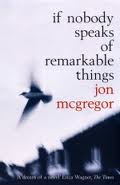
IF NOBODY SPEAKS OF REMARKABLE THINGS by Jon McGregor (2002)


In this startling first novel it's a quiet Sunday afternoon at the end of summer and several ordinary citizens are going about their ordinary daily lives. A young man is taking photographs, a young woman two doors down is packing up her belongings to move home, another neighbour is painting his house and a some siblings are playing cricket.

I loved the clever narrative structure and the way McGregor was able to withhold the details of the tragedy the unites all of the characters until the last twenty pages.

The story made me question how I am complicit in my own life in not addressing out loud the remarkable things. And, how much is lost to that silence.

212 by Alafair Burke (2010)


In this third NYPD Detective Ellie Hatcher novel, Megan Gunther, a sophomore, finds herself the target of threats on a campus website dedicated to gossip. Someone knows her daily routine in unsettling detail, but even when she goes to the police, they tell her there's nothing they can do until there is an actual physical threat made.

When Megan is brutally murdered in her own apartment and her roommate is hospitalized as well, Detective Ellie Hatcher and her straight-talking partner J.J. Rogan take the case. They soon discover a connection between Megan's murder and another one involving a real estate agent who had been living a dangerous double life. The stakes are raised when Megan's surviving roommate disappears and Det. Hatcher realizes that she must be found before yet another young woman dies.

With twists and turns and compassion doled out in equal measure, 212 is a satisfying read that has me eager for Burke to pen the next in this intelligent and topical series set in contemporary New York City.

Tuesday, April 06, 2010

CITIES OF REFUGE by Michael Helm (2010)


This third novel by Michael Helm is his best to date and the two previous ones made it to the short list of the top fiction prize in Canada, the Scotiabank Giller. I expect no less of this one, except I dare to hope that it be selected the 2010 winner.

In CITIES OF REFUGE subtle Russian nesting doll narratives and meditations on loss and violence set it apart from other literary novels, though paradoxically Helm's stylistic restraint is reminiscent of Coetzee's. If you've read the Nobel Laureate's DISGRACE, you'll know what I mean.

In spare and haunting prose, Helm both unravels and weaves the stories of 28-year-old Kim and her estranged father Harold, an historian of Latin America. Both Kim and Harold have come face-to-face with blind violence and it is that untenable bond that cleaves them.

CITIES OF REFUGE is also a novel about illegal immigrants and the people who try to help them find new lives when there may be absolutely no reason to hope. And, it is a love letter to Toronto neighborhoods, to a dying mother and to those with the power to save or condemn. Expect to be challenged morally and intellectually by this worthy and moving book.

HEART AND SOUL by Maeve Binchy


Fans of Binchy's novels will feel the Dublin familiarity of the posh neighborhood restaurant Quentin's in this most recent tale about a middle-aged cardiologist who is raising her 20-something daughters by herself while her estranged husband begins a second family with his twenty-something girlfriend.

Many of the relationships are cliche and the almost-tragedies predictable as the folks with the hearts of gold face obstacle after obstacle before realizing that not all nice guys and dolls finish last. There is class tension thrown in for good measure to show that the Anglo-Irish aristocracy really isn't consigned to the past. New prejudices form with the influx of cheap labour from Eastern Europe and a priest who is being stalked by a sociopathic parishioner.

Binchy's compassion rings true nonetheless and she manages to show that even the most unlovable among us are worthy of love.

THE WONDER by Diana Evans (2009)


I absolutely loved Diana Evans' breakout novel 26A (winner of the Orange Award for New Writers) and this sophomore effort is equally as engaging.

THE WONDER follows adult siblings/orphans Lucas and Denise who share life aboard a boat moored on the Thames, the same narrow skiff on which they were raised by their eccentric mother. Denise is the responsible older sibling who runs her own floral business while her younger brother Lucas is mostly adrift, though he occasionally writes bit pieces for a magazine.

Trying to figure out who he is and where he's come from, Lucas plumbs the depths of his father's past and discovers that he was at one time an extraordinary dancer/choreographer who steered the once-respected Midnight Ballet, a modern dance company of mainly Black dancers in England in the 1960s.

Meeting one of the lead dancers as well as a dance critic who knew his father intimately, Lucas manages to unravel truths that help him forge his own identity.

Because Evans was a dancer before she became a writer and a critic, this novel hums with authentic dance-world detail.

Sunday, March 28, 2010

SO MANY WAYS TO BEGIN by Jon McGregor (2006)


Named by GRANTA as one of the top writers under 30, Jon McGregor hits all of the marks with this second novel. As its title implies, there are so many ways to begin: relationships, careers, love.

Protagonist David Carter learns quite unexpectedly through the unintended disclosure of a secret by his mother's longtime friend, his Aunt Julia, (who thanks to early onset Alzheimer's no longer knows how to distinguish the past from the present) when he's twenty-something that he is adopted. His understanding of who he is and where he's come from falls away and he becomes obsessed with finding out who he really is.

Ironically, David's day job is as a curator and archivist at a local Coventry museum, so he is well-equipped to research the past. At the same time, David is struggling with the emotional loss of his wife Eleanor, who is wrestling with difficulties in her own past, one that she knows only too well.

What is interesting about the way that McGregor unravels their stories is his use of artifacts to drive the narrative. For example, we peer into their individual and shared lives by examining items such as "Shoebox of assorted domestic goods, bullets, shrapnel, 1953-60;" "b/w photograph of Albert Carter, defaced, c.1943;" Hospital admissions card, 1945 (discovered 1976);" and "Envelopes with Aberdeen postmarks, occasional 1984-2000." The tangible detritus of personal histories make David and Eleanor seem just like you and me.

I am looking forward to getting my hands on copies of McGregor's other books: IF NOBODY SPEAKS OF REMARKABLE THINGS and EVEN THE DOGS. He had me captivated from the opening page right through to the end.

Thursday, March 25, 2010

TRAVELS IN THE SCRIPTORIUM by Paul Auster


My neighbour loaned me this little novel--the first I've read of Auster's-- because he said that Auster is his favourite American novelist. I can understand why, knowing that he is also a fan of Camus and St. Exupery.

Mr. Blank is the protagonist, an elderly man who seems either to be suffering from early Alzheimer's or brainwashing. He is kept in a sterile room that might be a prisoner's cell and every moment of his life is recorded by video and sound. There are a variety of supporting characters who come and go from his room, claiming to be doctors, lawyers, former colleagues, possible lovers. Because Mr. Blank is never quite sure of their identity, neither are we.

To help pass the time he reads a manuscript in loose leafed paper that sits on his desk next to a pile of framed photographs that are supposed to trigger memories of relationships past, most of which haunt him.

The book is unsettling and induced in me panic, which I'm sure was entirely the point, but if TRAVELS IN THE SCRIPTORIUM is typical of the kind of stories Auster tells, I won't be reaching for another one anytime soon.

Sunday, March 21, 2010

JULIET, NAKED by Nick Hornby (2009)


Most recently Hornby's screenplay for "An Education" was nominated for an Academy Award, but JULIET, NAKED revisits earlier interests of his previously explored in HIGH FIDELITY and FEVER PITCH: the influence of pop culture and loving relationships.

Annie and Duncan have been together for fifteen years and think they love each other. They are both keen on literature and the arts and music, but Duncan has become obsessively interested in a washed up 80s singer/songwriter called Tucker Crowe; both the real and imagined Tucker drives a wedge in Duncan's relationship with Annie.

Using email and blogposts in addition to the third person narrative creates an immediacy to the characters' voices and propels the narrative forward in a satisfying way. JULIET, NAKED is also a cautionary tale about trust and intimacy for contemporary times.

THE WEED THAT STRINGS THE HANGMAN'S BAG by Alan Bradley (2010)


In this second whodunnit by Bradley , eleven year-old chemistry whiz and neighborhood snoop Flavia de Luce finds herself muddling her way through another mystery in 1950 Bishop's Lacey--the sleepy English town where she is to the manor born.

There are two deaths that demand Flavia's sleuthing attention: a 5 year-old hanging of a young boy and the likely electrocution of a famous visiting puppeteer who expires in full view of his audience.

While she pieces together the clues, Flavia is faced with the irritating teenish behaviour of her older sisters Daffy (Daphne) and Feely (Ophelia) that temporarily distracts her, though she is reassured in her quest by her father's faithful servant Dogger who acts as her conscience.

Again, Bradley has wound a tale that is intriguing and playful and mischievous: Flavia's precocity is just what the doctor ordered.

Friday, March 19, 2010

THE VINTAGE CAPER by Peter Mayle (2009)


This fly by night light read was perfect for the gym. Flitting from the excesses of Hollywood to the braggadoccio of the French Riviera, Mayle's wine heist caper is a vacuous and frothy tale about vacuous and frothy folk.

Entertainment lawyer Danny Roth has the ego to match his unmatchable wine cellar which he flaunts in a feature article published in the LA Times. While Roth is away at another home in Aspen over the holidays, the best bottles in his collection are stolen: 3 million dollars worth of wine, on the lam.

The insurance company hires Sam Levitt, a former corporate lawyer and wine connoisseur, to track down the missing vino. His journey takes him to Paris, then Bordeaux, then Provence and into the home of an eccentric billionaire collector who just might have had the wherewithal to spirit Roth's bottles away.

Though the plot is entirely predictable and the characters stock, I enjoyed learning about special vintages and being reminded of the splendour of the south of France. You'll enjoy it all the more with a piche of chilled vin rose within arm's reach.

ONE GOOD DOG by Susan Wilson (2010)


If you are a fan of Cesar Milan and his dog-whispering ways, this novel is for you.

Adam March is on the fast track to corporate fiefdom as the next in line for the CEO position. His daughter Ariel jumps horses. His wife Sterling spends her days planning the next best party and shopping for her designer-label wardrobe: it's a full life, rife with materialistic excess.

However, a telephone message Adam receives one morning, scribbled on a pink scrap by his PA essentially unhinges him and his made-for-tv lifestyle unravels in the blink of an eye.

Enter a pit-bull cross with a sweet disposition and an uncanny knack for knowing he's on death row at the local shelter. Chance, as Adam later names him, saves Adam as he spirals, but so does the new community at the homeless shelter where Adam has been ordered by the courts to do 6 months of service. Salvation comes in the unlikeliest of places.

Wednesday, March 17, 2010

SUMMERTIME by J.M. Coetzee (2009)


The South African Nobel Laureate ( and novelist most famous for Disgrace) has written a gem of a book in his third installment of his fictional memoir.

Summertime finds a young British biographer working on a book about John Coetzee focusing on the years between 1972-1977 when the not yet world-famous writer was sharing a run-down home in Cape Town with his widowed father.

The book consists of a series of interviews given in the recent past (2007-2009) with some of the women in Coetzee's life including relatives and lovers. What is especially engaging to me is the remarkable emotional objectivity with which he describes himself in third person through these female perspectives. It feels almost like a very clever extended inside joke.

POINT OMEGA by Don Delillo (2010)


Framed by the viewing of a video installation called 24 Hour Psycho in which the film is slowed down to play over the course of a full day without any sound, this compact novel turns its inner eye on Richard Elster where he has retreated to the American desert. There, filmmaker Jim Finley joins Elster, a former government consultant who specialized in troop deployment and counter insurgency, intent on documenting his experience. Finley hopes to get Elster's permission to make a one-take film along the lines of Russian Ark, but instead of a sweeping pic, it would be singularly about Elster: "about a man and a wall."

Elster's daughter Jessica shows up part way and the three of them form an odd sort of family until Jessica disappears. It's her disappearance that provides the novel its narrative drive and its ambiguous conclusion.

Sunday, March 14, 2010

FEBRUARY by Lisa Moore (2009)


I read this novel in one gulp, marveling at the gorgeous prose and pacing every page that I turned. I can't believe that FEBRUARY was not on all of the book prize short lists in 2009, because Lisa Moore's style is breathtaking and her capacity for description and characterization unmatched by most of her peers.

Moore uses the events of Valentine's night in 1982 when all 84 men aboard the oil rig Ocean Ranger off the coast of Newfoundland died as the through line that unites her narrative that switches seamlessly from present to past as Helen O'Mara, one of those left behind when her husband drowns, reveals how she has endured in the quarter century since her grief began.

Richard Ford calls Moore "an astonishing writer....[with] a magnetizing gift for revealing how the earth feels, looks, tastes, smells and an unswerving instinct for what's important in life."

Don't wait any longer. Get yourself a copy of FEBRUARY and prepare to be astonished.

THE GIRL WHO PLAYED WITH FIRE by Stieg Larsson (2006)


In this sequel to the immensely popular and riveting THE GIRL WITH THE DRAGON TATTOO, Mikael Blomkvist has decided to run a controversial article in his magazine about sex trafficking in Sweden that will expose well-known and highly-regarded members of the establishment including journalists, government officials and dirty cops.

On the eve of the publication the two collaborating journalists are murdered execution style in the comfort of their own flat and they aren't the only ones--a lawyer who just happens to be the guardian of Lisbeth Salander is also slain in his bedroom, by his own gun, the smoking gun that is discovered in the stairwell of the building where the murdered journalists are found. And, the circumstantial evidence points to Salander as the killer.

While the first book in this Millenium trilogy found Blomkvist indebted to the peculiar and brilliant and socially challenged Salander for literally saving his life through her own determined brand of justice, the tables are turned in this equally adrenaline-filled sequel that left me gasping for breath on the final page.

THE FIFTH WOMAN by Henning Mankell (2000)


In this Kurt Wallander mystery, there are two murders that baffle and appal the inspector. An octogenarian bird enthusiast and self-published poet is impaled on sharpened bamboo poles in a ditch near his secluded home and the atrophied corpse of a missing florist is discovered strangled and tied to a tree where he is found by a runner.

As clues, Wallander has discovered a skull, a diary and a photo of three men taken in the 50s or 60s and it seems that at least one of the recent dead is implicated in former mercenary activity. Just as the team begin to understand what is happening, there is another corpse, this time a university researcher who is drowned in a hemp sack, and the pathologist is certain that he was alive when the bag hit the water.

What becomes clear is that each of these victims shares a sordid past and that in the present there is someone determined to expose those horrors, but not before a distinct brand of justice is served.

What I continue to appreciate in Mankell's storytelling is his ability to weave narratives so that each has a definite and important weight.

Tuesday, March 09, 2010

LOVE AND SUMMER by William Trevor (2009)


This is the most recent novel by the prolific Irish treasure William Trevor.

It takes place during the middle of the past century in a small Irish town. A stranger cycles through Rathmoye asking for directions to the burnt out cinema which he plans to photograph. He happens to meet Ellie, a foundling raised by nuns who is newly married to her employer, the widower Dillahan, a man who is responsible for the deaths of his first wife and child, though we never discover how or why.

A romance blooms and then dies, leaving Ellie devastated as Florian arranges for a passport, sells his family home and tells her that they were only meant to have the summer.

LOVE AND SUMMER is a quiet gem-of-a-story that romanticizes farm life.

Sunday, March 07, 2010

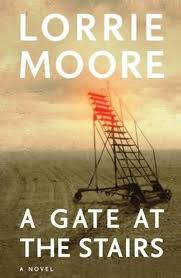
A GATE AT THE STAIRS by Lorrie Moore (2009)


Marketed as a post-9/11 novel, A GATE AT THE STAIRS follows mid-Western university gal Tassie Keltjin as she navigates her way through the words and action of a post-racial America.

She is excited to have escaped the farm life of her upbringing to study Chaucer, Sylvia Plath and Simone de Beauvoir and finds herself taking a job as a part time nanny for a quirky middle-aged couple who are in the process of adopting a biracial toddler. Tassie peels away the layers in her relationship with her new employers to discover a dark and disturbing past at the same time that she worries about her younger brother who is considering enlisting in order to avoid his future as a farmer or a truckdriver, the only two options that seem available to him.

I read this book in one gulp, even though there were moments that I was ready to hurl it across the room because of the preciousness of some of the bit players, which I realize is entirely the point that Moore is satirizing.

THE HUMAN STAIN by Philip Roth (2001)


Having been so disappointed by THE HUMBLING, I reached for an earlier Roth novel to remind myself what it was that I so admire about his writing.

THE HUMAN STAIN follows that tragic (though not unexpected) trajectory of Coleman Silk, an aging classics professor who is forced to retire for allegedly racist comments he makes in one of his classes. The irony of this dismissal is not lost on Coleman or on the reader who quickly discovers the heart of Silk's secret that he has protected for 50 years.

There are the predictable Roth fixations like aging sexuality and contemporary American politics (it is the height of the White House scandal involving Monica Lewinsky and then-president Bill Clinton) that keep the plot simmering, but more importantly Roth unravels his protagonist's tragic self-awareness.

Nadine Gordimer called THE HUMAN STAIN Roth's "best novel," because in it "the impact of society on himself and the people around him, world contemporary mores, beliefs, prejudices, have come to full realization."

CAT'S CRADLE by Kurt Vonnegut


On a recent trip to Germany, I ran out of reading material and borrowed this Vonnegut from a student while I was stuck in a hotel ministering to a different one with the flu.

Of course I'd devoured all Vonnegut books in my twenties, but reading this one in my forties gave me a renewed appreciation for his satiric wit. I was also happy to refamiliarize myself with Vonnegut's voice before returning to Toronto because I had tickets for the new George F. Walker play AND SO IT GOES which features KV as the protagonist's imaginary shrink.

Not that I'd pick Vonnegut for my own shrink--I'm more liable to take advice from Tina Fey or Mel Brooks.

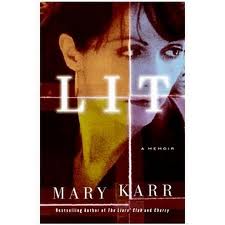
LIT by Mary Karr


What an adrenaline-pumping ride Mary Karr's most recent memoir is. LIT is a kick-in-the-ass, quick-upper-cut-of-a- read that had me gasping for breath in awe at its direct, unselfpitying tone and clean prose style.

Forget Hemingway: Karr is my new stylistic guru.

THE THIN MAN by Dashiell Hammett (1933)


I read THE MALTESE FALCON years ago when I was obsessed with all things Humprey Bogart, but only got to THE THIN MAN fairly recently.

What I loved about this book was how the language play between Nick and Norah Charles reminded me of my grandparents and their expressions like "tight" or "pansy." Though, how this glamourous couple managed to get anything done between all of the Manhattan high balls or martinis that they consumed is really beyond my ken.

THE FOREVER WAR by Dexter Filkins


Until I read this book, I'd only had a vague idea about the horrors in Afghanistan and Iraq.

Filkins is a top-notch New York Times journalist who manages to ground each piece in the ordinary, reminiscent of the fiction of Carol Shields.

He doesn't shy away from the honest truth about circumstances in which new normal includes children who run skittishly across minefields because that's the quicker route, the exploded ground-zero flesh of innocent civilians or the puppyish American soldiers who are meant to serve and protect.

I have a better understanding how covering war zones becomes a compulsion and causes irrevocable damages.

This is a brave and shocking book.