Wednesday, March 17, 2010

SUMMERTIME by J.M. Coetzee (2009)


The South African Nobel Laureate ( and novelist most famous for Disgrace) has written a gem of a book in his third installment of his fictional memoir.

Summertime finds a young British biographer working on a book about John Coetzee focusing on the years between 1972-1977 when the not yet world-famous writer was sharing a run-down home in Cape Town with his widowed father.

The book consists of a series of interviews given in the recent past (2007-2009) with some of the women in Coetzee's life including relatives and lovers. What is especially engaging to me is the remarkable emotional objectivity with which he describes himself in third person through these female perspectives. It feels almost like a very clever extended inside joke.

POINT OMEGA by Don Delillo (2010)


Framed by the viewing of a video installation called 24 Hour Psycho in which the film is slowed down to play over the course of a full day without any sound, this compact novel turns its inner eye on Richard Elster where he has retreated to the American desert. There, filmmaker Jim Finley joins Elster, a former government consultant who specialized in troop deployment and counter insurgency, intent on documenting his experience. Finley hopes to get Elster's permission to make a one-take film along the lines of Russian Ark, but instead of a sweeping pic, it would be singularly about Elster: "about a man and a wall."

Elster's daughter Jessica shows up part way and the three of them form an odd sort of family until Jessica disappears. It's her disappearance that provides the novel its narrative drive and its ambiguous conclusion.

Sunday, March 14, 2010

FEBRUARY by Lisa Moore (2009)


I read this novel in one gulp, marveling at the gorgeous prose and pacing every page that I turned. I can't believe that FEBRUARY was not on all of the book prize short lists in 2009, because Lisa Moore's style is breathtaking and her capacity for description and characterization unmatched by most of her peers.

Moore uses the events of Valentine's night in 1982 when all 84 men aboard the oil rig Ocean Ranger off the coast of Newfoundland died as the through line that unites her narrative that switches seamlessly from present to past as Helen O'Mara, one of those left behind when her husband drowns, reveals how she has endured in the quarter century since her grief began.

Richard Ford calls Moore "an astonishing writer....[with] a magnetizing gift for revealing how the earth feels, looks, tastes, smells and an unswerving instinct for what's important in life."

Don't wait any longer. Get yourself a copy of FEBRUARY and prepare to be astonished.

THE GIRL WHO PLAYED WITH FIRE by Stieg Larsson (2006)


In this sequel to the immensely popular and riveting THE GIRL WITH THE DRAGON TATTOO, Mikael Blomkvist has decided to run a controversial article in his magazine about sex trafficking in Sweden that will expose well-known and highly-regarded members of the establishment including journalists, government officials and dirty cops.

On the eve of the publication the two collaborating journalists are murdered execution style in the comfort of their own flat and they aren't the only ones--a lawyer who just happens to be the guardian of Lisbeth Salander is also slain in his bedroom, by his own gun, the smoking gun that is discovered in the stairwell of the building where the murdered journalists are found. And, the circumstantial evidence points to Salander as the killer.

While the first book in this Millenium trilogy found Blomkvist indebted to the peculiar and brilliant and socially challenged Salander for literally saving his life through her own determined brand of justice, the tables are turned in this equally adrenaline-filled sequel that left me gasping for breath on the final page.

THE FIFTH WOMAN by Henning Mankell (2000)


In this Kurt Wallander mystery, there are two murders that baffle and appal the inspector. An octogenarian bird enthusiast and self-published poet is impaled on sharpened bamboo poles in a ditch near his secluded home and the atrophied corpse of a missing florist is discovered strangled and tied to a tree where he is found by a runner.

As clues, Wallander has discovered a skull, a diary and a photo of three men taken in the 50s or 60s and it seems that at least one of the recent dead is implicated in former mercenary activity. Just as the team begin to understand what is happening, there is another corpse, this time a university researcher who is drowned in a hemp sack, and the pathologist is certain that he was alive when the bag hit the water.

What becomes clear is that each of these victims shares a sordid past and that in the present there is someone determined to expose those horrors, but not before a distinct brand of justice is served.

What I continue to appreciate in Mankell's storytelling is his ability to weave narratives so that each has a definite and important weight.

Tuesday, March 09, 2010

LOVE AND SUMMER by William Trevor (2009)


This is the most recent novel by the prolific Irish treasure William Trevor.

It takes place during the middle of the past century in a small Irish town. A stranger cycles through Rathmoye asking for directions to the burnt out cinema which he plans to photograph. He happens to meet Ellie, a foundling raised by nuns who is newly married to her employer, the widower Dillahan, a man who is responsible for the deaths of his first wife and child, though we never discover how or why.

A romance blooms and then dies, leaving Ellie devastated as Florian arranges for a passport, sells his family home and tells her that they were only meant to have the summer.

LOVE AND SUMMER is a quiet gem-of-a-story that romanticizes farm life.

Sunday, March 07, 2010

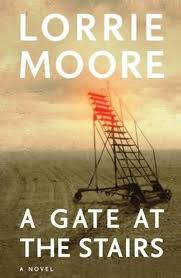
A GATE AT THE STAIRS by Lorrie Moore (2009)


Marketed as a post-9/11 novel, A GATE AT THE STAIRS follows mid-Western university gal Tassie Keltjin as she navigates her way through the words and action of a post-racial America.

She is excited to have escaped the farm life of her upbringing to study Chaucer, Sylvia Plath and Simone de Beauvoir and finds herself taking a job as a part time nanny for a quirky middle-aged couple who are in the process of adopting a biracial toddler. Tassie peels away the layers in her relationship with her new employers to discover a dark and disturbing past at the same time that she worries about her younger brother who is considering enlisting in order to avoid his future as a farmer or a truckdriver, the only two options that seem available to him.

I read this book in one gulp, even though there were moments that I was ready to hurl it across the room because of the preciousness of some of the bit players, which I realize is entirely the point that Moore is satirizing.

THE HUMAN STAIN by Philip Roth (2001)


Having been so disappointed by THE HUMBLING, I reached for an earlier Roth novel to remind myself what it was that I so admire about his writing.

THE HUMAN STAIN follows that tragic (though not unexpected) trajectory of Coleman Silk, an aging classics professor who is forced to retire for allegedly racist comments he makes in one of his classes. The irony of this dismissal is not lost on Coleman or on the reader who quickly discovers the heart of Silk's secret that he has protected for 50 years.

There are the predictable Roth fixations like aging sexuality and contemporary American politics (it is the height of the White House scandal involving Monica Lewinsky and then-president Bill Clinton) that keep the plot simmering, but more importantly Roth unravels his protagonist's tragic self-awareness.

Nadine Gordimer called THE HUMAN STAIN Roth's "best novel," because in it "the impact of society on himself and the people around him, world contemporary mores, beliefs, prejudices, have come to full realization."

CAT'S CRADLE by Kurt Vonnegut


On a recent trip to Germany, I ran out of reading material and borrowed this Vonnegut from a student while I was stuck in a hotel ministering to a different one with the flu.

Of course I'd devoured all Vonnegut books in my twenties, but reading this one in my forties gave me a renewed appreciation for his satiric wit. I was also happy to refamiliarize myself with Vonnegut's voice before returning to Toronto because I had tickets for the new George F. Walker play AND SO IT GOES which features KV as the protagonist's imaginary shrink.

Not that I'd pick Vonnegut for my own shrink--I'm more liable to take advice from Tina Fey or Mel Brooks.

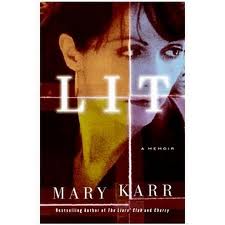
LIT by Mary Karr


What an adrenaline-pumping ride Mary Karr's most recent memoir is. LIT is a kick-in-the-ass, quick-upper-cut-of-a- read that had me gasping for breath in awe at its direct, unselfpitying tone and clean prose style.

Forget Hemingway: Karr is my new stylistic guru.

THE THIN MAN by Dashiell Hammett (1933)


I read THE MALTESE FALCON years ago when I was obsessed with all things Humprey Bogart, but only got to THE THIN MAN fairly recently.

What I loved about this book was how the language play between Nick and Norah Charles reminded me of my grandparents and their expressions like "tight" or "pansy." Though, how this glamourous couple managed to get anything done between all of the Manhattan high balls or martinis that they consumed is really beyond my ken.

THE FOREVER WAR by Dexter Filkins


Until I read this book, I'd only had a vague idea about the horrors in Afghanistan and Iraq.

Filkins is a top-notch New York Times journalist who manages to ground each piece in the ordinary, reminiscent of the fiction of Carol Shields.

He doesn't shy away from the honest truth about circumstances in which new normal includes children who run skittishly across minefields because that's the quicker route, the exploded ground-zero flesh of innocent civilians or the puppyish American soldiers who are meant to serve and protect.

I have a better understanding how covering war zones becomes a compulsion and causes irrevocable damages.

This is a brave and shocking book.

Thursday, February 11, 2010

THE HONEY LOCUST by Jeffrey Round (2009)


Photojournalist Angela Thomas and videographer Andre Riel meet in the former Yugoslavia in 1995, chronicling the horrific civil war between the Croats and Serbs which they file for a Canadian daily newspaper. They are both committed to telling truthful stories, no matter how upsetting, and are driven to exposing the awful reality of ordinary people under siege. For a time, their flak jackets and UN affiliation manage to protect them from physical harm, but that good luck cannot endure.

The backstory involves Angela's complicated relationship with her mother and is as satisfying to witness unravel as the main plot on the war front. I especially liked the way that Round re-imagines an alternate ending from Angela's perspective, a notion that is used as a motif beginning with the moment that Andre manages to get Angela's Leica back from an army guard by offering him a pack of cigarettes wrapped in a little cash.

This is a literary novel that is a real departure from Round's previous books, campy mysteries featuring Bradford Fairfax.

Saturday, January 30, 2010

HALF BROKE HORSES by Jeannette Walls (2009)


Because I was enthralled with Walls' memoir THE GLASS CASTLE, I couldn't wait to read this "true novel" about her grandmother Lily Casey. Although the cover has one of Dorothea Lange's famous Depression-era photos taken for the Farm Security Administration setting the tone, the inside sections have actual photos of Lily and her relatives including her hardworking husband Jim, her Hollywood-dreamer sister Helen and her daughter Rosemary (Walls' mother who so memorably opens her memoir rummaging through a NYC dumpster).

Lily is certainly a character worthy of the tale that her granddaughter pens for her. This bildungsroman stretches from Lily's Texan upbringing on a ranch where she learned to break the horses of the title to the two-bit towns she served in as a schoolteacher (including a remote settlement where when she educated the Mormon girls in her care about the wider world she was run out of town by the patriarch), to the dizzying excitement of being a flapper in Chicago, to the massive ranch where she and her husband raised their two children and she takes flying lessons with the hope of becoming a bush pilot to bring a much-needed income to support her family through more tough times.

In the Epilogue the story loops around to focus on Rosemary and Rex and their loose ideas about raising their own children and the certain difficult times ahead for them all. Lily's voice is resolute, however: "No way in hell were Rex and Rosemary cutting me out of the action when it came to my own grandchildren. I had a few things to teach those kids, and there wasn't a soul alive who could stop me."

THREE DAY ROAD by Joseph Boyden

I've read several wonderful novels set on the front during WWI including Pat Barker's REGENERATION trilogy and Timothy Findley's THE WARS, but none of them matches the exquisite detail and narrative triumph of THREE DAY ROAD.

With the convincing authentic voices of Xavier Bird (a Native sniper in the Canadian division on the front at Vimy and Ypres and Passchendaele) and his last remaining relative Niska threading together in the cyclical tradition of Native storytelling, Joseph Boyden weaves together stories that hurt, resonate and matter.

Using the legend of the windigo as a through line, THREE DAY ROAD will open your eyes once again to the human capacity to endure man's inhumanity to man and our desire for healing through the balm of storytelling.

Friday, January 29, 2010

BEIJING CONFIDENTIAL by Jan Wong

If you've read her column, you know that Jan Wong is no shrinking violet when it comes to asking tough questions. But, did you know that Wong was the first Canadian to be permitted to study at Beijing University after the Cultural Revolution, or that she was a dewy-eyed Maoist who laboured idealistically at Number One Machine Tool Factory in the 70s, or that she convinced the Beijing police to return her stolen car that they'd equipped with a red siren to her during her stint as the Globe and Mail's correspondent decades later?

BEIJING CONFIDENTIAL is Wong's journey back to Beijing with her husband "Fat Paycheck" and two teenaged sons in tow in the summer of 2006 with the single purpose of trying to find a woman she'd betrayed to the authorities in the 70s, a woman whose life she had most certainly ruined.

Wong reported on the Tian An Men Square massacre in 1989, has spoken openly about the "tank man" and has long been a voice against human rights violations, a national shame. However, her personal shame forces her to make this very personal journey to try to reconcile with a woman named Yin, if she can find her. Beijing is a modern city now. Few of its million cellphone users are listed in its phonebooks and a geography that was once familiar is perplexing as the government gears up to save face and welcome the world at the 2008 Summer Olympics

Sunday, January 24, 2010

THREE DAY ROAD by Joseph Boyden (2005)

I've read several wonderful novels set on the front during WWI including Pat Barker's REGENERATION trilogy and Timothy Findley's THE WARS, but none of them matches the exquisite detail and narrative triumph of THREE DAY ROAD.

With the convincing authentic voices of Xavier Bird (a Native sniper in the Canadian division on the front at Vimy and Ypres and Passchendaele) and his last remaining relative Niska threading together in the cyclical tradition of Native storytelling, Joseph Boyden weaves together stories that hurt, resonate and matter.

Using the legend of the windigo as a through line, THREE DAY ROAD will open your eyes once again to the human capacity to endure man's inhumanity to man and our desire for healing through the balm of storytelling.

DEAD CONNECTION by Alafair Burke (2007)


When I started this book after a dinner party last night, I didn't expect to have it inform my dreamscape, but it did, and I woke up, heart racing, worried that my identity had been stolen.

NYPD Rookie detective Ellie Hatcher goes undercover on the Internet dating scene when it seems the murders of two young women exactly a year apart could be related to First Date, a NYC site for singles looking to hook up. Handpicked by maverick detective Flann McIlroy, Ellie finds herself navigating the high tech world of identity theft and discovering that the sociopathic behaviour of the suspect is all too familiar.

Being the reading geek that I am I especially enjoyed the moment where Ellie contacts a New Iberian detective Dave Robi.... to follow a lead about the past of one of the victims. What fun for Burke to have her father's most famous detective Dave Robichaux implied in the background investigation!

DEAD CONNECTION is a first-rate thriller that will have you cheering for Ellie Hatcher as she navigates her way through the mess and heartbreak to expose the greed and horror at the core.

CLOSE CASE by Alafair Burke (2005)


This is the second Samantha Kincaid novel I've read and it's cemented my urge to read every novel by Alafair Burke, herself a former deputy district attorney in Portland. There is a credibility to her storytelling that convinces me that everything is plausible.

In the opening pages, star investigative reporter Percy Crenshaw is bludgeoned to death in the carport of his tony neighborhood where his Mercedes with its vanity plate "Snoop" fits right in. Everyone says what a good guy Percy was and how generous he was to the extended community, especially to those who were so frequently marginalized by poverty.

Two young men seem easy suspects, especially when one of them confesses as much, only later to recant citing coercive police tactics. Complicating the tension is the fact that Kincaid's live-in beau, Chuck Forbes, is one of the detectives involved in the investigation. He is torn, of course, between protecting his love and supporting his partner Mike, who has a questionable past of his own.

Faced with a bull-terrier defense counsel and new evidence that brings her case under question, Kincaid finds herself wondering who she can trust, including herself. With the help of a fledgling reporter determined to interpret Crenshaw's notes, Kincaid follows the path of clues that leads her to the truth, but not before other innocent victims are slain in its wake.

RAIN GODS by James Lee Burke (2009)

Although I am a committed reader of Burke's Dave Robichaux novels, RAIN GODS is the first that features sheriff Hackberry Holland (a war vet with horrors of his own to exorcise) and his deputy Pam Tibbs (who has more than a little crush on her boss). Set in a tiny Texas town near the Mexican border, the novel offers a lens on the lives of the lost, the vulnerable, the wounded and the corrupt who people this desperate place in desperate times.

Holland's discovery of the shallow graves of nine illegal aliens leads him to the heart of organized crime and face to face with memorable villains like Hugo Cistranos, Nick Dolan and Bible-thumping sociopath "Preacher" Jack Collins all of whom want to kill a young damaged Iraq War vet Pete Flores, who with his girlfriend Vikki Gaddis, hopes beyond hope for a fresh start.

With betrayal at breakneck speed and Burke's capacity to show humans at their best and their worst, RAIN GODS will keep you reading through the night.

Wednesday, January 20, 2010

JOIN THE REVOLUTION, COMRADE by Charles Foran

I read this collection of essays and reminiscences and book reviews because Charles Foran is going to be speaking at an event I've curated called Focus on China here in Toronto on February 2nd. The essays include the titular one that explores relationships with native Chinese friends during the time Foran spent teaching in Beijing that happened to place him in the eye of the student protests that culminated in the Tian An Men Square Massacre at the beginning of June 1989. The writing moves to Bali and to Vietnam and to Dublin where he was a student of Irish literature and working on his first novel manuscript.

I especially enjoyed the pieces about language and listening to the music and rhythm of accents as well as the more provocative pieces chronicling his time in south east Asia, an area for which he clearly has a passion.

Charles Foran is the authorized biographer of Canadian novelist Mordecai Richler and that book MORDECAI RICHLER: A LIFE will be published later in 2010 by Knopf.

Visit his website: www.charlesforan.com to learn more about his other books.

Saturday, January 16, 2010

ANGEL'S TIP by Alafair Burke (2008)


In ANGEL'S TIP, three female Midwest college students decide to spend Spring Break in NYC where, on their final night on the town, they use their fake I.D. to get into a trendy nightspot in the meat-packing district. When it's time to head back to the hotel to snatch a few hours' sleep before flying back to Indiana, Chelsea Hart decides to stay on in the VIP room of the elite club, flirting with handsome strangers while her friends Stefanie and Jordan call it a night.

Cue NYPD detective Ellie Hatcher, a looker herself, who is on her morning run with her brother Jess who is flopping at her apartment while he's trying to make it as a musician. Ellie comes upon the mauled corpse of what turns out to be Chelsea Hart, her legs splayed, lingerie on display, and stabbed several times, including on her face.

In this mystery, you'll be carried along from clue to clue in step with Ellie and her partner J.J. Rogan and your heart will thump just a little quicker as you begin to unravel the knot of deception that leads to the truth about who killed Chelsea Hart and why. You'll be white-knuckling it all the way through to the satisfying end.

I especially enjoyed the pop-cultural references to books and tv shows of my early adolescence including Judy Blume's BLUBBER and then-scandalous WIFEY and the misheard lyrics to the theme songs for ALL IN THE FAMILY and THE JEFFERSONS.

Alafair Burke knows her genre and is already writing at the top of her game.

Sunday, January 10, 2010

FIREWALL by Henning Mankell (2002)

Two apparently unconnected cases disarm Inspector Kurt Wallander. In one, the corpse of computer consultant Tynnes Falk is found near the ATM closest to his apartment where it seems that he has died of an unexpected heart attack. In the other, two teenaged girls, Sonja Hokberg and Eva Persson have been arrested for the brutal murder of a cab driver, a crime to which they both confess without any remorse.

As Wallander peels away layers of both cases, he realizes that the implications extend far beyond the borders of Sweden. With compounding personal troubles at work, Wallander thinks he knows who to trust, but he's not sure. It is this doubt that allows him to save his own life and the life of another teenager who has been also caught up in this web of intrigue that reaches as far as the heart of darkest Angola and the World Bank.

STILL ALICE by Lisa Genova (2007)


Written by a woman who has a PhD in neuroscience from Harvard, STILL ALICE is not your typical novel. Because of the medical details, it reads more like a case study at times. However, as the protagonist, a 50-year-old cognitive psychology prof, is diagnosed with Alzheimer's, the narrative draws you in and Genova creates a character who is entirely credible.

For anyone with a family member who is suffering the ravages of this debilitating disease, STILL ALICE is a must read.

Sunday, January 03, 2010

THE TELLING OF LIES by Timothy Findley (1989)

In this mystery, everyone seems to be a liar, including Vanessa Van Horne, our narrator and sleuth. Vanessa is holidaying for the last summer at the Aurora Sands Hotel (it is closing) on the eastern seaboard when Calder Maddox, an elderly and excessively wealthy businessman expires in his beach chair in broad daylight on the day that an iceberg has floated into view.

There is a flurry of activity as Maddox's wife is brought to the hotel and his longtime mistress is conveniently disappeared. What perplexes Vanessa and her MD cousin Lawrence is the discovery that Maddox's corpse is being kept on ice as important government agents descend on this sleepy retreat.

Not one to abandon her curious ways even when threatened, Vanessa, with the help of her friend Mercedes, uncovers ugly truths that lead her to solve the mystery.

This is not Findley's best novel (for me that would be either FAMOUS LAST WORDS or NOT WANTED ON THE VOYAGE), though it was given the 1989 Edgar Award for the best mystery book in Canada. He does know how to tell a story, and Vanessa albeit irksome is memorable.

Saturday, January 02, 2010

MISSING JUSTICE by Alafair Burke (2004)


Deputy District Attorney Samantha Kincaid has been recently promoted and her first assignment back after having been attacked in her own home is one about a judge who has gone missing.

Clarissa Easterbrook's Cole Haan loafer has been found in the muck at a new building project on the outskirts of Portland and her lab Griffie picked up by neighbors wandering the streets with his leash still attached. From the outset it seems that Judge Easterbrook has been abducted and that is upsetting enough to her husband, the CEO of the local hospital. When the police find her corpse, her husband becomes almost catatonic.

It's too easy to apprehend a suspect who had been sending Clarissa threatening letters and Kincaid wisely doubts the decision to prosecute him without crossing all of her Ts and dotting her Is. Adding insult to injury it's Kincaid's suave and noxious ex-husband who turns up as opposing counsel.

There are many red herrings along the way, but they didn't deter me from happily flipping the pages through to its satisfying end where even Kincaid's father's mysterious professional past is delectably resolved.

This is the first Samantha Kincaid novel I've read, but it certainly won't be the last.

Thursday, December 31, 2009

THE HUMBLING by Philip Roth (2009)


I'll read anything by Roth, but this most recent novella had me a little disappointed in the predictability of the three act outcome.

Roth continues to be preoccupied with sex and aging and here his protagonist, a formerly famous actor who recently admitted himself to a psychiatric hospital, finds himself smitten with a lesbian 25 years his junior whom he first met in utero when he played against her mother in Synge's Playboy of the Western World 40 years ago.

Pegeen Mike lands on Simon's doorstep and offers him sexual salvation and companionship, but of course that can't last what with her parents and her scorned lesbian lover interfering.

Yet, I can't help but admire the directness and honesty and the believability of the words that Roth puts in the dirty mouths of his characters.

Tuesday, December 29, 2009

THE BRUTAL TELLING by Louise Penny (2009)


It's the end of summer in Three Pines and good things are happening for some of the locals: Ruth has adopted a duck named Rosa who follows her around like a lost lamb; the Bistro is brimming with business over the Labour Day weekend as visitors stretch out the last long weekend; and Clara Morrow has an upcoming show of her paintings at the Fortin Gallery in Montreal, a vernissage that promises to provide connections to some of the most influential people in the art world including a curator from the MoMA in NYC.

Even though the old Hadley House has been sold and gutted to become a posh inn and spa, it has been tainted again, by the corpse of a stranger and by the living breathing presence of a man who is a stranger to his son, but a "saint" to the wider world.

When "the Hermit's" bludgeoned body shows up on the floor of Olivier's Bistro, Inspector Gamache and his crew from the Surete are called in from Montreal to reveal not only the killer but also some ugly truths about greed.

In addition to purposeful plot twists and being welcomed into the homes and hearts of Three Pines locals like the Morrows, Myrna, Ruth, Olivier and Gabri, the inclusion of a subplot involving a first edition of Jane Eyre, the china of Catherine the Great and the work of Emily Carr kept me flipping pages through the night so I gulped the book in one sitting from start to finish.

The Brutal Telling is Globe and Mail crime fiction editor Margaret Canon's favorite pick for 2009 and I can see why. Pass the word about Louise Penny. She deserves to be read widely and with enthusiasm.

Monday, December 28, 2009

THE BOY IN THE MOON by Ian Brown (2009)


I probably read close to 100 books/year, many memoirs, mysteries and novels and no book has moved me more than this one this past year. I put Ian Brown's memoir on my Grade 11 English reading list because of the connection to L'Arche ( a community established by Jean Vanier for adults with intellectual disabilities) where all of my students are spending an evening volunteering throughout this school year.

What is astonishing about this book is the honesty, directness, compassion and love that infuses it. Brown does not set himself up for a pity party as a parent of a profoundly disabled son. Instead, he has the humility and grace to write truthfully about the exhausting and infuriating challenges of raising a child who not only rages and self-abuses but also has the capacity for joy.

Your attitudes will be altered by The Boy in the Moon and your heart might just be opened to a radical way of thinking about disability.

Saturday, December 26, 2009

THE ART OF RACING IN THE RAIN by Garth Stein


This is a book I wish I'd written. I'm always a sucker for a story that's told by a dog (shouts out to Virginia Woolf, David Wrobelewski and Erika Ritter for particularly memorable canine tales) and in this case, Enzo is especially engaging.

On the last day of his life Enzo recalls the recent upset and troubles that have befallen his alpha male Denny, a young widower who has had to fight for custody of his only daughter because his rich in-laws refuse to accept that he could ever provide for Zoe in a sufficiently materialistic way.

Enzo and Denny are as close as man and man's best friend can be. They bond over Zoe, Eve and car racing. Yes, car racing-the art of the racing in the rain that is the title.

From the outset you know that Eve is going to die and it can't possibly be a surprise when it happens, but Enzo's description from his canine perspective underscores how transformative death can be.

Treat yourself and read this book that you will wish could just possibly be true.

Tuesday, December 22, 2009

HELLO GOODBYE: A NOVEL by Emily Chenoweth (2009)

This novel about a brain cancer patient's final summer is deft and not self-pitying. It's written from a third person perspective, so you have a little emotional distance from the three main characters, a self-absorbed university-aged daughter (Abby) and her parents (Elliott and Helen).

Clearly Chenoweth has walked this grief walk in her own life, because many of the details smack of a reality that is not contrived and essentially believable.

Sparing the reader the final goodbye, Chenoweth wisely closes the book with Helen (in the final stages of her inoperable brain cancer--a fate her healthy lifestyle couldn't spare her) looking over her shoulder as her husband and daughter jog up the path to meet her.

Sunday, December 20, 2009

SPADEWORK by Timothy Findley (2001)

Although a novel, this could easily have been a morality play. You find infidelity, murder, betrayal and lust on the side streets of sleepy Stratford, the provincial Ontario town that discovered its raison d'etre when Tyrone Guthrie launched the theatre festival in the 1950s. And, in the tradition of 16th century morality plays, no one remains unpunished: avarice and lust eventually take a backseat to more pressing situations that involve real grief.

If you're lured by peering into the private lives of theatre folk, this is the book for you. Findley weaves a tapestry of small town preoccupations and peoples the warp with characters those familiar to his other work will identify: the lonely, the dispossessed, the sexually confused.

The tale unfolds and all of the digging begins after an accidental spade severs the line of communication into the home of the festival's nascent and dishy actor Griffin Kincaid.

Sunday, December 13, 2009

9 DRAGONS by Michael Connelly (2009)


I picked up Connelly's most recent novel at IFOA where I heard him read on a night that Ian Rankin hosted. Both are masters of the crime fiction genre.

In 9 DRAGONS, Detective Harry Bosch is sent to investigate a homicide at Fortune Liquors, a small shop in a seedy section of south L.A. There he discovers John Li has been shot to death at close range, three times in the chest. Having met Li several years before, Bosch feels a connection and vows to his family that he will find his killer.

As he closes in on a suspect, a triad gang member who had been collecting protection payments from Li, Bosch receives an upsetting text video from his daughter's phone. Madeleine lives in Hong Kong with her mother and it appears that she has been abducted and Harry is being threatened from afar to drop his case in L.A.

Over the next 72 hours, Harry is on the chase of his life to find his daughter before she is trafficked out of Hong Kong and her organs are sold on the black market. Before they are reunited, Harry and his ex-wife's new love (and former triad member) Sun Yee find themselves in the seediest districts in Kowloon where there is real danger at every turn. There are 9 corpses that accumulate--the 9 dragons of the title.

Fans of Connelly will be amused by the appearance of Mickey Haller as Bosch's defense attorney when the Hong Kong police follow Bosch back to L.A. and try to pin the slaughter on him.

9 DRAGONS zooms along at a breakneck pace. I read its 374 pages in one gulp.

Thursday, December 03, 2009

THE GIRL WITH THE DRAGON TATTOO by Stieg Larsson

I have been meaning to read this crime novel since I first learned about it in the Sunday New York Times over a year ago. However, no amount of crime novels exposing man's inhumanity to man that I've read in the past could have prepared me for the horrific details connected to the masochistic serial killer at the heart of this story.

Thankfully Larsson tempered such graphic descriptions with a subplot involving a difficult romance, the tenuous health of a frail business icon and a through line about the mysterious disappearance/possible murder of a beloved woman who is part of a rich and famous family with questionable relationships.

Translated from the Swedish, I did find proper names with unfamiliar accents distracting, but not so much as to persuade me to stop reading this fiery-footed tale that gallops apace. And, the only situation that I found not credible was the remarkably open sexual rapport that journalist Mikael Blomkvist has with his married best friend Erika Berger.

Don't take only my word for this compelling book. Listen to Michael Ondaatje who blurbed "The Girl with the Dragon Tattoo is an utterly fresh political and journalistic thriller that is also intimate and moral."

Monday, November 16, 2009

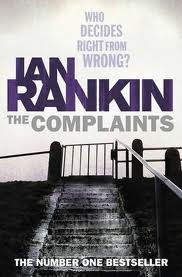
THE COMPLAINTS by Ian Rankin (2009)


Taking place over the course of 18 days in February in Edinburgh, this newest Rankin crime novel doesn't miss a note, even though I still pine for DI Rebus whom he stopped writing about two books ago in EXIT MUSIC.

Malcolm Fox is a more ordinary fellow, though like Rebus, he's not so lucky in love, having been divorced from his spouse after less than 2 years together. Malcolm has a sister who gets knocked about by her boyfriend and an aging father who is in a facility for which Malcolm foots the full bill without a grudge. Malcolm sees himself as the caretaker for both, though it's not until his sister's boyfriend shows up in a morgue that Fox acts on his genuine concern.

Because he is incapable of letting sleeping dogs lie, Fox finds himself on the wrong end of a promise and is suspended from the Complaints department with pay. He and another cop with a conscience, Jamie Breck, take the law into their own hands and get into even more trouble along the way to resolution.

I will read anything that Rankin pens and hope that this isn't the only time I'll be reading about Fox, though I do hope that he'll find more to do than alphabetize his exploding book collection in his spare time.

Tuesday, November 10, 2009

TIME WAS SOFT THERE by Jeremy Mercer


This was a dreamy little memoir of the English language bookshop with heart in Paris, originally founded by Sylvia Beach who famously loaned books to Hemingway and published Joyce when no-one else would look at his writing.

I especially loved meeting the current octogenarian owner George, a true Renaissance man, with the heart of ten thousand men.

Did you know that you could move in to Shakespeare and Company and work in the bookshop if you are a writer passing through?

TOO MUCH HAPPINESS by Alice Munro (2009)


You can't rush reading Alice Munro. I savoured each story and felt altered by every one of them. Violence shimmers under the surface, yet each flawed character draws attention to our own humanity.

Too Much Happiness is a collection not to be missed, nor is it for the weak of heart. Here is 78-year-old Alice Munro at the peak of her storytelling powers--until she dazzles with her next book, of course.

Sunday, October 18, 2009

ALICE MUNRO SELECTED STORIES (1997)

I picked up this collection in Paris at Shakespeare and Company at the end of June and rationed the stories while I was reading many other novels.

Nobody, and I mean nobody, writes such heart-stopping and utterly beautiful stories. Assembled here are the ones that Munro chose, stories that she believes have a "sturdy sense" of self, "built out of [their] own necessity, not just to shelter or beguile."

Dip in and then delve. You will change the way you read fiction.

THE STRANGER HOUSE by Reginald Hill (2005)


I can't get enough of good crime fiction and Hill is at the top of his game in this novel. A young Australian mathematician is on her way to graduate work at Cambridge, but en route she decides to visit Illthwaite, the village from which her paternal grandmother was displaced thanks to a child migrant scheme forty years ago. Samantha Flood discovers quite quickly that the villagers she asks about her gran are definitely not telling her the full shilling about the past and she is determined to find out the truth, in spite of the consequences.

Hill never insults his readers, rather assumes that you are up to the chase, both physical and mental.

THE DAY THE FALLS STOOD STILL by Cathy Marie Buchanan (2009)


First time novelist Cathy Marie Buchanan writes with precision and aplomb in this tale which begins in 1915 in Niagara Falls, the dawn of a new era of hydroelectric power. Seventeen year old Bess Heath has lived a life of privilege as the youngest daughter of a hydro executive; however, after graduating from her boarding school and returning to her family home, she discovers that nothing is as she'd remembered. Her father has been fired, her mother is working as a seamstress instead of managing her household staff and Bess's beloved sister Isabel has taken to her bed, her engagement to Boyce Cruikshank broken.

A chance meeting with Tom Cole on a trolley platform changes Bess's life. And, although her blossoming relationship with him causes friction with her family, Bess is determined to make it work because Tom is not only handsome, but also talented and kind and thoughtful. Prejudice makes life difficult for the two lovers, but they persevere and remain devoted to each other throughout the years that Tom serves in WWI and returns a broken man.

Archival photos of the era as well as news clippings interspersed throughout the story add a degree of verisimilitude, though Buchanan's telling is deft enough without them. I thoroughly enjoyed the journey along the shoals and eddies of this story and you will too.

Thursday, October 08, 2009

SWAN PEAK by James Lee Burke (2008)

Louisiana lawman Dave Robicheaux is taking a well-deserved and much needed break in Montana on his friend's ranch with his wife Molly and his bail-buddy Clete Purcel. They've left their Hurricane-ravaged New Orleans parish homes for respite in the mountains where they hope to spend their days fishing and relaxing.

However, the unusual and brutal murders of two college students on their friend's property pulls them into the whirl of a nefarious community run by a vicious and twisted oil tycoon.

Clete continues to be haunted by nightmares of a bloody episode in which the remains of a former mob boss had to be "combed out of the trees..." looking like "pulled pork somebody had dropped into a fire."

Dave and Clete and Molly have to keep their wits about them in order to get out of Montana alive.

Thursday, October 01, 2009

JAQUOT AND THE ANGEL by Martin O'Brien


This is the second Jaquot novel I've read and it is as equally satisfying as the first also set in Provence.

A German family is extinguished by close-range gunfire and the case is one of the most baffling of Inspector Danile Jaquot's career. Many of the villagers believe that the crime could be personal since they remember the atrocities committed by the Germans during WWII, crimes that included the execution of innocent civilians.

When a local son is arrested and charged with the murders because of his passing dalliance with the dead granddaughter, a young stranger comes to town to temporarily run the family's flower shop. Marie-Ange's talent as a horticulturist and a business woman means the shop flourishes, but it is her talent as a psychic that is even more important in helping Jaquot to solve the crimes as the corpses continue to pile up.

THE SUFFOCATING NIGHT by Andrew Taylor

Cameron Rouse, a right-wing freelance journalist from London, shows up in Lydmouth to do a piece on the "communist" squatters in a disused military camp outside of town. However, Rouse's working visit to Lydmouth is short-lived indeed. He's one of the corpses that mystifies Detective Richard Thornhill who is on a bit of a wild goose chase of "persons of interest" that includes local Philip Wemyss-Brown, the esteemed editor of the local newspaper, and dear friend to Thornhill's former lover Jill Francis.

Taylor weaves a tangled web that is supremely satisfying as the real criminals are unable to escape its sticky grasp.

Tuesday, September 08, 2009

JAQUOT & THE MASTER by Martin O'Brien (2007)


Having just been through Provence on some of the hottest days of the year this past June, the setting with Cavaillon yawning in the distance was especially appealing to me.

Dreamy Chief Inspector Daniel Jaquot is called to an artist's retreat in a luxury hill-top hotel near Luissac, an old Monastere, when one of the guests, a beautiful young woman, disappears, her bedclothes blood-damp. There are several guests easily suspect due to means and motive as well as having their own lecherous secrets to conceal.

In the Ivory Tower itself is a celebrated and reclusive painter who had been friends with Picasso and Matisse and whose current favour many of the guests are attempting to curry, among them an award-winning documentary filmmaker from Cannes, aspiring landscape painters, a rich patron of the arts and the artist's agent.

When two corpses are discovered, everyone's passion erupts.

Saturday, August 29, 2009

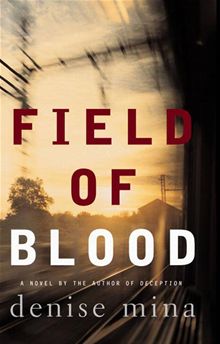
THE FIELD OF BLOOD by Denise Mina (2005)


When I learned that Ian Rankin would be hosting an evening with Denise Mina and Michael Connelly during IFOA here in Toronto in October, I was delighted to find one of her novels in a stack of cottage reading.

Rankin blurbs that Mina is "one of the most exciting writers to have emerged in Britain for years," and Connelly gushes, "really quite wonderful. I am a true fan." And these two know what they are talking about.

Set in Glasgow in 1981, a toddler goes missing from his garden and two young boys are subsequently arrested for beating the child to death and leaving him on the railroad tracks. Protagonist Paddy Meehan is working for the Scottish Daily News where she dreams of becoming an ace investigative journalist some day. When one of the boys turns out to be a cousin to Paddy's fiance, Paddy attempts to distance herself from the emerging story but finds herself all the more in the thick of things.

If you haven't already found Denise Mina and you devour mysteries, add her to your list.

GOOD MORNING, MIDNIGHT by Reginald HIll (2004)


Anyone who uses Emily Dickinson as a literary springboard has my attention.

Hill is an acknowledged master of the genre whose "intelligence, quick humour [and] compassion...blends elegance and grace." In this mystery, DS Andrew Dalziel is faced with what appears to be a copy cat suicide when Pal Maciver's corpse is discovered in a locked room where his father offed himself 10 years before.

Dalziel is determined to uncover the truths about both the past and the present and finds himself revealing curious connections beyond Yorkshire to London, NYC and even Iraq. Throw in a hooker who is actually the meek younger sister of the local vicar and you have a compelling web of deceit to unravel.

Monday, August 24, 2009

BLUE MOUNTAIN TROUBLE by Martin Mordecai (2009)

This YA novel follows twins Pollyread and Jackson as they complete their grade 6 year in a small country school in Jamaica where they are known and loved by their classmates and teachers.

Infused with local belief in duppies, colourful descriptive detail of the landscape and authentic dialect, this first novel is a revelation.

BLACK SWAN GREEN by David Mitchell (2007) Random House, 304 pages


This coming of age novel set in Warwickshire in the early 1980s reads more like a memoir from the point of view of 13-year-old Jason Taylor, who is a burgeoning poet, and adolescent outsider who is reconciling with his emerging sexuality as all teens do.

It is funny and warm and insightful and rife with pop cultural and political references. Anyone who suggests "Neil Young's voice sounds like a barn collapsing, but it's dead epic" [and that's a good thing] has my attention.

Saturday, August 15, 2009

TRAVELING MUSIC: THE SOUNDTRACK TO MY LIFE AND TIMES by Neil Peart (2004)

RUSH drummer and lyricist Neil Peart is a favorite creative nonfiction writer of mine. If you haven't stumbled onto Ghost Rider: Travels on the Healing Road, you must make the time for Peart's very personal account of his grief journey when his only daughter was killed in a car crash and he buried his longtime spouse a year later.

Traveling Music is lighter fare, though it has the same personal touches with letters to Brutus (a longtime dear friend to Peart) and actual journal entries from his 6-day 2500 mile round trip from Santa Monica to Big Bend National Park in southwest Texas in his dream car, a BMW Z-8. There are plenty of flashback sequences to Peart's formative years in St. Catharine's and then London, England and back to Toronto where he auditions successfully as the replacement drummer for RUSH.

What delighted me about this particular story is the breadth and intelligence with which Peart cultivates his burgeoning list of musical favorites which predictably includes Buddy Guy and not so predictably Frank Sinatra, Linkin Park, Patsy Cline and Madonna.

You'll find that Peart's narrative meanderings will lead you to your own nostalgia about the music of your youth.

Thursday, August 13, 2009

T.S. Eliot by Peter Ackroyd (1984)

I found this meaty biography on a cottage bookshelf and decided to dip in to remind myself why Eliot was considered such a great poet, albeit a supremely emotionally damaged man.

The youngest in the St. Louis-based Eliot family, Tom was educated at Harvard and moved to London where he became a banker and then an editor of The Criterion (where he published Ezra Pound)and at Faber and Faber where he published the esteemed American poet W.H. Auden among other notables of their generation.

Eliot spent fractious years with his first wife Vivienne who was institutionalized repeatedly for mental instability. They split with the encouragement of their common friends the Woolfs and Ottoline Morrel. In 1939, inheriting the lyric cloak of W.B. Yeats, Eliot gave the first speech in Dublin and in 1948 he received the Nobel Prize for Literature, an honour and a burden since he would no longer enjoy the privacy he so coveted.

It will turn me back to his great pieces including "The Waste Land," "The Four Quartets," "Sweeney Agonistes," "The Love Song of J. Alfred Prufrock" and his plays Murder in the Cathedral, The Cocktail Party and The Elder Statesman (the only one written when he was admittedly happy in his marriage to his second wife Valerie Fletcher in the decade before his death in 1965).

Wednesday, August 05, 2009

THE SELECTED WORKS OF T.S. SPIVET by Reif Larsen (2009)


Pick up this first novel that Stephen King blurbed: "It combines Mark Twain, Thomas Pynchon and Little Miss Sunshine. Good novels entertain; great ones come as a gift to the readers who are lucky enough to find them. This book is a treasure."

Twelve-year-old map-making obsessed genius Tecumseh Sparrow Spivet will grab you by the hand and pull you along his cross country journey from his family ranch in Montana to his mecca, the Smithsonian in Washington D.C.

Read Larsen's delightfully whimsical book and admit that fiction has no boundaries. You will slow down to read all of the marginalia, turning the novel to its side and upside down to examine all of T.S.'s sketches and musings.

Saturday, August 01, 2009

INDIGNATION by Phlilp Roth (2008)

I will read any title by Roth--one of the finest English language novelists working today.

INDIGNATION is set in the 1950s, the time of the Korean War. Protagonist Marcus Messner decides to transfer to an out-of-town college in his sophomore year, primarily to get away from the controlling hand of his father, a man whom he respects for his earnest work ethic.

There he meets Olivia, the daughter of a doctor alum who has a history of mental illness--a fact that eludes Marcus for some time as he is swept up by the whirlwind of new passion and sexual awakening. At the conservative campus of Ohio's Winesburg College, Marcus discovers that he is more of an outsider than he could even imagine.

WHERE WE HAVE TO GO by Lauren Kirshner (2009)


Lucy is eleven when we meet her in this "sparkling first novel" and we watch her find her way in her world through fantasy and reality. Through the unexpected kindness of "Crashing Wave" (a former exotic dancer) at Lucy's dad's AA meeting and the tension of her parents' temporary split, Lucy navigates her way messily through adolescence as an outsider and develops an eating disorder that has her institutionalized where she is known as "Bananas" rather than her name.

Set in Toronto in the 1990s rife with pop cultural cues and the angst that adolescence is for most of us, WHERE WE HAVE TO GO acknowledges that more often than not the most difficult journey we have to take is the one home.

Monday, July 27, 2009

THE WAY HOME by George Pelecanos (2009)


This thriller was on the "Best bets" shelf of my local library. I haven't read any of his other titles, but Pelecanos certainly writes convincingly from an insider's point-of-view. (His bio notes that he write for HBO's THE WIRE as his day job).

Chris Flynn is a sixteen-year-old with an attitude. Ironically, in an adolescent rush to avoid the law, he ends up incarcerated in a juvenile facility, the only white boy first offender among many coloured faces accustomed to spending time on the inside.

What is interesting about this book is not the relationships that Chris builds in prison or the loyalty he feels towards his fellow inmates, but rather the growing rapport with his father which for most of his life has been tense to say the least.

There are several graphic scenes that I would have closed my eyes for in the film adaptation--examples of man's inhumanity to man that are at once predictable and unforgivable.

With enough plot twists to keep you flipping the pages through to the end and a superb ear for the rhythm of the spoken word, THE WAY HOME is definitely worth a rainy afternoon.

Friday, July 24, 2009

PREP by Curtis Sittenfeld (2005)


If I had an acute ear for dialogue and the creative talent necessary to be a fiction writer, this is a novel I wish I'd thought to write. Because I've been immersed in private school culture for almost twenty years and because I remember my own brother as an adolescent at a boarding school and the antics he and his friends got up to and because my own adolescence was tortured in the way the protagonist's is, I had much of the same raw material.

However, I do not have Curtis Sittenfeld's ability to write with apparent ease and to create believable characters in credible situations.

Lee Fiora is an observant and intelligent 14-year-old when she begins life as a scholarship student at a prestigious Massachusetts boarding school in her freshman year. Accustomed to the pleasure of her own company, Lee is socially awkward, but manages to adjust to the insider rules by which the sons and daughters of the rich and very rich seem to play.

By the time Lee is in her graduating year, she has established herself as unique and independent rather than simply the loner she was when she began her life at Ault. And, like a typical teenager, she becomes distracted by the lure of sex and almost obsessed by her conflicts with her parents and some of her peers.

Luckily Lee has a true friend in Martha Porter, who supports her through the mess that adolescence almost always is.

Sunday, July 19, 2009

THE MAN OF MY DREAMS by Curtis Sittenfeld (2006)


Hannah Gavener is 14 in the summer of 1991 when her parents decide to split and she is sent to live temporarily with her Aunt Elizabeth. Hannah has always been something of a loner, in fact, often prefers the quiet of her own company through adolescence and into her university years. She finally makes friends with Jenny at Tufts where she studies Art History, and has a succession of boyfriends, but is not so sure that she will ever meet the man of her dreams, as it appears her older sister Allison has done in finding and marrying Sam.

We follow Hannah for fourteen years and realize, as she eventually does herself, that you can't blame your adult failures on your messed-up childhood.

But, don't take my word for it that this novel is worth your while. Take the word of Alice Munro, this year's Man Booker International Prize winner, who wrote: "THE MAN OF MY DREAMS is so free of tricks, the honesty is so startling, you feel there's a writer here who isn't trying to beguile you but to lay out some plain, raw truth about emotions and sex. This is a courageous, refreshing novel."

Friday, July 17, 2009

OLD CITY HALL by Robert Rotenberg (2009)


This is Rotenberg's first novel and I hope not his last.

In the opening pages, Kevin Brace, Canada's most famous radio host of The Dawn Treader (surely modeled after the late, great Peter Gzowski and his show Morningside) announces to his newspaper man (a charming 70-something East Indian named Mr. Singh) at 5:30 in the morning that he has killed his companion, Katherine Torn. And, although it seems like an open and shut case with the corpse in the bathtub, having expired from a stab wound to the stomach, neither the police (including Daniel Kennicott and Detective Ari Greene) nor Brace's lawyer Nancy Parish is convinced.

As truths about Torn are revealed and we meet Brace's ex-wife Sarah McGill, his only neighbour, 83-year-old Edna Wingate (they have the two penthouses in the condo) and learn more about his family past, the case doesn't seem so cut and dry.

What I especially liked about this book in addition to the sympathetic and complicated characters including the very likable Daniel Kennicott and Ari Greene, is the way Toronto is a character itself here. You sit in the Don Jail, spend time in Old City Hall, walk along Front Street and up Bay.

As a criminal lawyer and former CBC employee, Rotenberg writes convincingly from the inside.

THE SWEETNESS AT THE BOTTOM OF THE PIE by Alan Bradley (2009)


11 year-old Flavia de Luce is a precocious and intelligent heroine in the tradition of Jane Austen's Emma and Harper Lee's Scout Finch. She's certainly a know-it-all with more than her fair share of curiosity about other people's business.

Set in 1950, primarily in and around Flavia's sprawling family home in England called Buckshaw, SWEETNESS AT THE BOTTOM OF THE PIE follows the pre-adolescent devoted chemist and amateur poisoner (she does have two older irritating and narcissistic sisters, afterall: Ophelia aka Feely and Daphne aka Daffy) as she tries to solve the mystery involving two corpses on the grounds.

The first is a bird with its spike-of-a-beak impaling a postage stamp and the second is a stranger who expires as Flavia finds him in among the cucumber patch, but not before he mysteriously utters "Vale."

What follows is a terrific romp where we learn about her father, the Colonel's, adolescent past from other local townsfolk and where through Flavia's wit and common sense the mysteries are solved right to the satisfying end when Flavia receives a remarkable handwritten letter of thanks from His Majesty (George VI) himself.

It is no wonder that Bradley was awarded the Debut Dagger Award for this first in a series featuring the intrepid Flavia.

Monday, July 13, 2009

AMERICAN WIFE by Curtis Sittenfeld (2008)


Alice Blackwell is the First Lady of the United States when her husband Charlie occupies the commander-in-chief's seat from 2000-2008. In this novel, loosely based on the life of former First Lady Laura Bush, Sittenfield explores how an ordinary happy childhood in the midwest, transformed by adolescent grief and followed by stable adulthood can have the surprising trajectory that lands in the Oval Office.

Alice Lindgren Blackwell is a sympathetic character from the outset when she is a bookish only child, raised by adoring parents and an eccentric grandmother who has a longterm lesbian romance with a medical doctor in Chicago. One night when she is seventeen changes Alice forever as she realizes the fragility of life.

When she is wooed frenetically more than a decade later by the charismatic and playful Charles Blackwell, Alice cannot quite believe her good fortune, until that is tempered by meeting Charlie's controlling mother, nicknamed "Maj" by all of her sons (short for Her Majesty), who imposes her will and apparently racist attitudes more often than not.

The privilege into which Alice marries means she no longer works as a children's librarian, yet her story continues to be infused with the great children's books of the 20th century: A Tree Grows in Brooklyn, The Giving Tree, Mike Mulligan and His Steamshovel, and on and on...all books I remember either reading or having read to me by my grade school librarian, Mrs. Malcolm--the coolest teacher in the school because she drove a yellow corvette.

Sittenfield knows how to tell a compelling story with interwoven plotlines and she creates a most believable character in Alice Blackwell. Now I'm going to not only pick up her other novels but also look for the biographies of Laura Bush.

Thursday, July 09, 2009

DEATH'S OWN DOOR by Andrew Taylor (2001)

Set in 1953 in Lydmouth, DEATH'S OWN DOOR opens with the discovery of an apparent suicide. Rufus Moorcroft buried his wife many years previous, so it is unusual according to Detective Inspector Richard Thornhill that he would resolve to kill himself so much later.

Unlike the other Lydmouth mysteries, this one focuses on Thornhill's wife Edith and her past connection to the deceased. At the funeral, Edith remeets acquaintances from the pre-war years and has flashbacks to what she had once believed was an idyllic time in her life. Then she was convinced by the charismatic Hugh (Oxford-educated, playwrighting son) to star alongside him in a local production. Edith believed she'd been in love with Hugh and was devastated by his accidental death. He had gone to meet his father at the train and was instead crushed on the tracks. When his father saw the bits and pieces of what was clearly his only son, he had a heart attack and died en route to hospital.

Rufus's nephew Jack Graig, a former friend of Edith's, resurfaces and it's through him that she discovers the truths about the past and the present and is able to help her philandering husband to solve the crime.

The Thornhill children are conveniently away for most of the story, so Edith is free to indulge in her whims and to figure out whether or not to believe the town rumours about her husband's affair with the bright and beautiful journalist Jill Francis.

DEATH AND RESTORATION by Iain Pears (1996)

Another Jonathan Argyll Art Mystery, DEATH AND RESTORATION chronicles the work of a restoration expert, Dan Menzies, who is working on a disputed Caravaggio canvas in a monastery in San Giovanni. While Menzies is trying to clean and restore the dark masterpiece, a smaller painting, a curious icon of the BVM said to have potent powers over her people, goes missing, but not before an elderly monk has his head paritally bashed in and is left bleeding on the cold stone floor.

While the icon is lost in transit--a caper including a French art dealer and an infamous thief and a bag of money left in a railway station--there is also a corpse floating in the Tiber.

It takes the wiles of both Flavia di Stefano of Rome's Art Theft Squad and her fiance, art dealer Jonathan Argyll, a few missteps, conversations with a crazy priest and many documents in Latin and Greek to discover what has really happened and why.

BROOKLYN by Colm Toibin (2009)


Eilis Lacey comes of age in post-WWII small town Ireland where opportunities to live an independent life are slim to none. When a New York priest who knows her family offers her a job there in a clothing store, she jumps at the chance to begin a new life abroad.

Although terribly homesick at first, Eilis soon adapts to life in the women's boarding house and writes letters to her widowed mother and charismatic sister Rose about life in NYC (working on the floor of the department store and studying to be a bookkeeper at night through the kindness of a parishioner) and how she is becoming familiar with its rhythms.

At an Irish-organized dance hall event, Eilis meets Tony, an Italian from a closeknit family of boys. Tony woos Eilis and convinces her to marry him secretly before she is called back to Ireland due to a family tragedy. Back in Ireland her life becomes constricted and Eilis yearns to return to her new life in New York.

Toibin writes so quietly and deftly that it is hard to believe that Eilis's story is not entirely true.

Tuesday, June 30, 2009

THE HOUR I FIRST BELIEVED by Wally Lamb (2008)


This novel is a doorstop at 700 pages, but it is worth every ounce of its heft in storytelling. In the traditions of Charles Dickens, Robertson Davies and John Irving, Wally Lamb constructs a complicated tale that is grounded in humanity and its immense capacity for good and evil, secrecy and forgiveness.

The narrator is 47-year-old Caelum Quirk, a high school English teacher who has moved to Littleton, Colorado with his nurse wife Maureen. In April 1999 when Caelum is called away to his hometown in Connecticut to bear witness to his Aunt Lolly's final exit, his wife finds herself taking shelter in the library of Columbine High School where now infamously two teenaged boys mowed down several classmates before turning their guns on themselves.

Maureen suffers from post-traumatic stress disorder and becomes addicted to prescription meds. In order to attempt to put at least some geographic distance between themselves and the massacre, the Quirks move back to Three Rivers and into the farmhouse where Caelum grew up. There, with the help of tenants from New Orleans, on their own redemptive quest post-Hurricane Katrina and its physical and psychological devastation, Caelum begins to understand and meet his own grief and fear and anger about his past and about his future which, in the short term, is without Maureen since she is serving time for manslaughter--having killed a bright and beautiful young man while she was stoned and behind the wheel of her car.

There is pain on every page of this book, yet it is bearable, because Lamb manages to lift its veil and reveal the true beauty that sometimes follows.

GIOTTO'S HAND and THE TITIAN COMMITTEE by Iain Pears

These two are Jonathan Argyll art mysteries involving detective Flavia di Stefano of Rome's Art Theft Squad.

In the first, a letter turns up offering details about one of "Giotto's" (the nicknamed thief, not the esteemed painter) earliest heists and dispatches di Stefano to Florence without delay to investigate. While Flavia is there interviewing an ailing old woman, her boyfriend, art dealer Jonathan Argyll uncovers possible leads of his own in England. When he discovers his lead, dead at the bottom of the stone stairs in his rented cottage, Argyll rightly suspects foul play, especially in this little English town where the townsfolks' mouths are tighter than drumskins. What both Argyll and di Stefano discover as the truth is a little surprising and ultimately satisfying, including a lovely tiny, overlooked da Vinci sketch that sets the world right again.

In the second, Flavia spends time in Venice investigating the Titian Committee--a political body of art specialists responsible for cataloguing and identifying the master's work. To be on the committee is a plum career appointment, so when one and then two of its members is found dead, di Stefano knows there's more to these academics than meets the eye.

Friday, June 12, 2009

THE GIRL OF HIS DREAMS by Donna Leon (2008)

The title of this Guido Brunetti mystery is misleading, but don't let that dissuade you from dipping into Leon's series set in Venice. There are two storylines that weave in and out, one about a potentially corrupt priest who may be "fleecing his flock" for all the euros he can muster, and the other involving a dead girl (a gypsy from the fringes of society) whose corpse surfaces in one of the calles near the home of a wealthy family.

What strikes me most about Leon's books is the compassion with which she suffuses Commissario Brunetti and his genuine gratitude for the loving family that supports him.

Monday, June 08, 2009

ABOUT FACE by Donna Leon (2009)

Donna Leon's most recent Inspector Brunetti mystery aptly plays on the double entendre of the title which not only hints at the fact of cosmetic surgery of one of the main characters, but also at the change of attitude that follows discovering the truth about assumptions.

The woman at the centre of this mystery is Franca Marinello, La Superliftata, a long time friend to Contessa Falier, Brunetti's rich and powerful mother-in-law. She seems a cliche with her much older husband and a face disfigured by excessive plastic surgery. However, there is, of course, more to Marinello than meets the eye. She reads classics, including Ovid, and Brunetti finds himself unusually drawn to her.

With a subplot involving Marinello's husband and illegal dumping, Leon begins a treatise on environmental responsibility--a religion for Brunetti's adolescent daughter Chiara.

Smart, engaging and utterly human, ABOUT FACE is worth your time.

DEVIL BONES by Kathy Reichs (2008)

The eleventh in the Temperance Brennan series, DEVIL BONES has the North Carolina forensic pathologist working on interlocking cases that include human remains found in a cauldron with relics from a religious ceremony, a headless corpse on the shore of a nearby lake and the unexpected death of an innocent Wicca member.

There are graphic descriptions of autopsies that are visceral and not for the weak-stomached in the crowd.

The plot twists push the plot forward, though the romantic subplot of potential suitors is tiresome.

Monday, June 01, 2009

THE WHOLE TRUTH by David Baldacci (2008)

This breakneck speed-paced thriller is the first of Baldacci's that I've read, simply by accident as it was one in a mound of books loaned to me by my friend Pat--one of the most discerning and voracious readers I know.

Anyone familiar with the premise of the movie WAG THE DOG will understand the temptation that governments might have to fabricate war for financial gain.

In THE WHOLE TRUTH, billionaire Nick Creel decides he's going to do just that. Manufacture the idea of war, with self-made martyrs, that will jump start his arms dealing with the Chinese and Russian governments. While you're following Creel's sinister plans (which are tempered by bursts of philanthropy to make him feel less guilty), you also follow Shaw, a freelancer of sorts, who sorts out the baddest of the bad through independent contracting with a nefarious underbelly.

Shaw has little regard for the value of his own life until he falls in love with an intelligent and stunning German-born beauty named Anna who works for a think tank in London. Once he proposes to Anna and she accepts, his professional life begins to unravel and he finds himself in terrifying situations with the scum of Europe and the Middle East, barely escaping each time, and never without the help of his controlling boss Frank. Of course there are dirty agents as well as the unexpected kindness of strangers to propel Shaw's story forward to a satisfying end.

Baldacci has me hooked. He has also co-founded a non-profit organization dedicated to supporting literacy across the USA. Check out his foundation at:

www.wishyouwellfoundation.org

2 more by Andrew Taylor

Books Two and Three of Taylor's Roth trilogy (THE JUDGEMENT OF STRANGERS and THE OFFICE OF THE DEAD) can be read independently, but when read in the light of the first in the series, THE FOUR LAST THINGS, enrich the understanding of the characters whose lives intertwine over the decades and you begin to understand the psychopathology a little better.

Book Two begins in 1970 when David Byfield, a widowed parish priest, brings home a new wife, a publisher who becomes obsessed with the papers of dead poet Francis Youlgreave. Byfield neglects his adolescent daughter Rosemary who is home for the summer from boarding school and finds himself having to face terrifying truths about his past and his future.

Book Three flashes back to the idyllic 1950s when Byfield is happily married to his wife Janet. It is told from her friend Wendy Appleyard's perspective. And, it is this distance that allows you to put together the jigsaw of their lives and to begin to comprehend the seeds of what triggers sociopathic behaviour even among the most innocent.

STET by Diana Athill (2000)

I found my way to this memoir after reading Athill's SOMEWHERE TOWARDS THE END--my newest favourite book to give to friends.

STET is the term used by editors to recorrect corrections, meaning, "let it stand." And, this memoir published by then- octogenarian Athill lets stand for the public record her work life first at the BBC (after halcyon days spent reading at Oxford) and later in publishing with Andre Deutsch and the house that bears his name.

The second half of the book chronicles Athill's relationships with some of her famous literary charges: Mordecai Richler, Brian Moore, Jean Rhys, Alfred Chester, V.S. Naipal and Molly Keane. With each she is fair and discerning, yet almost always loving.

Saturday, May 23, 2009

THE DISCOMFORT ZONE: A PERSONAL HISTORY by Jonathan Franzen (2006)

This series of personal reflections about adolescence and early adulthood reveals an uber-senstive Franzen at his squirmy best, "a small and fundamentally ridiculous person."

You will find yourself identifying with his unflinching honesty about his awkward teenhood every page of the way.